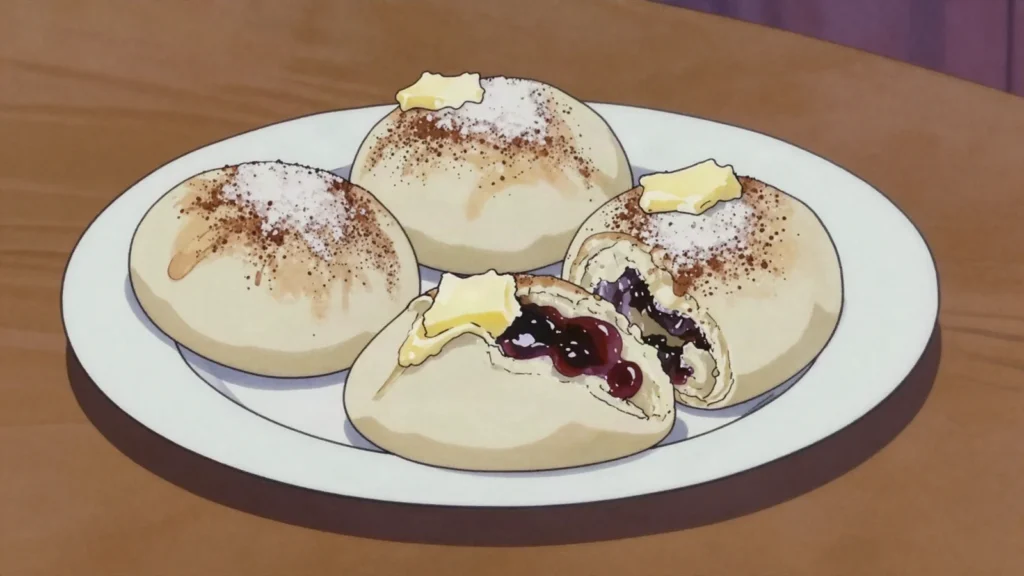

Ingredients
The dough
- 600 gplain flour
- 250 mlwarm milk
- 80 gsugar
- 80 gbutter, melted
- 2egg yolks
- 10 gdried yeast
- 1 teaspoonsalt
- grated zest of 1 lemon
The filling
- 300 gthick plum jam
- povidla, or lekvár
- or apricot jam
To steam
- a wide pan with a lid
- a little milk and butter
- in the base
- or a steamer
To serve
- melted butter
- ground poppy seed
- icing sugar
- or cocoa and sugar
Directions
- Steam holds the risen buns up. They do not recover from that at all. Keep the lid on the whole time. The base liquid must not boil dry. Use enough to last the cooking. Do not lift the lid to check on it. Use a little more than you think. Povidla is thick cooked plum jam. Reduce a thin jam first if needed. Cook a thin jam down in a pan. That makes it both soft and rich.
- Warm the milk gently in a pan. Stir the yeast and a spoon of sugar in. Let it stand there for ten minutes. The yeast should foam up visibly. Discard it and start again if not. Mixing the dry is the next step.
- Put the flour in a large bowl. Add the sugar, salt and lemon zest. Stir them together thoroughly. Add the yeast milk and egg yolks. Add the melted butter to them. Bring it together into a soft dough. Knead it for about ten minutes. It becomes smooth as gluten develops.
- Keep going through the sticky stage. Put the dough in an oiled bowl. Cover it and leave it somewhere warm. Give it about ninety full minutes. Divide it into about twelve pieces. Flatten each piece into a disc. Put a spoon of jam in the centre. Pinch it firmly closed at the top. The seal must be entirely complete.
- Check every single seal carefully. Do not overfill any of them at all. Roll each one smooth between your palms. Set each one seam side downward. Seam down keeps it closed as it rises. Set them out on a floured tray. Cover them and leave them to rise. Give them about forty minutes.
- Pour milk into a wide heavy pan. Add a knob of butter and a little sugar. Use about a centimetre of liquid. It should not reach the top of the buns. Butter in the base fries the bottoms. That is what gives the golden crust. Set all of the buns in the pan. Leave good wide gaps between them. Leave a good gap between each. Cover the pan with a tight lid.
- Set it over a steady medium heat. Too high a heat and the base burns. Adjust it if you hear fierce sizzling. Cooking them takes about twenty-five minutes. Let them cook for twenty-five minutes. Do not lift the lid at any point. Lift the lid only at the very end. They should be puffed and pale on top.
- Lift one gently to see the bottom. It should be crisp and golden. Lift them out onto warm plates. Pour melted butter over all of them. It must be very freshly ground. Grind it just before you serve it. They are eaten hot with a fork. Steam them again briefly to revive them.
Technique
- Do not lift the lid at any point during the twenty-five minutes: steam is what holds the risen buns up, and a sudden temperature drop deflates them beyond recovery. That is the commonest mistake. It also means you cannot check the base liquid, so use a little more than you think it needs — a glass lid solves the problem entirely.
- The buns sit in about a centimetre of milk with butter in a covered pan, so the bottoms fry to a golden crust while the tops steam pale and soft. That contrast is characteristic and quite unlike a plain steamed bun; without butter in the base they stay pale all over. Judge by sound: gentle bubbling is fine, fierce sizzling means the liquid has gone and the heat should come down at once.
- Use a thick cooked plum jam, since runny jam leaks out during steaming and then burns in the pan base — reduce a thin jam in a pan first. Seal each bun completely, roll it smooth and set it seam side down, and do not overfill, since overfilled buns burst as they rise.
Substitutions
- Apricot jam stands in for povidla, provided it is thick enough not to run.
- Ground poppy seed is the classic topping and cocoa with sugar another, with icing sugar over either; all are genuinely used. Grind poppy seed just before serving, since whole seeds give nothing at all.
Variations
- They descend from Austrian Dampfnudeln, steamed in a covered pan over a little liquid, and parené means steamed in Slovak.
- Give the second rise about forty minutes and stop while they look puffy rather than fully doubled, since they rise further in the pan and overproved buns collapse when steamed.
- Egg yolks alone rather than whole eggs give the richer softer crumb that is traditional here.
History
Steamed yeast buns filled with plum jam and served with poppy seed and butter, descended from Austrian Dampfnudeln.
Frequently asked questions
What is Parené buchty?
Parené buchty is a dessert from Slovakia: steamed jam-filled yeast buns with cocoa and butter. Steamed yeast buns filled with plum jam and served with poppy seed and butter, descended from Austrian Dampfnudeln.
How long does Parené buchty take to make?
Parené buchty takes 40 minutes plus rising of preparation and 25 minutes of cooking. The recipe makes about 12 buns. It is rated hard to make.
What can I substitute in Parené buchty?
Yes, within limits. Apricot jam stands in for povidla, provided it is thick enough not to run. Ground poppy seed is the classic topping and cocoa with sugar another, with icing sugar over either; all are genuinely used. Grind poppy seed just before serving, since whole seeds give nothing at all.
What is the most important thing to get right in Parené buchty?
Steam holds the risen buns up. They do not recover from that at all. Keep the lid on the whole time. The base liquid must not boil dry. Use enough to last the cooking. Do not lift the lid to check on it. Use a little more than you think. Povidla is thick cooked plum jam. Reduce a thin jam first if needed. Cook a thin jam down in a pan. That makes it both soft and rich.