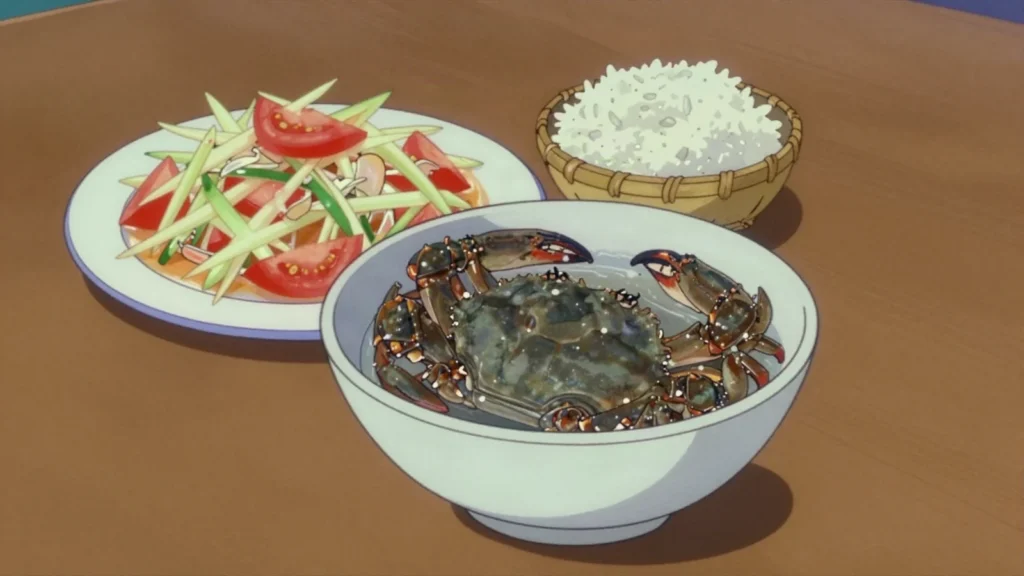

Tiny paddy-field crabs from the rice terraces of Isan, packed whole and alive into salt brine and left to cure raw, then pounded into som tam for a deep, funky salinity.
Raw freshwater crab is the established vector for paragonimiasis, the lung fluke, across Southeast Asia, and salt brine does not kill the metacercariae — Thai public health surveys keep finding infections traced to uncooked pu dong and to som tam made with it. This is not a matter of technique or cleanliness, so the atlas describes the preserve rather than giving a method for curing raw crab at home
What goes into it
- Small freshwater rice-field crabs, caught after the rains
- Coarse salt, in a heavy brine
- Sometimes a little roasted rice powder or garlic
How it is made
The crabs are rinsed, packed whole into jars and covered with a strong salt brine, then left for anything from a few days to several months. Nothing is heated at any stage. The shells soften, the brine goes dark and pungent, and the whole crab — shell included — is pounded into the mortar when som tam pu pla ra is made.
How long it takes: A few days to several months, depending on the household
How it is eaten
Pounded whole into som tam, shell and all, or eaten a piece at a time with sticky rice
History
The pungent Isan addition to som tam pu pla ra, made from tiny rice-field crabs caught after rains.
Frequently asked questions
What is Pu Dong?
Pu Dong is a fermented & pickled from Thailand: small paddy-field crabs cured raw in salty brine, pounded into papaya salad. The pungent Isan addition to som tam pu pla ra, made from tiny rice-field crabs caught after rains.
How is Pu Dong made?
The crabs are rinsed, packed whole into jars and covered with a strong salt brine, then left for anything from a few days to several months. Nothing is heated at any stage. The shells soften, the brine goes dark and pungent, and the whole crab — shell included — is pounded into the mortar when som tam pu pla ra is made. It takes a few days to several months, depending on the household.
Can I make Pu Dong at home?
No, and the atlas gives no method for it. Raw freshwater crab is the established vector for paragonimiasis, the lung fluke, across Southeast Asia, and salt brine does not kill the metacercariae — Thai public health surveys keep finding infections traced to uncooked pu dong and to som tam made with it. This is not a matter of technique or cleanliness, so the atlas describes the preserve rather than giving a method for curing raw crab at home.
What goes into Pu Dong?
Small freshwater rice-field crabs, caught after the rains, coarse salt, in a heavy brine, sometimes a little roasted rice powder or garlic.
How is Pu Dong eaten?
Pounded whole into som tam, shell and all, or eaten a piece at a time with sticky rice.