
Ingredients
Broth
- 12large head-on prawns (about 600 g)
- 1.2 litreswater or light stock
- 3lemongrass stalks, bruised and cut in 4 cm lengths
- 60 ggalangal, sliced in coins
- 8makrut lime leaves, torn
- 3coriander roots, bruised
- 2shallots, halved
Seasoning
- 200 gstraw mushrooms, halved (or oyster mushrooms)
- 4 tbspfish sauce
- 5 tbsplime juice, added off the heat
- 6–10bird’s eye chillies, bruised
- 2 tbspnam prik pao (roasted chilli paste)
- 1 tsppalm sugar
To finish
- Handful of coriander leaves
- 2sawtooth coriander leaves, sliced (optional)
Directions
- Peel the prawns, keeping heads and shells. Devein the bodies and refrigerate them.
- Fry the heads and shells in a dry pot over high heat for 2–3 minutes, pressing with a spoon until the shells turn deep orange and the red tomalley runs out – this is where the depth comes from.
- Add the water, bring to a boil, skim, and simmer 12 minutes. Strain and return the liquid to the pot.
- Add lemongrass, galangal, lime leaves, coriander roots and shallots and simmer 5 minutes until the broth smells sharply aromatic. Do not boil hard or the herbs turn bitter.
- Add the mushrooms and simmer 2 minutes, then stir in the nam prik pao, fish sauce and palm sugar until the paste dissolves and the surface carries a slick of orange chilli oil.
- Slide in the prawns and cook 90 seconds, just until they curl and turn opaque. Take the pot off the heat immediately.
- Bruise the chillies between your fingers, drop them in, then stir in the lime juice off the heat. Taste – it should hit sour and hot first, salty behind, barely sweet.
- Ladle into bowls with the aromatics still in (they are not eaten, only picked around), scatter coriander and serve at once with rice.
Technique
- Lime juice is never boiled. Heat turns its perfume flat and slightly bitter, so it always goes in last, off the flame.
- Galangal is not ginger. Ginger gives a pungent, warming heat where galangal is piney and medicinal – the swap changes the dish completely.
- This is the clear tom yum nam sai. The creamy orange bowls served abroad are tom yum nam khon, finished with evaporated milk.
Substitutions
- No fresh galangal or lime leaves? Frozen ones are far better than dried; dried galangal needs a 10 minute head start in the broth.
- Nam prik pao can be replaced with 1 tbsp chilli flakes fried in 2 tbsp oil with a little tamarind and palm sugar.
Variations
- Tom yum nam khon – stir 100 ml evaporated milk in at the end for a creamy, cloudy broth.
- Tom yum pla, made with sliced river fish, and tom yum gai with chicken.
History
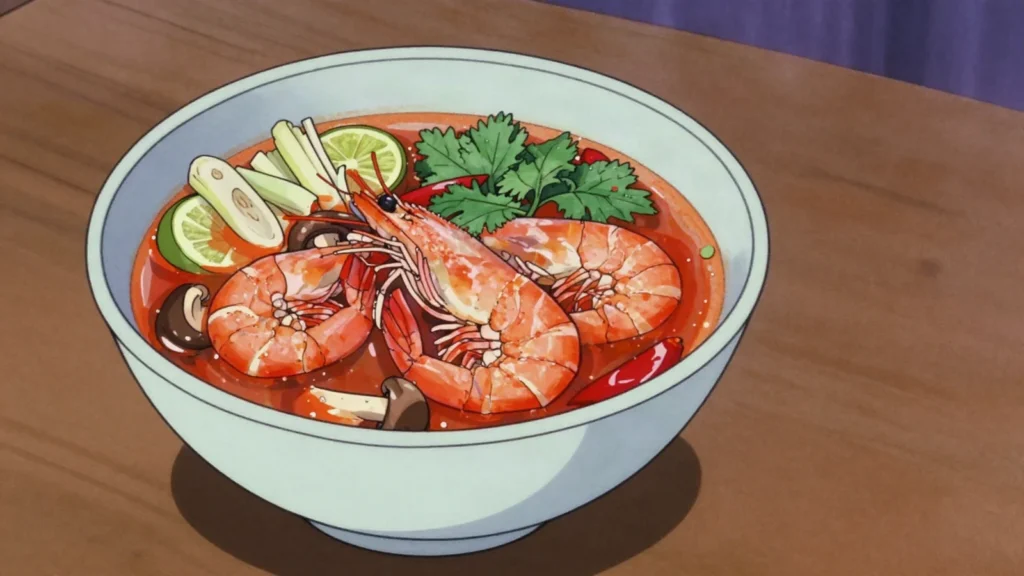
A hot and sour soup made with shrimp, lemongrass, galangal, kaffir lime leaf and chili, documented across Thailand as one of the country’s most iconic and internationally recognized dishes. Its defining hot-and-sour flavour, built from fresh aromatic herbs and lime juice rather than vinegar, reflects a broader Thai culinary philosophy of balancing multiple intense flavours, spicy, sour, salty and often a touch of sweet, within a single dish rather than emphasizing any one flavour alone. Tom yum goong exists in two main styles, a clear broth version and a creamier version enriched with coconut milk or condensed milk, and it remains one of the most internationally famous dishes representing Thai cuisine as a whole.
Frequently asked questions
What is Tom Yum Goong?
Tom Yum Goong is a soup & stew from Thailand: hot-and-sour prawn soup with lemongrass, galangal and lime leaf. A hot and sour soup made with shrimp, lemongrass, galangal, kaffir lime leaf and chili, documented across Thailand as one of the country’s most iconic and internationally recognized dishes. Its defining hot-and-sour flavour, built from fresh aromatic herbs and lime juice rather than vinegar, reflects a broader Thai culinary philosophy of balancing multiple intense flavours, spicy, sour, salty and often a touch of sweet, within a single dish rather than emphasizing any one flavour alone. Tom yum goong exists in two main styles, a clear broth version and a creamier version enriched with coconut milk or condensed milk, and it remains one of the most internationally famous dishes representing Thai cuisine as a whole.
How long does Tom Yum Goong take to make?
Tom Yum Goong takes 15 min of preparation and 20 min of cooking. The recipe makes 4 servings. It is rated easy to make.
What can I substitute in Tom Yum Goong?
Yes, within limits. No fresh galangal or lime leaves? Frozen ones are far better than dried; dried galangal needs a 10 minute head start in the broth. Nam prik pao can be replaced with 1 tbsp chilli flakes fried in 2 tbsp oil with a little tamarind and palm sugar.
What is the most important thing to get right in Tom Yum Goong?
Add lemongrass, galangal, lime leaves, coriander roots and shallots and simmer 5 minutes until the broth smells sharply aromatic. Do not boil hard or the herbs turn bitter.