
Ingredients
Meat
- 1.5 kgmutton flaps, in strips
To marinate
- 4 tbspsoy sauce
- 4garlic cloves, crushed
- 1thumb ginger, grated
- 1 tspblack pepper
- juice of 2 limes
For the stew version
- 20young taro leaves
- 400 mlcoconut cream
- 2onions, chopped
- 1tomato, chopped
To serve
- boiled taro
- breadfruit
- rice
- boiled green banana
Note
- taro leaves must be cooked thoroughly, since raw leaves are an irritant
Directions
- Cut the flaps into strips or into serving pieces. Trim off the very thickest slabs of fat. Leave plenty on, since the fat is where the flavour is. Removing all of it gives dry disappointing meat.
- Mix the soy sauce, garlic, ginger, pepper and lime juice. Turn the meat through the marinade. Cover it and refrigerate it for at least an hour. The acid helps cut the richness. Set the grill high above the coals. Lay the strips out on the grill. Turn them every four or five minutes.
- Grill them for thirty to forty minutes. The fat needs time to render out. Use young tender leaves and cut out the thick central stem. Wash them well and discard any damaged leaves. Building the parcels is done by hand.
- Stack three or four leaves in your palm to form a cup. Put pieces of marinated mutton in the centre. Add the chopped onion and tomato.
- Pour in coconut cream to fill the cup. Do not overfill, since it will leak. Fold the leaves over to close the parcel. Wrap it in a further leaf or in foil. Cooking them takes a long slow heat.
- Bake them at 180C for at least two hours. That length is about the leaves as much as the meat. Return them to the oven for another twenty minutes if there is. Do not serve them until that sensation has gone entirely.
- Serve the grilled meat with boiled taro or rice. Serve the parcels whole and let each person open their own.
Technique
- Taro leaves must be cooked long and thoroughly, since the raw leaf causes burning and itching.
- Grill over embers with no flames, as dripping fat from this cut causes flare-ups.
- The fat needs thirty to forty minutes to render; rushing it gives burnt fat and raw meat.
Substitutions
- Lamb belly in place of mutton flap.
- Spinach in place of taro leaves, though it is not the same dish.
Variations
- Grilled over charcoal, as an everyday dish.
- Baked in taro leaves with coconut cream, as lu sipi.
- Stewed with cabbage and onion.
History
Cheap New Zealand mutton flaps became a Tongan staple after the 1970s; the government briefly restricted imports over health concerns.
Frequently asked questions
What is Sipi?
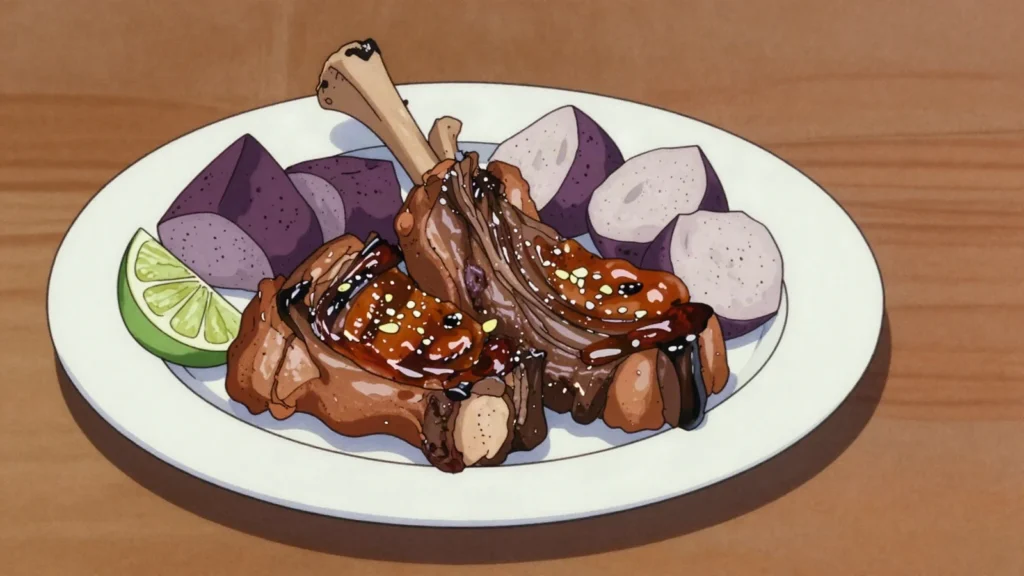
Sipi is a main from Tonga: fatty mutton flaps grilled or stewed with taro leaves and coconut cream. Cheap New Zealand mutton flaps became a Tongan staple after the 1970s; the government briefly restricted imports over health concerns.
How long does Sipi take to make?
Sipi takes 20 min of preparation and 1 hour 30 min of cooking. The recipe makes 6 servings. It is rated easy to make.
What can I substitute in Sipi?
Yes, within limits. Lamb belly in place of mutton flap. Spinach in place of taro leaves, though it is not the same dish.
What is the most important thing to get right in Sipi?
Pour in coconut cream to fill the cup. Do not overfill, since it will leak. Fold the leaves over to close the parcel. Wrap it in a further leaf or in foil. Cooking them takes a long slow heat.