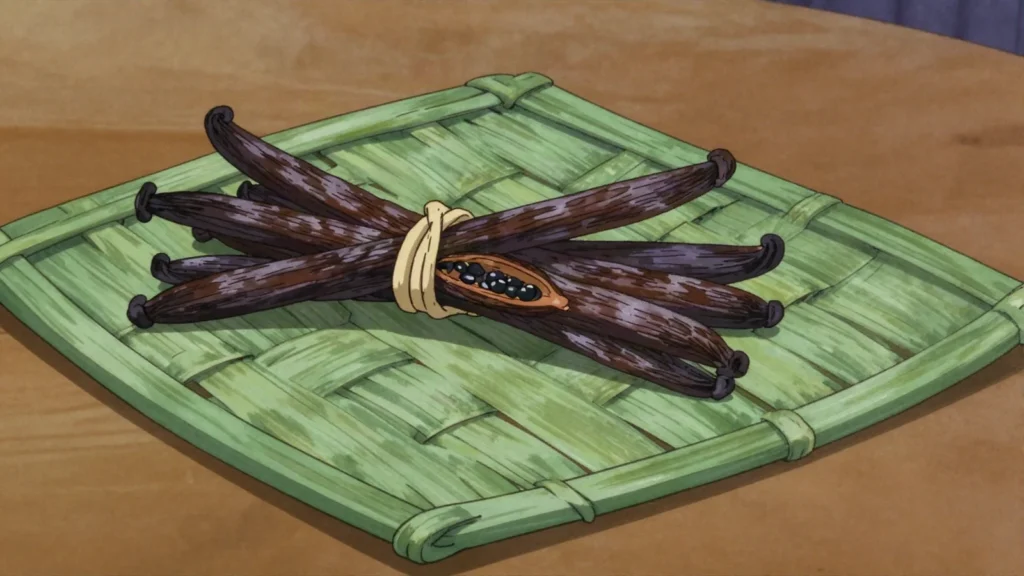

Ingredients
For vanilla extract
- 6Tongan vanilla beans
- plump, dark and pliable
- about 25 g
- 250 mlvodka
- or white rum
- at least 35 percent alcohol
- a clean glass bottle with a tight lid
For vanilla sugar
- 2vanilla beans
- split lengthways
- or used, scraped pods
- 500 gcaster sugar
- an airtight jar
For vanilla paste
- 6vanilla beans
- 150 mlwater
- 150 gsugar
- a small pinch of salt
Equipment
- a sharp small knife
- sterilised jars and bottles
- a dark cupboard
- labels and a pen
Directions
- Discard genuinely mouldy beans. Keep them in a cool dark cupboard. Never store vanilla beans in the fridge. Cut the beans in half if the bottle is short. Put them in a clean sterilised bottle.
- Pour over the vodka or the rum. The beans must be fully submerged. Seal the bottle tightly and shake it. Shake the bottle once a week or so. Leave it for at least eight weeks.
- Top it up with more alcohol as you use it. The beans keep giving for a long while. Seal the jar and leave it for two weeks. Shake it occasionally to distribute the aroma. The sugar takes on the scent completely.
- Top it up with fresh sugar as you use it. It keeps going for months on the same pods. Chop the emptied pods roughly. Simmer pods, seeds, water and sugar gently.
- Simmer for about twenty minutes. Let it cool and then blend it smooth. Strain out the larger woody fibres. It keeps a month in the fridge.
- Add the pod as well and remove it later. Infuse the pod in warm milk or cream. Add vanilla late in a cooking process. A whole pod in a hot oven loses a great deal.
- Check whether a product says natural vanilla. Homemade extract keeps for years.
Technique
- Every vanilla flower grown outside its native range is pollinated by hand, because the insects that pollinate it live only in Mexico and Central America. The technique was worked out on Réunion by Edmond Albius, a twelve-year-old enslaved boy, and it is still the method used today. He was freed when slavery ended there and died in poverty. That is documented and it belongs in the record.
- Each flower opens for one day only and must be pollinated within hours, and flowers open a few at a time over weeks. Someone walks the rows every morning for an entire season. That, plus a curing process running many months, is why vanilla costs what it does.
- Green pods have no vanilla flavour at all. It develops entirely during curing — killing, sweating in sun by day and wrapped by night for weeks, slow drying, then months of conditioning in closed boxes.
- Never store vanilla beans in the fridge. Cold and damp makes them mould. Airtight, cool and dark is correct, which is the opposite of what most people assume.
- White frosting on a bean is vanillin crystallising on the surface and is a mark of quality. Mould is fuzzy, grey or green and smells wrong. Do not confuse them.
- For extract, the beans must stay fully submerged and the alcohol must be at least 35 percent. Any bean above the liquid moulds, and weaker alcohol neither preserves nor extracts properly.
- Infuse vanilla in a fatty liquid — milk, cream, butter — rather than water where you can. The aroma compounds dissolve far better in fat. And add it late, since prolonged high heat drives the aroma off.
- Tonga lies in the South Pacific cyclone belt and vanilla vines take years to recover from a bad storm. Prices are also extremely volatile, and high prices bring theft of ripening pods, which pushes growers to pick early and damages the crop. Those pressures fall on smallholders.
- Most vanilla flavouring is synthetic vanillin made from wood pulp or petrochemicals. It is a legitimate product honestly sold, but it is one note where real vanilla has hundreds of aroma compounds. Check whether a label actually says natural vanilla.
Substitutions
- Madagascan, Tahitian, Ugandan, Indonesian and Mexican vanillas can all be used the same way. Tahitian is more floral and less rich; Madagascan is the classic creamy profile.
- White rum or bourbon replaces vodka for extract and gives a warmer, more characterful result.
- Used scraped pods make vanilla sugar and a second-run extract, and should never be thrown away.
- Vanilla paste replaces beans where you want visible seed specks without splitting a pod.
- Good-quality natural vanilla extract replaces beans in most baking; roughly a teaspoon per bean.
- Synthetic vanillin is far cheaper and works in strongly flavoured baking where the complexity would be lost anyway.
Variations
- Tahitian vanilla, Vanilla tahitensis, is a different species with a more floral, anise-like character.
- Madagascan bourbon vanilla dominates the world market and is the reference profile most people know.
- Vanilla paste, made by simmering and blending pods with sugar syrup, is a useful kitchen form with visible seeds.
- Vanilla sugar, made by burying pods in caster sugar, is the simplest use of all and is standard across Europe.
- Homemade extract improves for years and can be topped up with fresh alcohol as it is used.
- In Tonga the beans flavour coconut and cream desserts and are given as gifts in tied bundles, though most of the crop is exported.
History
Vava’u growers have produced vanilla since the 1970s, hand-pollinating each flower in the absence of its native bee.
Frequently asked questions
What is Tongan Vanilla?
Tongan Vanilla is a sauce & condiment from Tonga: hand-pollinated vanilla beans, dark and floral; sold cured in bundles. Vava’u growers have produced vanilla since the 1970s, hand-pollinating each flower in the absence of its native bee.
How long does Tongan Vanilla take to make?
Tongan Vanilla takes 15 minutes of preparation and none, plus 8 weeks steeping of cooking. The recipe makes makes about 250 ml extract, or a jar of vanilla sugar. It is rated easy to make.
What can I substitute in Tongan Vanilla?
Yes, within limits. Madagascan, Tahitian, Ugandan, Indonesian and Mexican vanillas can all be used the same way. Tahitian is more floral and less rich; Madagascan is the classic creamy profile. White rum or bourbon replaces vodka for extract and gives a warmer, more characterful result. Used scraped pods make vanilla sugar and a second-run extract, and should never be thrown away. Vanilla paste replaces beans where you want visible seed specks without splitting a pod. Good-quality natural vanilla extract replaces beans in most baking; roughly a teaspoon per bean. Synthetic vanillin is far cheaper and works in strongly flavoured baking where the complexity would be lost anyway.
What is the most important thing to get right in Tongan Vanilla?
Discard genuinely mouldy beans. Keep them in a cool dark cupboard. Never store vanilla beans in the fridge. Cut the beans in half if the bottle is short. Put them in a clean sterilised bottle.