
Ingredients
Pork
- 600 gpork belly or shoulder, in small cubes
- 400 gpork offal, lungs, heart, kidney and intestine, cleaned
Blood
- 500 mlfresh pig’s blood, with 2 tbsp vinegar stirred in to stop it clotting
Base
- 1onion, chopped
- 6 clovesgarlic
- 3 tbspoil
Sour and hot
- 150 mlcane or coconut vinegar
- 4to 6 long green chillies, siling haba
- 2bay leaves
- 1 tbspfish sauce
- 1 tspsugar
- black pepper
- salt
Also
- 300 mlstock or water
To serve
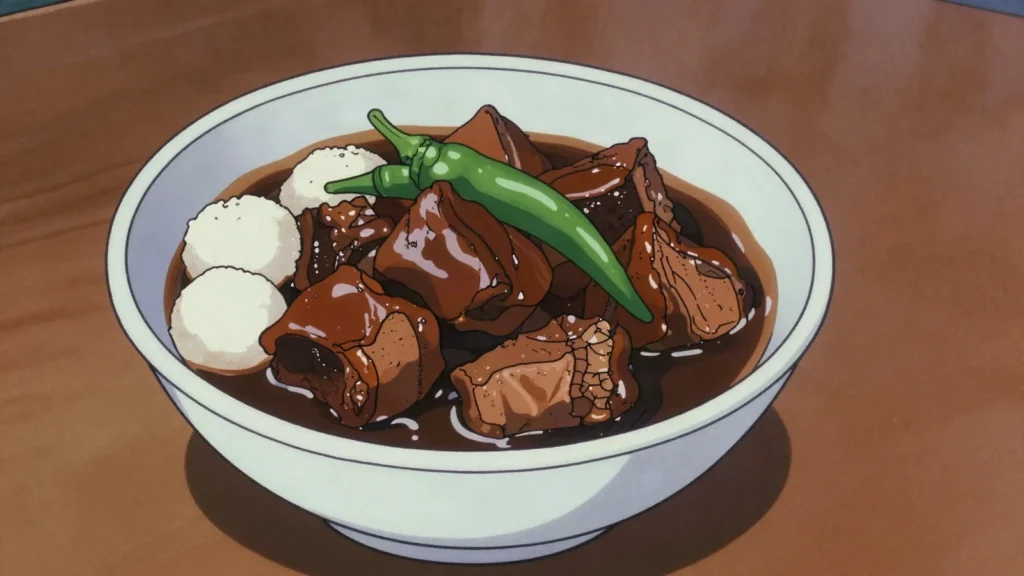
- puto, steamed rice cakes
- or plain rice
Directions
- Use it fresh, within a day or two, and keep it refrigerated until the moment it goes in the pot. Strain it through a sieve before use to catch any clots that have formed. If using offal, boil it separately first until tender and discard that water, which removes the strongest flavours.
- Cut everything into small even cubes, since this is eaten with rice and large pieces are unwieldy. Fry the garlic in oil until pale gold, then add the onion and cook until soft. Do not let the garlic go dark, since burnt garlic turns bitter and that bitterness carries right through the finished dish.
- Add the pork and brown it, then the offal. Add the fish sauce and let it cook for a minute, then the bay leaves and stock. Simmer, covered, for about forty minutes until the pork is tender. Now the vinegar, and there is a rule about it that runs through Filipino cooking.
- Pour in the vinegar and let it come to a boil without stirring, then leave it undisturbed for three or four minutes. Do not stir while the vinegar cooks off, which is standard practice for adobo and every other vinegar-based Filipino dish.
- Add more vinegar if it tastes flat and heavy. Turn the heat down to the lowest setting before the blood goes anywhere near the pot. Pour the strained blood in slowly while stirring constantly with a wooden spoon.
- Stir without stopping from the moment it goes in, and keep stirring for the next five to ten minutes. Never let it boil hard, which curdles it into a separated, gritty mess that cannot be recovered.
- Keep it at the barest simmer with constant movement, and it will thicken smoothly into a glossy dark sauce. It should end up thick enough to coat the meat and cling to a spoon, and it will go from red-brown to almost black.
- Cook it gently for a further ten to fifteen minutes so the raw blood taste cooks out entirely. Now add the long green chillies whole or slit, and simmer for five minutes more. Taste and adjust the salt, sugar and vinegar until it is sour, rich and savoury in balance. Serve it hot with puto or with plain rice.
Technique
- The blood must be strained and stirred constantly over the lowest heat.
- Do not stir while the vinegar cooks off, which is standard Filipino practice.
- Puto, sweet steamed rice cakes, are the classic partner.
Substitutions
- Pork belly alone in place of offal, which many prefer.
- Any mild vinegar in place of cane vinegar.
Variations
- Dinuguang Kapampangan, thicker and richer.
- Made with chicken blood and chicken.
- Served as a filling for pandesal at breakfast.
History
A stew made from pork blood, meat and offal, simmered in vinegar and chili until thick and dark, its Filipino name meaning literally to be made into blood, reflecting a broader Filipino and wider Southeast Asian culinary tradition of using an animal’s blood after slaughter rather than discarding it, a practical necessity when meat itself was historically too valuable to waste any part of a butchered animal. Its distinctive dark colour and rich, slightly tangy flavour from the vinegar come together into a dish that, despite sometimes surprising visitors unfamiliar with blood-based cooking, remains deeply beloved within Filipino cuisine. Dinuguan is traditionally paired with puto, a steamed rice cake, whose mild sweetness is considered an essential counterbalance to the stew’s rich, savory intensity.
Frequently asked questions
What is Dinuguan?
Dinuguan is a main from Philippines: pork offal simmered in pig’s blood with vinegar and chilli, served with rice cakes. A stew made from pork blood, meat and offal, simmered in vinegar and chili until thick and dark, its Filipino name meaning literally to be made into blood, reflecting a broader Filipino and wider Southeast Asian culinary tradition of using an animal’s blood after slaughter rather than discarding it, a practical necessity when meat itself was historically too valuable to waste any part of a butchered animal. Its distinctive dark colour and rich, slightly tangy flavour from the vinegar come together into a dish that, despite sometimes surprising visitors unfamiliar with blood-based cooking, remains deeply beloved within Filipino cuisine. Dinuguan is traditionally paired with puto, a steamed rice cake, whose mild sweetness is considered an essential counterbalance to the stew’s rich, savory intensity.
How long does Dinuguan take to make?
Dinuguan takes 30 min of preparation and 1 hr 15 min of cooking. The recipe makes 6 servings. It is rated medium to make.
What can I substitute in Dinuguan?
Yes, within limits. Pork belly alone in place of offal, which many prefer. Any mild vinegar in place of cane vinegar.
What is the most important thing to get right in Dinuguan?
Cut everything into small even cubes, since this is eaten with rice and large pieces are unwieldy. Fry the garlic in oil until pale gold, then add the onion and cook until soft. Do not let the garlic go dark, since burnt garlic turns bitter and that bitterness carries right through the finished dish.