
Ingredients
Vegetables
- 12small courgettes, or 6 small aubergines
Filling
- 500 gminced lamb
- 1onion, finely chopped
- 80 gpine nuts
- 1 tspallspice
- 1 tspcinnamon
- 1 tspblack pepper
- 2 tbspghee or butter
- salt
Yoghurt sauce
- 1.5 kgfull-fat yoghurt
- 1egg white
- 2 tbspcornflour
- 1 tspsalt
- 300 mllamb or chicken stock
To finish
- 3 clovesgarlic crushed with salt
- 2 tbspdried mint
- 2 tbspbutter
To serve
- rice with vermicelli
- flatbread
Equipment
- a vegetable corer, ma’jarah
Directions
- Trim the stem end off each courgette and hollow it out with a corer, turning it as you go. Leave a wall of about 4 mm and stop short of the far end so the base stays closed. Pierce the wall or the base and the vegetable splits open in the sauce and empties itself. Do not throw the scooped flesh away, which is fried with eggs or added to another dish.
- Toast the pine nuts in the ghee until golden and set some aside for the top. Fry the onion until soft, add the mince and cook it until browned and dry. Cook the meat completely dry, because any liquid in the filling will thin the yoghurt sauce from inside.
- Add the allspice, cinnamon and pepper and season well, then stir in the pine nuts. Allspice and cinnamon with lamb is the Levantine signature and the quantity should be noticeable. Cool the filling completely before stuffing. Fill them firmly but stop short of the opening, and do not pack them to bursting.
- Whisk the room-temperature full-fat yoghurt with the cornflour, egg white and salt until completely smooth. Set it over a medium-low heat and stir constantly in one direction until it comes to a boil.
- Stir without stopping, keep the lid off, and bring it to the boil once. Those three rules are what stop it curdling, and the same method underlies shakriyeh and mansaf.
- Simmer very gently, uncovered, for 30 to 40 minutes. Keep it at the barest simmer. Do not stir once they are in; shake the pan gently instead if you need to move them. Fry the crushed garlic in butter for under a minute, take it off the heat, and stir in the dried mint.
- Add the mint off the heat, because it burns and turns acrid in seconds in hot fat. Stir this into the sauce and simmer 5 more minutes. Taste the sauce and adjust the salt. Serve it over rice cooked with toasted vermicelli, with the reserved pine nuts scattered over.
Technique
- A ma’jarah, the long thin Levantine corer, is cheap and makes this vastly easier.
- The scooped courgette flesh is fried with eggs as a separate dish, ejjeh.
- It reheats gently but must never be boiled again hard.
Substitutions
- Small aubergines in place of courgettes, which is the older form.
- Beef in place of lamb, though lamb is traditional.
Variations
- Made with aubergines.
- Baked in tomato sauce instead of yoghurt, which is a different dish.
- With walnuts instead of pine nuts.
History
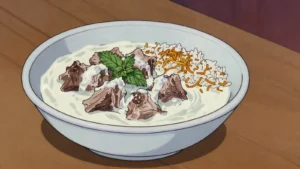
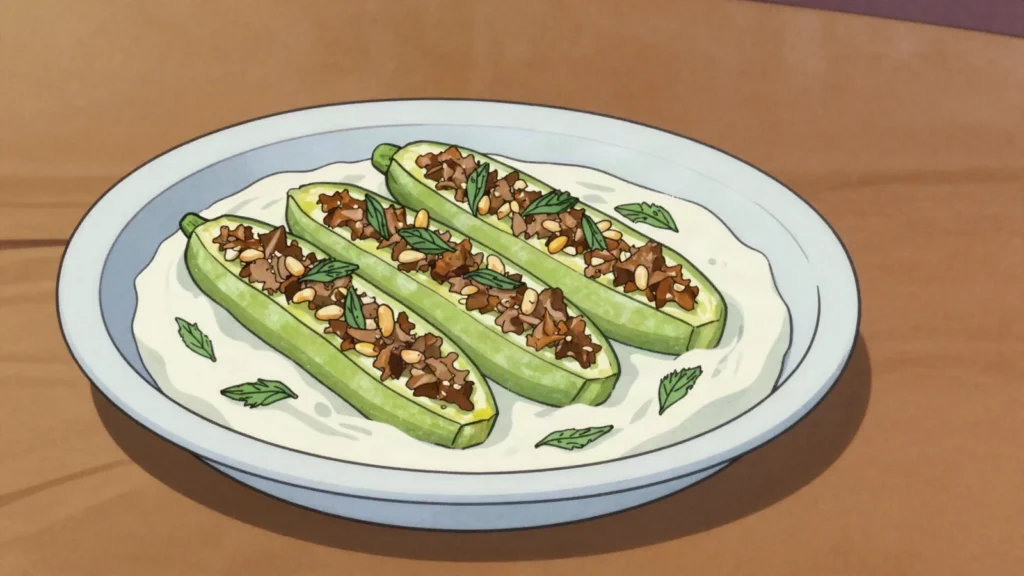
The chief of stuffed dishes: courgettes or aubergines filled with lamb and pine nuts in yoghurt sauce.
Frequently asked questions
What is Sheikh al-mahshi?
Sheikh al-mahshi is a main from Syria: courgette stuffed with lamb and pine nuts, baked in yoghurt sauce. The chief of stuffed dishes: courgettes or aubergines filled with lamb and pine nuts in yoghurt sauce.
How long does Sheikh al-mahshi take to make?
Sheikh al-mahshi takes 45 min of preparation and 1 hr of cooking. The recipe makes 6 servings. It is rated hard to make.
What can I substitute in Sheikh al-mahshi?
Yes, within limits. Small aubergines in place of courgettes, which is the older form. Beef in place of lamb, though lamb is traditional.
What is the most important thing to get right in Sheikh al-mahshi?
Trim the stem end off each courgette and hollow it out with a corer, turning it as you go. Leave a wall of about 4 mm and stop short of the far end so the base stays closed. Pierce the wall or the base and the vegetable splits open in the sauce and empties itself. Do not throw the scooped flesh away, which is fried with eggs or added to another dish.