
Ingredients
Curd
- 5 litreswhole milk
- ¼ tspcalcium chloride in 2 tbsp water, if using shop milk
- ½ tspliquid rennet in 50 ml cool water
Pulling and brining
- 2 litreswater, for the hot bath
- 2 tbspsalt, for the curd
- 1 tbspnigella seed
- 1 tbspmahleb, optional
Brine
- 1 litrewater
- 80 gsalt — an 8% brine
Directions
- Warm the milk to 32°C (90°F), stir in the calcium chloride if using shop milk, then the diluted rennet, and leave undisturbed 45 minutes until it gives a clean break.
- Cut the curd into 2 cm cubes, rest 10 minutes, then stir gently for 15 minutes and let the curd settle.
- Drain off the whey and let the curd mat in the colander for three to four hours at room temperature.
- This resting is where the cheese is made or lost: the curd has to acidify to about pH 5.2 before it will stretch. Test a small piece in water at 75°C (167°F) — if it pulls into a smooth rope it is ready; if it crumbles, wait another 30 minutes and test again.
- When it stretches, cut the curd into slices and put them in a bowl. Pour over water at 75°C (167°F) and work the curd with a wooden spoon until it comes together into a single glossy mass.
- Knead in the salt, nigella seed and mahleb, then begin pulling: stretch the mass out to arm’s length, fold it back, and stretch again.
- Always pull in the same direction. The threads are formed by aligning the protein, and reversing direction or twisting breaks up what you have just made.
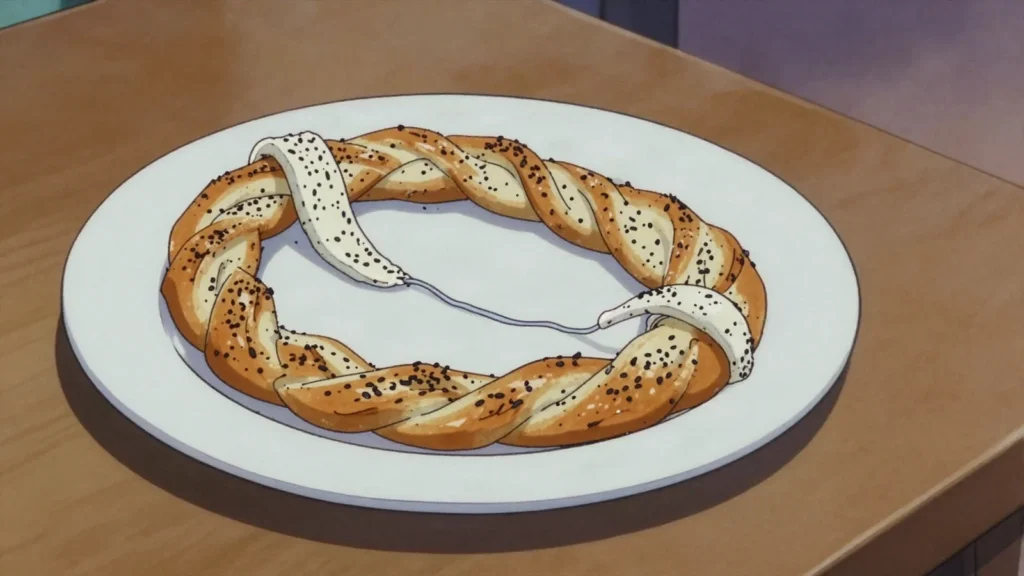
- Pull and fold ten or twelve times until you can see fine strands running the length of the rope. Then stretch it into a long thin rope, fold it double, and twist the two strands gently into a braid.
- Drop the braid into cold water to set, then into the 8 percent brine. Refrigerate.
- Eat within a week. Serve at breakfast, pulled apart into threads by hand — never sliced, because pulling is the whole pleasure of it.
Technique
- Test the stretch before you commit the batch. Curd that is not acidic enough will never pull.
- Water at 75°C (167°F), and always pull the same way.
- Wear gloves. The curd is hot and it must be worked hot.
Substitutions
- Vegetarian microbial rennet.
- Bought fresh mozzarella curd, which skips straight to the pulling stage.
- Left plain without nigella, which is common outside Aleppo.
Variations
- Stuffed into knafeh and halawet el-jibn, where its stretch is the point.
- The Armenian chechil and Georgian sulguni are the same pulled-curd family.
History
A Syrian braided string cheese eaten at breakfast and stuffed into halawet el-jibn and knafeh.
Frequently asked questions
What is Jibneh mshallaleh?
Jibneh mshallaleh is a cheese & dairy from Syria: white cheese pulled into fine salty threads, often studded with nigella seed. A Syrian braided string cheese eaten at breakfast and stuffed into halawet el-jibn and knafeh.
How long does Jibneh mshallaleh take to make?
Jibneh mshallaleh takes 1 hour plus 4 hours resting of preparation and 30 min of cooking. The recipe makes makes about 600 g. It is rated hard to make.
What can I substitute in Jibneh mshallaleh?
Yes, within limits. Vegetarian microbial rennet. Bought fresh mozzarella curd, which skips straight to the pulling stage. Left plain without nigella, which is common outside Aleppo.
What is the most important thing to get right in Jibneh mshallaleh?
Eat within a week. Serve at breakfast, pulled apart into threads by hand — never sliced, because pulling is the whole pleasure of it.