
Ingredients
Dough
- 600 gplain flour
- 7 gdried yeast
- 1 teaspoonsugar
- 1 teaspoonsalt
- 350 mlwarm water
- 3 tablespoonsolive oil
Topping
- 500 gminced lamb
- finely minced or hand chopped
- 3tomatoes, grated
- 1onion, very finely chopped
- 1red pepper, finely chopped
- 3 tablespoonspomegranate molasses
- 2 tablespoonstomato purée
- 1 tablespoonAleppo pepper
- or 2 teaspoons paprika with chilli
- 1 teaspoonground allspice
- 1 teaspoonground cumin
- a handful of parsley, chopped
- 2 teaspoonssalt
- black pepper
To serve
- lemon wedges
- more pomegranate molasses
- parsley and onion salad
- ayran or tea
Directions
- Add a squeeze of lemon to approach the fruitiness. It ran hot all day long for bread. Grate the tomatoes and drain them. Chop the onion very finely and salt it. Squeeze the onion out after ten minutes.
- Warm the water to blood temperature. Stir the yeast and the sugar into it. Let it stand until it foams up. Give it about ten minutes to foam. Put the flour and salt in a large bowl. Make a well in the middle of it. Pour in the foaming yeast liquid. Add the olive oil to the well.
- Bring it together into a soft dough. Turn it out onto a floured surface. Knead it for a good ten minutes. It should become smooth and elastic. Put the dough in an oiled bowl. Cover it and leave it somewhere warm. Let it roughly double in size. Give it an hour or a little more.
- Grate the tomatoes on a coarse grater. Cut them in half and grate the cut face. Put the pulp in a sieve to drain. Give it about fifteen minutes. Chop the onion extremely finely. Toss it with a teaspoon of salt. Let it sit there for ten minutes. Squeeze the liquid out of it by hand. They also fall off the thin base. Chop it as finely as you possibly can. Put the minced lamb in a large bowl.
- Add the drained tomato pulp to it. Add the squeezed onion in with it. Add the finely chopped red pepper. Add the pomegranate molasses to it. Add the tomato purée in as well. Add the Aleppo pepper to the bowl. Add the allspice and the cumin. Add the chopped fresh parsley.
- Season it with salt and black pepper. Working it together takes a moment. Mix it thoroughly with your hands. Work it until it is completely even. It should be a spreadable paste. Add more tomato purée if it is loose. Fry a teaspoonful in a pan to taste it.
- Adjust the salt and the molasses. It should taste clearly sour first. Put a baking stone or steel in a cold oven. Heat it to the very highest setting. Give it at least forty-five minutes.
- Divide it into even sized pieces. Roll each one into a smooth ball. Let them rest for fifteen minutes. Rolling them takes real effort. Roll each ball out very thin indeed. Take it down to about two millimetres. Make it an oval or a round shape. It should be almost see-through.
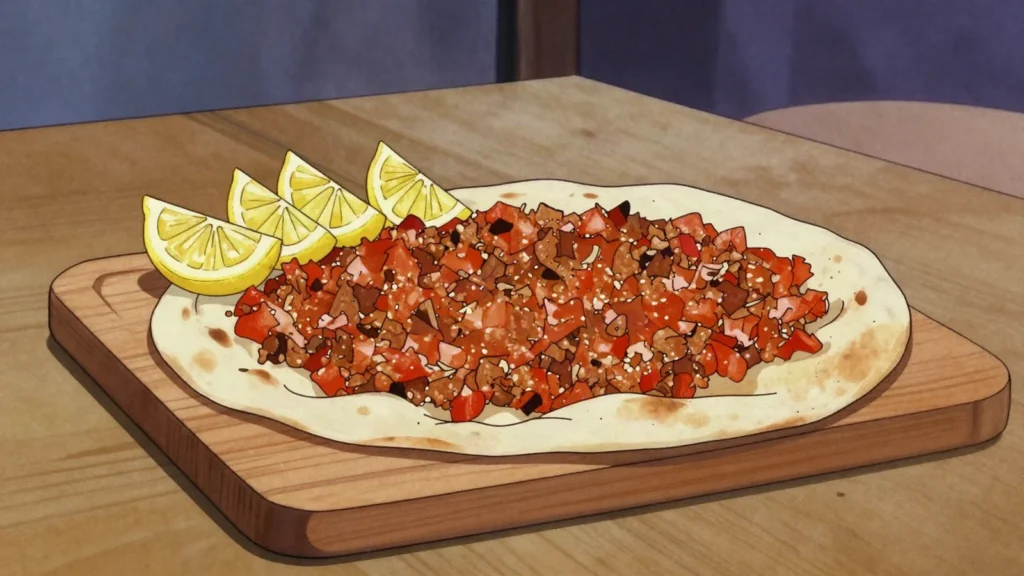
- Spread a thin layer of the meat mixture. The layer should be very thin indeed. Use less than feels reasonable. Slide one onto the hot baking stone.
- Take it out while it is still pliable. Keeping them soft is worth doing. Stack them up as they come out. Cover the stack with a clean cloth. That traps steam and keeps them pliable. Serve a parsley and onion salad alongside. Put the salad on top and fold it over. They keep a day in a sealed bag.
Technique
- Pomegranate molasses and Aleppo pepper are what make this sharper and fruitier than Turkish lahmacun: the molasses is pomegranate juice boiled down thick, dark and intensely sour with a fruity depth, and Aleppo pepper is moderately hot and fruity rather than simply fierce. Nothing quite replaces it, though sweet paprika with a little chilli and a squeeze of lemon comes closest.
- The topping must not be wet or it steams the base soggy, so grate the tomatoes and drain the pulp in a sieve, chop the onion very finely, salt it and squeeze it out after ten minutes; and spread the meat layer thinner than feels reasonable, since a thick layer will not cook through in the few minutes of baking.
- Aleppo has one of the oldest cooking traditions in the region and was severely damaged in the Syrian war, with much of the old city destroyed and many who cooked these dishes displaced; it is now cooked widely in the diaspora.
Substitutions
- Sweet paprika with a little chilli and lemon approaches Aleppo pepper.
- A baking stone or steel gets closest to the fierce heat of a neighbourhood oven.
Variations
- Turkish lahmacun is the same idea without the pomegranate sourness.
- Some cooks add tahini or a little yoghurt to the topping.
- It is eaten folded in half around a parsley and onion salad.
History
Sharper and fruitier than Turkish lahmacun, baked in the neighbourhood oven and eaten folded in half.
Frequently asked questions
What is Lahm bi ajin?
Lahm bi ajin is a bread & pastry from Syria: thin Aleppo flatbread baked with minced lamb, pomegranate molasses and pepper. Sharper and fruitier than Turkish lahmacun, baked in the neighbourhood oven and eaten folded in half.
How long does Lahm bi ajin take to make?
Lahm bi ajin takes 45 minutes plus rising of preparation and 20 minutes of cooking. The recipe makes about 16 flatbreads. It is rated medium to make.
What can I substitute in Lahm bi ajin?
Yes, within limits. Sweet paprika with a little chilli and lemon approaches Aleppo pepper. A baking stone or steel gets closest to the fierce heat of a neighbourhood oven.
What is the most important thing to get right in Lahm bi ajin?
Pomegranate molasses and Aleppo pepper are what make this sharper and fruitier than Turkish lahmacun: the molasses is pomegranate juice boiled down thick, dark and intensely sour with a fruity depth, and Aleppo pepper is moderately hot and fruity rather than simply fierce. Nothing quite replaces it, though sweet paprika with a little chilli and a squeeze of lemon comes closest.