
Ingredients
Meat
- 600 gpork ribs or smoked pork hock
- 2 litreswater
- 1bay leaf
- 6black peppercorns
- 5allspice berries
Main
- 600 gsauerkraut, hapukapsas
- 100 gpearl barley
- 3potatoes, in chunks
- 1onion, chopped
- 1carrot, in rounds
- 1 tablespoonbutter or lard
To finish
- 1 teaspooncaraway seeds
- salt and black pepper
- soured cream, to serve
- chopped dill
- rye bread
Directions
- Taste the sauerkraut straight from the jar. If it is very sour, rinse it briefly. Squeeze it dry well afterwards. Put the pork into a large pot. Cover it with all of the cold water. Bring it slowly toward a simmer. Skim the grey foam off the surface. Skimming carefully keeps the broth clear.
- Add the bay leaf, peppercorns and allspice. Simmer it for about ninety minutes. The meat should come away from the bone. Lift the pork out and let it cool. Strain the stock if you want it clear.
- Pull all the meat off the bones. Discard the bones, skin and gristle. Chop the meat into bite-sized pieces. Set it aside for use later on. Melt the butter or lard in a frying pan. Fry the onion until soft and golden.
- Add the carrot and cook it for three minutes. Return the strained stock to the pot. Add the pearl barley to the pot. Barley takes about forty minutes to soften. Add the sauerkraut and the caraway seeds. Add the fried onion and carrot. Bring the whole pot to a simmer.
- Cover it and cook for twenty-five minutes. Add the potato chunks to the pot. Simmer for another twenty minutes. The potatoes should be tender. Return the chopped pork to the pot.
- Warm it through for five minutes. Judging the balance takes a taste. Add a little sugar if it is too sour. Add a splash of sauerkraut brine if it is too mild. Season it with salt and plenty of pepper. The soup should be thick with barley and cabbage.
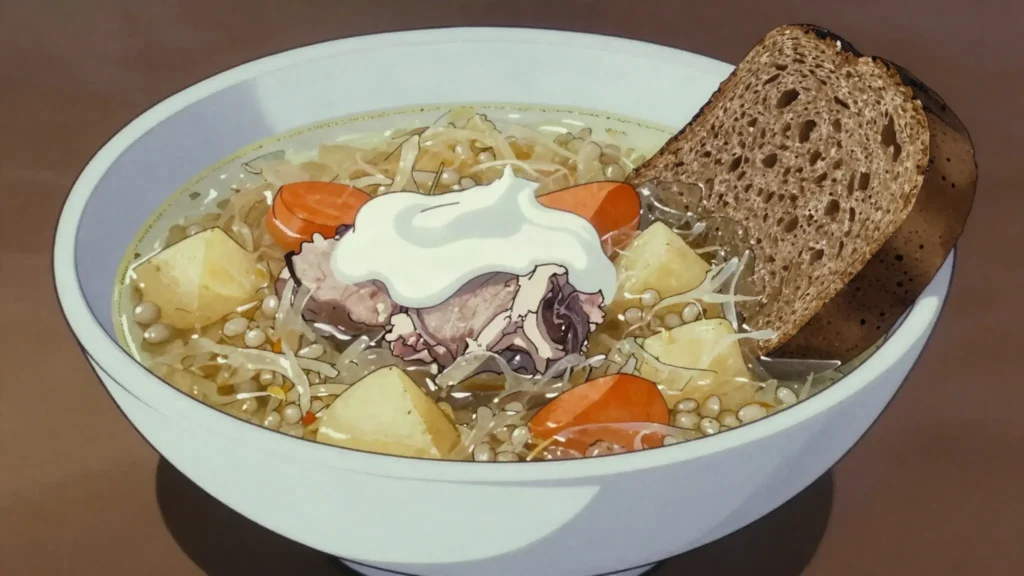
- Add hot water if it is too thick. Cool it and refrigerate it if you have time. Serving it is done hot in deep bowls. Spoon soured cream into each bowl. Stir it in or leave it as a white swirl. Scatter chopped dill over the top. Serve dark rye bread alongside. Butter the rye bread generously. It keeps four days refrigerated.
Technique
- Sauerkraut soups are made across the Baltic states, Poland, Germany and Russia, and each has a distinct character.
- The Estonian version is defined by pearl barley, pork and caraway.
Substitutions
- Smoked pork hock gives a deeper flavour than fresh ribs.
- Pearl barley can be replaced with rice or potato alone, though barley is traditional.
Variations
- Some households add dried mushrooms for extra depth.
- A version with sausage rather than ribs is quicker to make.
- Mulgikapsad is a related Estonian dish of sauerkraut cooked with pork and barley as a stew rather than a soup.
Frequently asked questions
What is Sauerkraut soup?
Sauerkraut soup is a soup & stew from Estonia: sour cabbage soup with pork and pearl barley.
How long does Sauerkraut soup take to make?
Sauerkraut soup takes 20 minutes of preparation and 2 hours of cooking. The recipe makes serves 6. It is rated easy to make.
What can I substitute in Sauerkraut soup?
Yes, within limits. Smoked pork hock gives a deeper flavour than fresh ribs. Pearl barley can be replaced with rice or potato alone, though barley is traditional.
What is the most important thing to get right in Sauerkraut soup?
Add the carrot and cook it for three minutes. Return the strained stock to the pot. Add the pearl barley to the pot. Barley takes about forty minutes to soften. Add the sauerkraut and the caraway seeds. Add the fried onion and carrot. Bring the whole pot to a simmer.