
Ingredients
Fish
- 1.5 kgmixed small fish, rockfish, scorpion fish, wrasse or grouper heads and bones
- or 800 g whole small fish plus 500 g fish trimmings
Base
- 1whole head of garlic, cloves sliced
- 1onion, chopped
- 4ripe tomatoes, chopped
- 2 tbsptomato paste
- 100 mlolive oil
Also
- 1.5 litreswater
- 100 grice
- a large bunch fresh marjoram
- 2bay leaves
- 1 tspchilli flakes, optional
- juice of 2 lemons
- salt and black pepper
To finish
- chopped parsley and marjoram
- lemon wedges
To serve
- with crusty Maltese bread
Directions
- Slice the cloves rather than crushing them, so they soften into the soup without burning. Use several kinds of small bony fish rather than one clean fillet. The bones and heads are where the body of the soup comes from, and a soup made from fillets alone is thin and characterless.
- Remove the gills from any heads, since they carry bitterness and grit. Fry the garlic gently in olive oil until softened but not coloured. Do not let the garlic brown, since burnt garlic turns bitter and carries right through the finished soup.
- Add the onion and cook until soft, then the tomato paste and fry it for three or four minutes. Add the chopped tomatoes and cook them down for five minutes. Add the fish, bones and heads with the water, bay and half the marjoram. Bring it to a simmer and skim the surface.
- Simmer it gently for twenty to twenty-five minutes and no longer. Do not cook fish stock for longer than about half an hour, since the bones begin to release bitterness beyond that point. Strain the broth through a sieve, pressing the solids firmly to extract everything. Pick through the fish and keep any good flakes of flesh to return to the soup.
- Discard the bones, heads and skin. Return the broth to the pot and add the rice. Simmer for fifteen to eighteen minutes until the rice is completely soft. Cook the rice well past al dente, since it should soften and release starch to give the soup body. Now the quantity of rice, which needs restraint.
- Use less than seems right, since it swells considerably and keeps absorbing as the soup stands. Aljotta should stay a soup rather than becoming a risotto, and too much rice ruins it by the next day.
- Add half at the start and the rest at the end, off the heat. The late addition keeps its aroma, which long simmering destroys. Add them at the very end, since they are already cooked and will disintegrate if simmered.
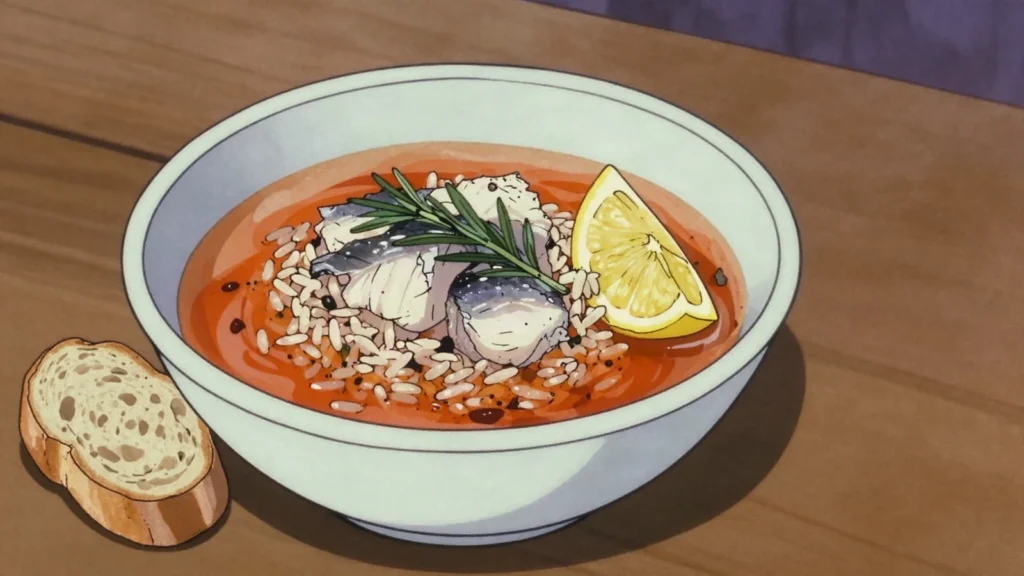
- Add the lemon juice off the heat and taste. The acid lifts what is otherwise a rich garlicky broth, and an aljotta without lemon tastes heavy and flat. Season generously with salt and black pepper. Serve it hot with chopped parsley and marjoram over the top and lemon wedges at the table.
- Serve plenty of crusty bread, which is used to mop the bowl. It thickens considerably overnight as the rice keeps absorbing, so loosen it with water or stock when reheating.
Technique
- A whole head of garlic is normal rather than excessive.
- Fish stock turns bitter if simmered beyond about half an hour.
- Marjoram is the herb that marks it as Maltese.
Substitutions
- Any mixed small bony fish, or fish trimmings from a fishmonger.
- Oregano in place of marjoram, accepting a sharper flavour.
Variations
- Thickened with stale bread instead of rice.
- Made with small pasta.
- With more chilli, for a hotter soup.
History
Garlic-and-tomato fish soup thickened with rice, its name reflecting the garlic-heavy cooking of the wider Mediterranean.
Frequently asked questions
What is Aljotta?
Aljotta is a soup & stew from Malta: garlicky fish soup with rice, marjoram, lemon. Garlic-and-tomato fish soup thickened with rice, its name reflecting the garlic-heavy cooking of the wider Mediterranean.
How long does Aljotta take to make?
Aljotta takes 30 min of preparation and 50 min of cooking. The recipe makes 6 servings. It is rated medium to make.
What can I substitute in Aljotta?
Yes, within limits. Any mixed small bony fish, or fish trimmings from a fishmonger. Oregano in place of marjoram, accepting a sharper flavour.
What is the most important thing to get right in Aljotta?
Slice the cloves rather than crushing them, so they soften into the soup without burning. Use several kinds of small bony fish rather than one clean fillet. The bones and heads are where the body of the soup comes from, and a soup made from fillets alone is thin and characterless.