
Ingredients
The chicken
- 1whole chicken
- spatchcocked or jointed
- about 1.5 kg
- or 6 chicken pieces
The marinade
- 2onions, blended or grated
- 6 clovesgarlic, crushed
- a thumb of ginger, grated
- juice of 2 lemons
- 4 tablespoonsoil
- 2 tablespoonsmustard
- 1stock cube, crumbled
- or 2 teaspoons salt
- 1 teaspoonblack pepper
- 1 teaspoondried thyme
- 1bay leaf, crumbled
- 1or 2 hot chillies, chopped
- or to taste
- 1 teaspoonpaprika
The basting sauce
- the reserved marinade, boiled
- or 1 onion, sliced thinly
- 2tomatoes, chopped
- 1stock cube
- 1 tablespoonoil
- 150 mlwater
For the fire
- charcoal
- long tongs
- a grill rack
To serve
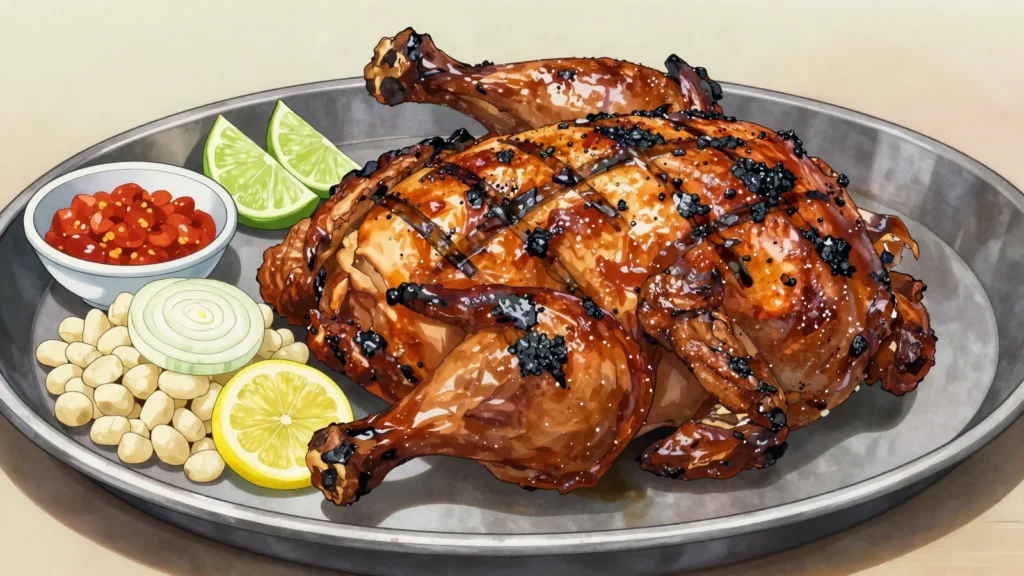
- attiéké, fermented cassava couscous
- or fried plantain
- or chips
- sliced onion with lemon
- piment, the chilli sauce
- lemon wedges
Directions
- Grill over indirect or moderate heat. Turn it constantly. Cut down either side of the backbone with shears. Remove the backbone and keep it for stock. Turn the bird over. Press hard on the breastbone with your palm. It cooks in about half the time.
- Use a separate board and wash everything after. Cut deep slashes into the thickest parts. Blend or grate the onions. Mix the onion with the garlic and ginger. Add the lemon juice, oil and mustard. Add the stock cube, pepper, thyme and bay. Add the chillies and paprika. It helps the marinade cling.
- Rub it into every surface and into the slashes. Cover it and refrigerate. Four hours is a minimum. Marinate in the refrigerator, never on the counter. Discard the marinade after the raw chicken comes out. Or boil it hard for five minutes to use as a baste. Cook sliced onion in oil until soft. Add chopped tomato and cook it down.
- Add a stock cube and water. Simmer it to a loose sauce. Let it burn down to embers. That takes twenty to thirty minutes. Leave a cooler area with no coals beneath. It finishes over the hot side for colour.
- Grill outdoors in open air only. Keep water or sand nearby. Keep children and animals away. Do not use petrol to light or revive a fire. Lay the chicken skin side up over the cooler zone. Cover it if your grill has a lid. Give it about thirty minutes there.
- Turn it every ten minutes. Baste it at every turn. Move it over the hot coals. Turn it often now. Baste it heavily. It should darken and glaze. Pierce the thickest part of the thigh, near the bone. The juices must run clear. Check the thigh, always. Let it rest five minutes off the heat. Roast it at one hundred and ninety degrees. Baste it every fifteen minutes. Give it about fifty minutes.
- Finish it under a hot grill for colour. Fresh needs only steaming or microwaving. Pile the attiéké on a plate. Lay the chicken over or beside it. Spoon the onion and tomato sauce over. Serve sliced raw onion with lemon. Serve piment, the chilli sauce. Serve lemon wedges. It is best hot from the grill. Steam it to reheat it.
Technique
- Bank the coals to one side and use two zones. Start the chicken over the cooler side to cook through gently, then finish over the hot coals for colour — that is what makes a whole bird work over charcoal, where the outside otherwise burns before the inside cooks.
- Spatchcock the bird so it lies flat. Even thickness means it cooks in about half the time and sits properly on a grill; chicken pieces are easier still.
- Cut deep slashes into the thickest parts. They let the marinade in, let heat reach the centre and shorten the cooking considerably.
- Check the thigh near the bone — juices running clear and no pink at the bone. Charred skin does not mean cooked meat; the two are independent.
- Blend or grate the onion for the marinade. Chopped pieces burn on the grill.
- Marinate overnight in the refrigerator, not for days. Lemon juice firms the surface and prolonged contact spoils the texture.
- Discard the raw marinade or boil it hard for five minutes before using it as a baste. The fresh onion and tomato sauce many maquis use avoids the question entirely.
- Baste at every turn. That repeated glazing is what builds the surface.
- Move the chicken to the cooler zone when fat drips and the coals flare. Never spray water on coals, which raises ash onto the food.
- Do not wash raw chicken. Washing splashes campylobacter around the kitchen and removes nothing from the meat.
- Charcoal produces carbon monoxide, which has no colour, smell or taste and kills in enclosed spaces. Grill outdoors only, never in a garage, tent or shed, and never bring a used grill inside.
- Attiéké is fermented grated cassava, steamed, and slightly sour. That fermentation is part of the cassava processing and reduces the cyanogenic compounds in the root — a genuine function, not just flavour. It is sold fresh and vacuum-packed by African grocers.
- Braisé here means grilled over coals, not braised in the usual French sense. That usage is specific to the region.
Substitutions
- Chicken pieces replace a whole spatchcocked bird and are easier to manage.
- Fish, particularly whole tilapia, is grilled the same way and served with the same attiéké.
- An oven at 190 degrees finished under a grill replaces charcoal, at the cost of the smoke.
- A fresh onion and tomato sauce replaces the boiled marinade as a baste.
- Fried plantain or chips replace attiéké where it is unavailable.
- Any hot sauce replaces piment.
Variations
- Poisson braisé, whole grilled fish, is the other maquis standard and is served identically.
- Ntaba in Kinshasa is charcoal-grilled goat in the same kind of setting.
- Kedjenou is the Ivorian sealed-pot chicken stew, a quite different method.
- Alloco, fried ripe plantain, is served alongside constantly.
- Yassa poulet in Senegal marinates chicken in onion and lemon and braises it.
- Poulet DG in Cameroon fries the chicken and serves it with plantain and vegetables.
Frequently asked questions
What is Poulet braisé?
Poulet braisé is a main from Côte d’Ivoire: charcoal-grilled marinated chicken, maquis classic with attiéké.
How long does Poulet braisé take to make?
Poulet braisé takes 20 minutes plus marinating of preparation and 50 minutes of cooking. The recipe makes serves 4. It is rated medium to make.
What can I substitute in Poulet braisé?
Yes, within limits. Chicken pieces replace a whole spatchcocked bird and are easier to manage. Fish, particularly whole tilapia, is grilled the same way and served with the same attiéké. An oven at 190 degrees finished under a grill replaces charcoal, at the cost of the smoke. A fresh onion and tomato sauce replaces the boiled marinade as a baste. Fried plantain or chips replace attiéké where it is unavailable. Any hot sauce replaces piment.
What is the most important thing to get right in Poulet braisé?
Rub it into every surface and into the slashes. Cover it and refrigerate. Four hours is a minimum. Marinate in the refrigerator, never on the counter. Discard the marinade after the raw chicken comes out. Or boil it hard for five minutes to use as a baste. Cook sliced onion in oil until soft. Add chopped tomato and cook it down.