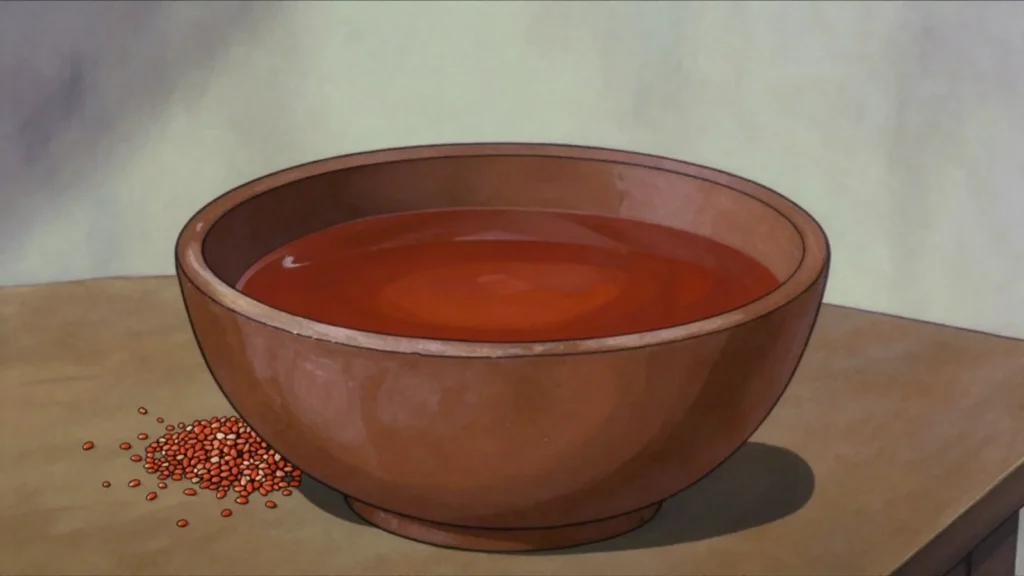

Cloudy sorghum beer ladled from calabashes in northern Ivorian courtyards, brewed by Senufo and Malinké women. It is sold fresh in cabarets and drunk within a day, before it turns sour.
Home brewing of alcohol is licensed or restricted in most of the atlas’s readership, and the yeast is carried forward from batch to batch in a household’s own vessels.
What goes into it
- red sorghum
- water
- sometimes a spoonful of the previous batch as starter
How it is made
Sorghum is soaked and sprouted for several days, dried and milled, then boiled at length into a wort. The wort sours overnight with lactic bacteria, is boiled again, cooled and pitched with yeast carried over from an earlier brew. It is sold the next day, still cloudy and working.
How long it takes: four to five days from grain to calabash
How it is eaten
From a shared calabash in a cabaret, at markets and funerals.
History
Brewed by Senufo and Malinke women in northern Côte d’Ivoire from germinated sorghum; sold fresh in cabarets within a day before it turns sour.
Frequently asked questions
What is Tchapalo?
Tchapalo is a wine & spirit from Côte d’Ivoire: cloudy sorghum beer ladled from calabashes in northern courtyards. Brewed by Senufo and Malinke women in northern Côte d’Ivoire from germinated sorghum; sold fresh in cabarets within a day before it turns sour.
How is Tchapalo made?
Sorghum is soaked and sprouted for several days, dried and milled, then boiled at length into a wort. The wort sours overnight with lactic bacteria, is boiled again, cooled and pitched with yeast carried over from an earlier brew. It is sold the next day, still cloudy and working. It takes four to five days from grain to calabash.
Can I make Tchapalo at home?
No, and the atlas gives no method for it. Home brewing of alcohol is licensed or restricted in most of the atlas’s readership, and the yeast is carried forward from batch to batch in a household’s own vessels.
What goes into Tchapalo?
Red sorghum, water, sometimes a spoonful of the previous batch as starter.
How is Tchapalo eaten?
From a shared calabash in a cabaret, at markets and funerals.