
Ingredients
- 1whole free-range chicken, about 1.5 kg, jointed into 8 pieces (traditionally guinea fowl)
- 3onions, roughly chopped
- 4tomatoes, quartered
- 4African garden eggs (small aubergines), halved, or 1 small aubergine in chunks
- 4garlic cloves, crushed
- 1thumb ginger, sliced
- 2whole scotch bonnet or piment antillais chillies
- 2bay leaves
- 2 sprigsthyme
- 1stock cube
- 1 tspsalt
- ½ tspblack pepper
- 2 tbspred palm oil or vegetable oil (optional; many cooks use none)
To serve
- Attiéké or plain rice
- 1chilli pounded with salt and a little lemon, as relish
Directions
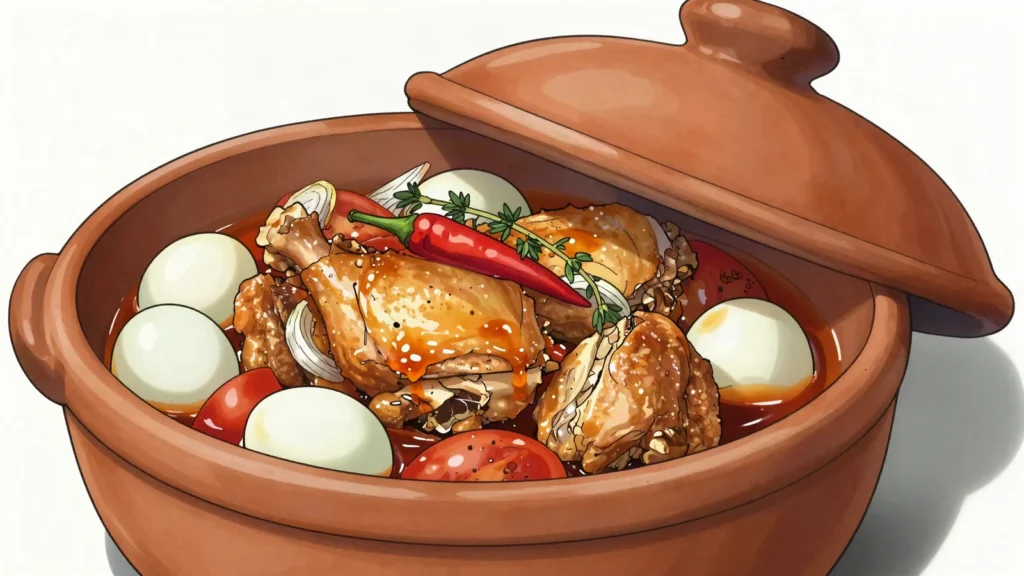
- Put the chicken pieces in a heavy clay pot (canari) or a heavy casserole with all the vegetables, aromatics, thyme, bay, stock cube, salt and pepper, and the whole chillies on top, unpierced.
- Add no water at all. Kedjenou cooks entirely in the moisture that comes out of the chicken and the tomatoes; adding liquid turns it into an ordinary stew.
- Seal the pot: traditionally the lid is luted on with a paste of banana leaf or flour and water, so no steam escapes at all. A tight lid weighted down, or foil under the lid, does the same job.
- Cook over low embers, or in a 160°C (325°F) oven, for 1 hour to 1 hour 15 minutes. Do not lift the lid to look.
- Every 15 minutes, take the pot by the handles and shake it firmly from side to side. This is the actual technique the name refers to, and it stirs the pot and keeps the base from catching without letting steam out.
- After an hour, check: the chicken should be falling from the bone, the onions collapsed, the tomatoes broken down into a small amount of intensely concentrated, almost jammy sauce.
- Lift out the whole chillies and either discard them or crush them into the pot depending on how hot you want it. Taste and correct the salt.
- If the sauce is looser than you want, uncover and reduce over medium heat for 5 minutes; it should coat the chicken rather than pool around it.
- Serve straight from the pot with attiéké, with the pounded chilli relish on the side.
Technique
- The name comes from Baoulé and refers to shaking the pot: kedjenou is the shaking, not the ingredients. Cook it any other way and Ivorians will tell you it is not kedjenou.
- Guinea fowl (pintade) is the traditional bird and has more flavour and firmer flesh than chicken; a mature free-range hen is the next best thing.
- Leaving the chillies whole perfumes the pot without making it fiery. Pierce one only if you want real heat.
- The finished dish is dry-ish and concentrated, not soupy. That intensity is the whole payoff of the sealed pot.
Substitutions
- No canari? A cast-iron casserole with a heavy lid, or a tagine, works; a slow cooker on low for 4 hours also reproduces the sealed, steam-recycling environment.
- African garden eggs can be replaced with baby aubergine or a small quantity of okra added in the last 20 minutes.
Variations
- Kedjenou de pintade is the celebratory version; some cooks make it with lamb or with mushrooms.
- A version from the north adds a spoonful of ground peanut to thicken the small quantity of sauce.
History
Chicken or guinea fowl, stewed with vegetables in a sealed clay pot called a canari over low heat, cooked without added liquid so the dish simmers entirely in its own steam and the natural juices released by the meat and vegetables as they cook, a technique documented among the Baoulé and other Akan peoples of Côte d’Ivoire for generations. Its name comes from an Akan word meaning to shake, referring to the traditional method of periodically shaking the sealed pot rather than opening it and stirring, which would release the trapped steam essential to the dish’s slow, self-contained cooking process. Kedjenou remains closely tied to Ivorian celebratory cooking, traditionally prepared for guests and significant occasions rather than treated as routine everyday fare given its comparatively long cooking time.
Frequently asked questions
What is Kedjenou?
Kedjenou is a soup & stew from Côte d’Ivoire: chicken and vegetables slow-steamed in a sealed clay canari pot. Chicken or guinea fowl, stewed with vegetables in a sealed clay pot called a canari over low heat, cooked without added liquid so the dish simmers entirely in its own steam and the natural juices released by the meat and vegetables as they cook, a technique documented among the Baoulé and other Akan peoples of Côte d’Ivoire for generations. Its name comes from an Akan word meaning to shake, referring to the traditional method of periodically shaking the sealed pot rather than opening it and stirring, which would release the trapped steam essential to the dish’s slow, self-contained cooking process. Kedjenou remains closely tied to Ivorian celebratory cooking, traditionally prepared for guests and significant occasions rather than treated as routine everyday fare given its comparatively long cooking time.
How long does Kedjenou take to make?
Kedjenou takes 20 min of preparation and 1 hr 15 min of cooking. The recipe makes 4 servings. It is rated easy to make.
What can I substitute in Kedjenou?
Yes, within limits. No canari? A cast-iron casserole with a heavy lid, or a tagine, works; a slow cooker on low for 4 hours also reproduces the sealed, steam-recycling environment. African garden eggs can be replaced with baby aubergine or a small quantity of okra added in the last 20 minutes.
What is the most important thing to get right in Kedjenou?
Put the chicken pieces in a heavy clay pot (canari) or a heavy casserole with all the vegetables, aromatics, thyme, bay, stock cube, salt and pepper, and the whole chillies on top, unpierced.