
Ingredients
Cheese, the moitié-moitié blend
- 400 gGruyère AOP, aged at least 8 months, coarsely grated
- 400 gVacherin Fribourgeois AOP, grated or cut into small dice
The pot
- 1fat garlic clove, halved
- 400 mldry white wine, Fendant or another Chasselas
- 1 tbsplemon juice
- 2 tspcornflour
- 30 mlkirsch
- black pepper, freshly ground
- a grating of nutmeg
To dip
- 1large day-old white loaf, cut into 3 cm cubes with crust on every piece
- boiled small potatoes and cornichons, optional
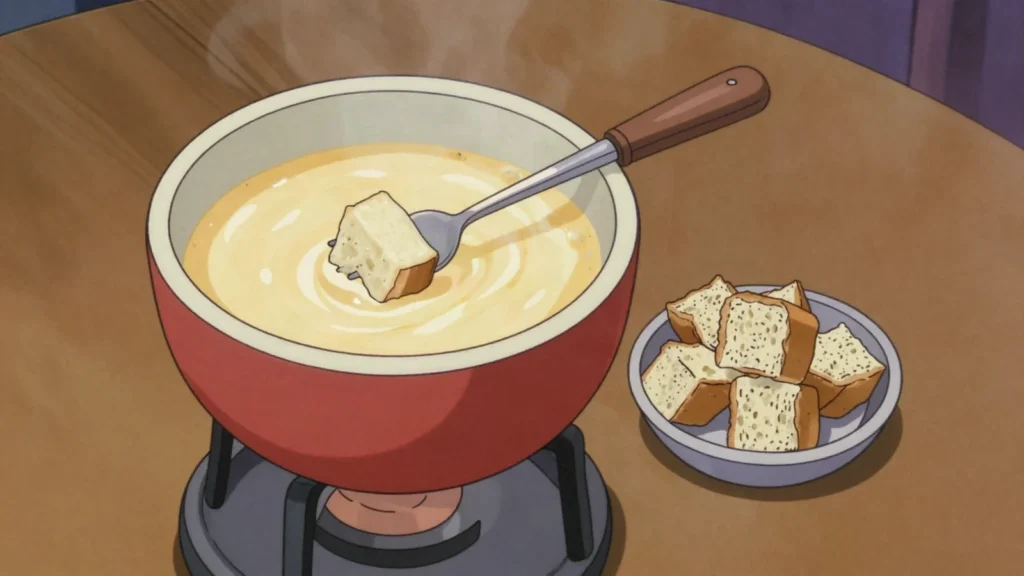
- a caquelon, an earthenware fondue pot, and a rechaud burner
At the table
- 1glass of the same white wine per person, or hot black tea
- a small glass of kirsch, the coup du milieu
Directions
- Rub the inside of the caquelon hard with the cut garlic, then leave the clove in the pot.
- Pour in the wine and lemon juice and bring it to a bare simmer on the hob over medium heat. The acid is what keeps the cheese proteins in suspension.
- Add the cheese by the handful, stirring continuously in a figure of eight with a wooden spoon and waiting for each handful to melt before adding the next. This takes about 10 minutes and cannot be rushed.
- Cook 2 to 3 minutes more, still stirring, until the fondue is glossy, thickens slightly and just begins to bubble sluggishly at the edges. It should coat a piece of bread without dripping straight off.
- Season with pepper and nutmeg. Do not add salt; the cheeses bring plenty.
Technique
- Moitié-moitié, half and half, is the Fribourg standard: Gruyère for the savoury depth and Vacherin Fribourgeois for the melt. Vacherin alone gives a fondue that is creamy but bland.
- A split fondue, oily on top and stringy below, means the heat was too high or the acid too low. Whisk in another teaspoon of cornflour slaked in lemon juice, off the heat, and it usually comes back.
- The Swiss rule against drinking cold water with fondue is folklore rather than physiology, but white wine or hot tea genuinely does make it sit more comfortably.
Substitutions
- No Vacherin Fribourgeois: use 800 g Gruyère alone for a firmer, sharper fondue, or 500 g Gruyère with 300 g Emmental for the neuchâteloise style.
- No kirsch: a little more wine plus a squeeze of lemon works, though the perfume of the cherry spirit is missed.
- No caquelon: a heavy enamelled cast-iron pan holds heat well enough to serve from, set over a tealight stand.
Variations
- Fondue neuchâteloise, Gruyère with Emmental and a full-bodied white.
- Fondue moitié-moitié, the Fribourg classic described here.
- Fondue aux herbes or with tomato, both modern Swiss supermarket favourites.
History
Melted cheese eaten by dipping bread on a long fork, developed in Switzerland’s Alpine regions as a practical winter dish for communities that had access mainly to aged, hardened cheese and stale bread during the cold months, when fresh food was scarce and melting the cheese together with wine made both easier to eat. Its documented history as a named dish is not especially ancient; while melted cheese dishes existed regionally for a long stretch, fondue only became widely known as a specifically Swiss national dish through the 1900s, significantly boosted by aggressive marketing from the Swiss Cheese Union starting in the 1930s, which actively promoted it, along with raclette, as a unifying Swiss culinary symbol across the country’s linguistically and culturally distinct regions.
Frequently asked questions
What is Fondue?
Fondue is a main from Switzerland: melted Gruyère-Vacherin pot with wine; bread cubes dipped communally. Melted cheese eaten by dipping bread on a long fork, developed in Switzerland’s Alpine regions as a practical winter dish for communities that had access mainly to aged, hardened cheese and stale bread during the cold months, when fresh food was scarce and melting the cheese together with wine made both easier to eat. Its documented history as a named dish is not especially ancient; while melted cheese dishes existed regionally for a long stretch, fondue only became widely known as a specifically Swiss national dish through the 1900s, significantly boosted by aggressive marketing from the Swiss Cheese Union starting in the 1930s, which actively promoted it, along with raclette, as a unifying Swiss culinary symbol across the country’s linguistically and culturally distinct regions.
How long does Fondue take to make?
Fondue takes 15 min of preparation and 20 min of cooking. The recipe makes 4 servings. It is rated easy to make.
What can I substitute in Fondue?
Yes, within limits. No Vacherin Fribourgeois: use 800 g Gruyère alone for a firmer, sharper fondue, or 500 g Gruyère with 300 g Emmental for the neuchâteloise style. No kirsch: a little more wine plus a squeeze of lemon works, though the perfume of the cherry spirit is missed. No caquelon: a heavy enamelled cast-iron pan holds heat well enough to serve from, set over a tealight stand.
What is the most important thing to get right in Fondue?
Season with pepper and nutmeg. Do not add salt; the cheeses bring plenty.