
Ingredients
Curry paste
- 8dried red chillies, soaked
- 4shallots
- 6 clovesgarlic
- 2 stalkslemongrass, sliced
- 2cm galangal
- 1 tspcoriander root, chopped
- 1 tspground coriander seed
- 1 tspground cumin
- 1 tspshrimp paste, kapi
- 50 groasted peanuts, ground
- 1 tspwhite peppercorns
- 1 tspsalt
Or
- 4 tbspgood shop-bought panang curry paste
Curry
- 600 gbeef or chicken, thinly sliced
- 400 mlthick coconut milk, unshaken
- 2 tbspfish sauce
- 1 tbsppalm sugar
- 4kaffir lime leaves, finely shredded
- 2red chillies, sliced
- a handful Thai basil
To serve
- steamed jasmine rice
Directions
- Spoon the thick cream off the top into the pan and heat it over a medium heat. Now let it cook until the oil separates, which takes five to ten minutes. Add the paste and fry it for three to five minutes, pressing and stirring it through the hot oil. It should darken, smell strongly aromatic, and the oil should turn deep red.
- Grind them fairly fine, since coarse pieces sit in the sauce rather than thickening it. Let it cook in the paste for a couple of minutes before any more liquid goes in, which seals in the flavour.
- Add it a little at a time and let it reduce between additions, which builds a thicker sauce than pouring it all in at once. Keep it at a gentle simmer, since coconut milk boiled hard splits unpleasantly rather than cracking usefully. Simmer for ten to fifteen minutes for chicken, or longer for beef.
- Add fish sauce for salt and palm sugar for sweetness, and taste continually. Panang should be clearly sweeter than red curry but still firmly savoury, with the sweetness supporting rather than dominating.
- Adjust in small amounts, since it is easy to overshoot and hard to correct. It should be thick enough to coat the meat and barely run on the plate. Let it reduce until it is genuinely thick, since a soupy panang has been undercooked. The oil should be visible on the surface, which is normal and expected in Thai curry.
- Roll the leaves tightly and slice them into the finest possible threads. Remove the tough central rib before shredding, since it is unpleasant to chew. Scatter most over the finished curry and stir a few through in the last minute. Add them off the heat, since their aroma is volatile and cooking destroys it.
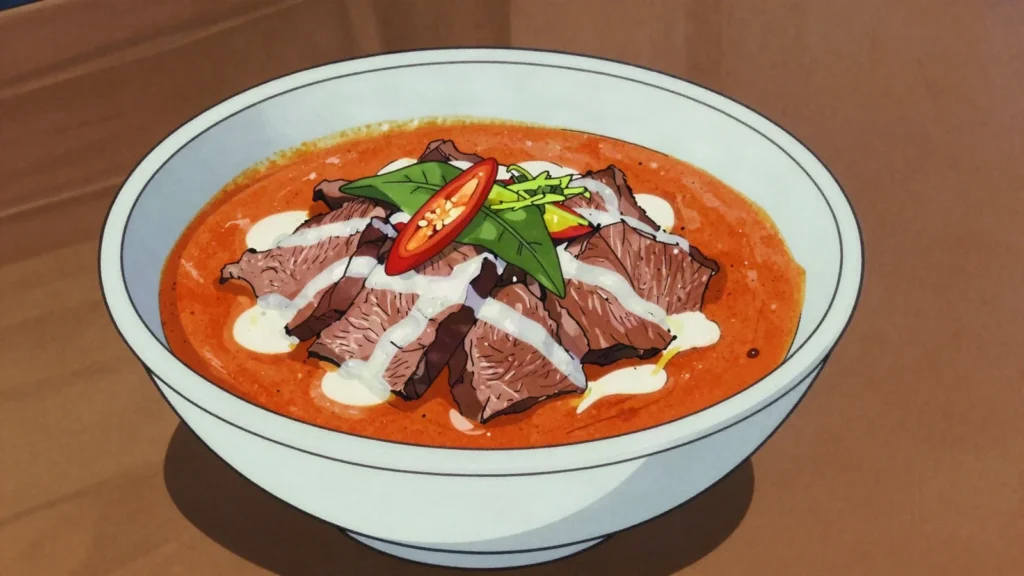
- Finish with sliced red chilli, Thai basil and a spoonful of the reserved thick coconut cream drizzled over. Serve with plenty of steamed jasmine rice, since the curry is rich and concentrated.
Technique
- The name’s origin is genuinely uncertain, despite the confident Penang story.
- Ground peanuts in the paste distinguish it from other Thai curries.
- The coconut cream is cracked and the paste fried in the separated oil.
Substitutions
- A good shop-bought panang paste, which is a reasonable shortcut.
- Chicken or pork in place of beef.
Variations
- Made with duck, which is excellent.
- Made vegetarian, with tofu and no shrimp paste.
- With more chilli, for a hotter version.
History
A curry made from a rich, thick paste of dried red chili, lemongrass, galangal and roasted peanut blended with coconut milk, typically cooked with beef, chicken or tofu, documented across Thailand as one of the country’s most distinctive curry styles, notably thicker and less soupy than many other Thai curries. Its inclusion of ground roasted peanut within the curry paste itself reflects broader culinary influence traced to trade contact between Thailand and the Indian subcontinent over many centuries, layered onto foundational Thai aromatic ingredients including lemongrass and galangal. Panang curry remains a popular and internationally recognized Thai curry, valued for its rich, slightly sweet and notably less spicy character compared to some other Thai curry varieties.
Frequently asked questions
What is Panang Curry?
Panang Curry is a main from Thailand: thick, nutty red curry with kaffir lime, less soupy than others. A curry made from a rich, thick paste of dried red chili, lemongrass, galangal and roasted peanut blended with coconut milk, typically cooked with beef, chicken or tofu, documented across Thailand as one of the country’s most distinctive curry styles, notably thicker and less soupy than many other Thai curries. Its inclusion of ground roasted peanut within the curry paste itself reflects broader culinary influence traced to trade contact between Thailand and the Indian subcontinent over many centuries, layered onto foundational Thai aromatic ingredients including lemongrass and galangal. Panang curry remains a popular and internationally recognized Thai curry, valued for its rich, slightly sweet and notably less spicy character compared to some other Thai curry varieties.
How long does Panang Curry take to make?
Panang Curry takes 20 min of preparation and 25 min of cooking. The recipe makes 4 servings. It is rated medium to make.
What can I substitute in Panang Curry?
Yes, within limits. A good shop-bought panang paste, which is a reasonable shortcut. Chicken or pork in place of beef.
What is the most important thing to get right in Panang Curry?
Grind them fairly fine, since coarse pieces sit in the sauce rather than thickening it. Let it cook in the paste for a couple of minutes before any more liquid goes in, which seals in the flavour.