
Ingredients
The omelette
- 3eggs
- at room temperature
- 1 tablespoonfish sauce
- or 1 teaspoon soy sauce
- 1 tablespoonwater
- or lime juice
- a pinch of white pepper
Sometimes added
- 2spring onions, sliced
- 1 tablespoonminced pork
- or crab meat
- a chopped chilli
- a little chopped coriander
For frying
- about 200 ml oil
- yes, that much
- or enough for 1 cm depth in a wok
To serve
- hot jasmine rice
- sriracha sauce
- the Thai kind
- or prik nam pla
- fish sauce with chilli and lime
- sliced cucumber
Directions
- Steam inside then inflates it. The oil must be genuinely hot. Stand back as you pour. Use a pan with sides rather than a flat one. Keep a lid within reach. Never leave hot oil unattended.
- Crack them into a bowl. Add the fish sauce and water. Add white pepper. That helps the omelette puff. Beat them hard for a full minute. Use a fork or a whisk.
- Beat air into them deliberately. Air in the mixture expands in hot oil. Beat until the mixture is frothy on top. Use eggs at room temperature. Cold eggs cool the oil when they hit it. Take them out twenty minutes ahead.
- Add them to the beaten egg. If you add minced pork, it must cook through. Spread it thin through the mixture. A wok is ideal because of its shape. Heat the oil until it shimmers.
- Pour it from a height of about thirty centimetres. Give it about a minute on the first side. Use a wide spatula or two. Fold it over or flip it whole. It should be deep golden.
- Take it out early rather than late. Lift it out and let the oil drain off. Hold it over the pan for a few seconds. Do not leave it on paper long. Put hot rice in a bowl or on a plate. Lay the omelette over it. Serve it immediately. It softens within a minute or two.
- Combine fish sauce with sliced bird’s eye chillies. Add lime juice and a little chopped garlic. Let it stand ten minutes. It keeps a week refrigerated.
Technique
- Use far more oil than feels right — about a centimetre in a wok. The hot oil sets the outside instantly so steam can inflate it, and a lightly oiled pan gives a flat pale omelette. Most of it is poured off rather than eaten, and it can be strained and reused once.
- The oil must be genuinely hot — shimmering, with a drop of egg sizzling violently and puffing at once. Fear of hot oil is the second thing people get wrong here.
- Beat the eggs hard for a full minute until frothy. That air expands in the hot oil and is part of what makes it rise; a gently stirred egg gives a flat result.
- Pour the egg in from about thirty centimetres up. It breaks apart as it falls and hits the oil spread out rather than in a mass, giving more surface and more puff. That is the street technique.
- A tablespoon of water or lime juice in the egg creates extra steam and helps it rise. It is a genuine trick.
- Under two minutes total, and take it out early rather than late. The centre should be just set, not dry.
- Use room-temperature eggs. Cold eggs drop the oil temperature the moment they hit it.
- Folding it in half is easier than flipping it whole in a small pan, and vendors often do exactly that.
- Do not leave it sitting on kitchen paper. Drain it over the pan for a few seconds, then serve — it goes soggy underneath if it sits.
- Fish sauce rather than salt is the seasoning, giving salt and savoury depth together. It is what makes this taste Thai.
- Hot oil and egg spit considerably. Stand back as you pour, use a pan with sides, keep a lid within reach, and never leave hot oil unattended or throw water on it if it catches fire.
- If you add minced pork, use very little and spread it thin, or fry it first and cool it. The omelette cooks in under two minutes, which is not long for raw meat.
- Thai sriracha is thinner, sweeter and more sour than the American kind, and it is what belongs here. Prik nam pla — fish sauce with sliced chilli and lime — is the other standard and takes two minutes to make.
Substitutions
- Soy sauce replaces fish sauce for a version without fish, at some cost in depth.
- Minced pork, crab meat or chopped prawns all go into the beaten egg.
- Spring onion, chilli and coriander are added freely or left out.
- Lime juice replaces the water and adds a faint sourness.
- Any chilli sauce serves if Thai sriracha is unavailable, though it is a different thing.
- A small deep frying pan replaces a wok; a large flat one spreads the oil too thin.
Variations
- Kai jeow poo, the crab version, is the restaurant treatment and uses a great deal of crab.
- Kai jeow moo sap adds minced pork and is the commonest home version.
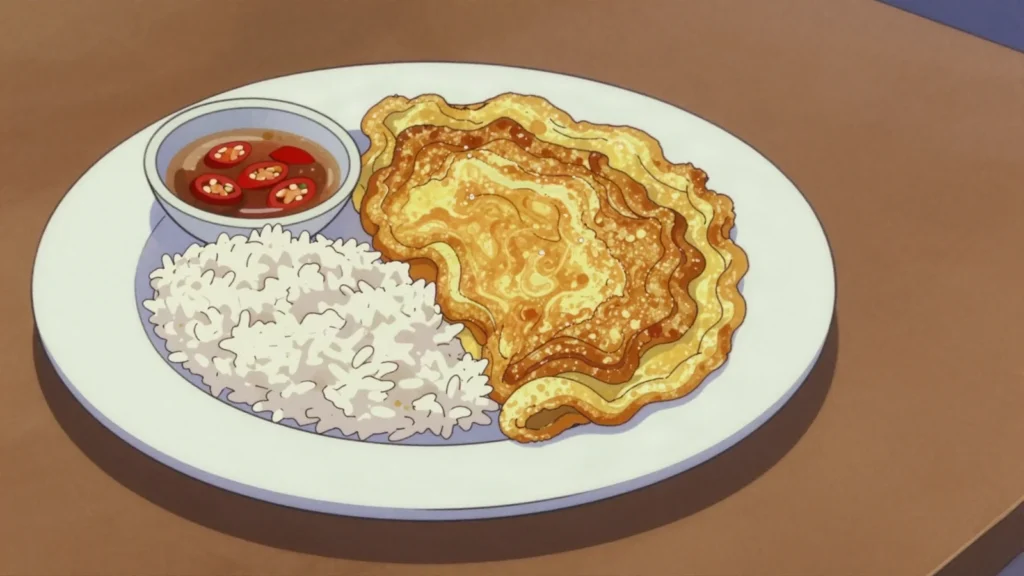
- Kai jeow raad khao, served over rice, is the everyday one-plate meal.
- Khai luuk koei, son-in-law eggs, are boiled then fried and served in tamarind sauce.
- Kai palo is the Thai five-spice braised egg and pork.
- Trung chien in Vietnam and telur dadar in Indonesia are the regional relatives.
Frequently asked questions
What is Kai Jeow?
Kai Jeow is a breakfast from Thailand: puffed deep-fried Thai omelette poured over rice with chilli sauce.
How long does Kai Jeow take to make?
Kai Jeow takes 5 minutes of preparation and 5 minutes of cooking. The recipe makes serves 2. It is rated easy to make.
What can I substitute in Kai Jeow?
Yes, within limits. Soy sauce replaces fish sauce for a version without fish, at some cost in depth. Minced pork, crab meat or chopped prawns all go into the beaten egg. Spring onion, chilli and coriander are added freely or left out. Lime juice replaces the water and adds a faint sourness. Any chilli sauce serves if Thai sriracha is unavailable, though it is a different thing. A small deep frying pan replaces a wok; a large flat one spreads the oil too thin.
What is the most important thing to get right in Kai Jeow?
Steam inside then inflates it. The oil must be genuinely hot. Stand back as you pour. Use a pan with sides rather than a flat one. Keep a lid within reach. Never leave hot oil unattended.