
Ingredients
Chicken
- 1.6 kgchicken, jointed into 10 pieces
- 2 tspsalt
- 1 tspground black pepper
- 3garlic cloves, crushed
- 1lemon, juiced
Nyembwe sauce
- 800 gpalm-nut cream (noix de palme, sauce graine), or 2 kg fresh palm nuts
- 2 tbspred palm oil
- 2onions, chopped
- 4garlic cloves, crushed
- 1thumb ginger, grated
- 3tomatoes, chopped (optional)
- 2aubergines or 200 g garden eggs, cubed
- 2hot chillies
- 1stock cube
- 1 litrewater
- 1small bunch African basil or odouma leaves
- salt
To serve
- boiled cassava, plantain or steamed rice
Directions
- Season the chicken with salt, pepper, garlic and lemon juice and leave 30 minutes.
- If starting from fresh palm nuts, boil them 30–40 minutes until the flesh squashes easily, pound them in a mortar with 500 ml hot water, then press through a sieve to extract a thick orange cream, discarding the fibres and kernels.
- Grill or sear the chicken pieces until browned all over. In Gabon the bird is often smoked or grilled over wood first, and that smoke is part of the dish.
- Heat the palm oil in a wide pot and soften the onions for 8 minutes, then add the garlic and ginger for a minute.
- Pour in the palm-nut cream with the water and bring to a simmer. It looks alarmingly thin at this stage and is meant to.
- Simmer uncovered 25–30 minutes, stirring, until it reduces, thickens and a layer of bright orange oil rises to the surface. That separation is the doneness signal for every palm-nut sauce.
- Add the chicken, aubergine, tomato, chillies and stock cube, cover and simmer 30–35 minutes until the chicken is tender and the sauce coats it.
- Taste for salt and heat, stir in the torn basil and rest 10 minutes off the heat so the herb infuses.
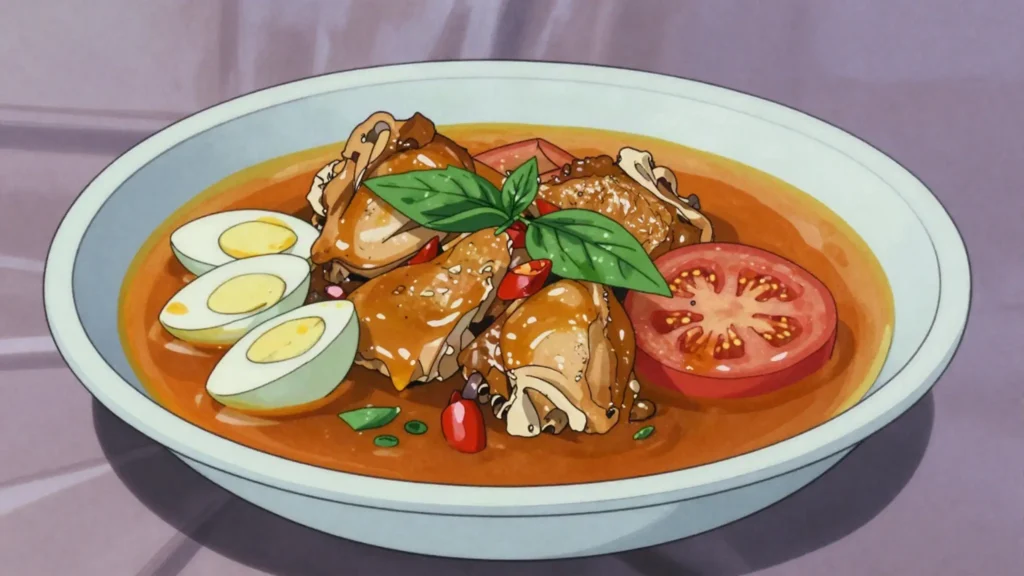
- Serve in deep bowls over boiled cassava, plantain or rice, with extra chilli on the side.
Technique
- Nyembwe is the Gabonese name for both the palm-nut cream and the dish built on it. It is the national dish and appears at every celebration and funeral.
- Tinned palm-nut cream from a West African grocer is the practical route and is what most Gabonese in cities use as well. Do not confuse it with palm oil, which is a completely different product pressed from the flesh in a different way.
- The sauce must be reduced until the oil visibly separates. Under-reduced nyembwe tastes chalky and raw and no amount of seasoning fixes it.
- Do not let the palm oil smoke at the start; burnt palm oil taints the whole pot with an acrid edge.
Substitutions
- Palm-nut cream has no true substitute, but 400 ml coconut milk with 3 tbsp red palm oil and 100 g ground roasted peanuts gives a comparably rich orange sauce with a different flavour.
Variations
- Made with smoked fish rather than chicken, which is common along the coast.
- Some cooks add okra or crushed peanuts for extra body, and others drop in whole smoked prawns near the end.
History
Chicken stewed in a sauce made from the pulp of palm fruit, considered Gabon’s national dish, developed using palm oil and palm fruit, both extracted from the oil palm native to West and Central Africa and central to cooking across a wide swath of the region for many centuries. Its name, nyembwe, comes from the Myene language spoken by one of Gabon’s coastal ethnic groups, directly naming the specific palm sauce base that defines the dish. Preparing the base sauce requires boiling and pressing the fibrous palm fruit to extract its pulp and oil, a labor-intensive process traditionally done by hand, and nyembwe chicken remains widely considered the clearest and most essential expression of Gabonese national culinary identity.
Frequently asked questions
What is Nyembwe chicken?
Nyembwe chicken is a main from Gabon: chicken stewed in palm-nut cream, often with smoked flavours; national dish. Chicken stewed in a sauce made from the pulp of palm fruit, considered Gabon’s national dish, developed using palm oil and palm fruit, both extracted from the oil palm native to West and Central Africa and central to cooking across a wide swath of the region for many centuries. Its name, nyembwe, comes from the Myene language spoken by one of Gabon’s coastal ethnic groups, directly naming the specific palm sauce base that defines the dish. Preparing the base sauce requires boiling and pressing the fibrous palm fruit to extract its pulp and oil, a labor-intensive process traditionally done by hand, and nyembwe chicken remains widely considered the clearest and most essential expression of Gabonese national culinary identity.
How long does Nyembwe chicken take to make?
Nyembwe chicken takes 30 min of preparation and 1 hr 20 min of cooking. The recipe makes 6 servings. It is rated medium to make.
What can I substitute in Nyembwe chicken?
Yes, within limits. Palm-nut cream has no true substitute, but 400 ml coconut milk with 3 tbsp red palm oil and 100 g ground roasted peanuts gives a comparably rich orange sauce with a different flavour.
What is the most important thing to get right in Nyembwe chicken?
Tinned palm-nut cream from a West African grocer is the practical route and is what most Gabonese in cities use as well. Do not confuse it with palm oil, which is a completely different product pressed from the flesh in a different way.