
Ingredients
Fruit
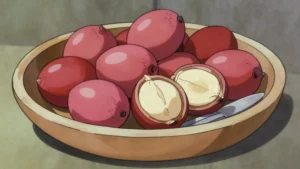
- 20ripe atanga, African plums
- water, for softening
- salt
To serve
- a fresh baguette
- or roasted maize
- or boiled cassava
Directions
- Heat is what turns it soft, buttery and mild. It should give very slightly under a thumb. Rinse the fruit under cold running water.
- Bring a pan of water to the boil and then take it off the heat. The water should be hot but no longer boiling hard.
- Drop the atanga into the hot water. Cover the pan and leave them for about five minutes. Do not boil them hard at any point.
- Set the whole fruit in the hot ashes of a fire. Turn them every minute or so with tongs. Give them about four minutes in total.
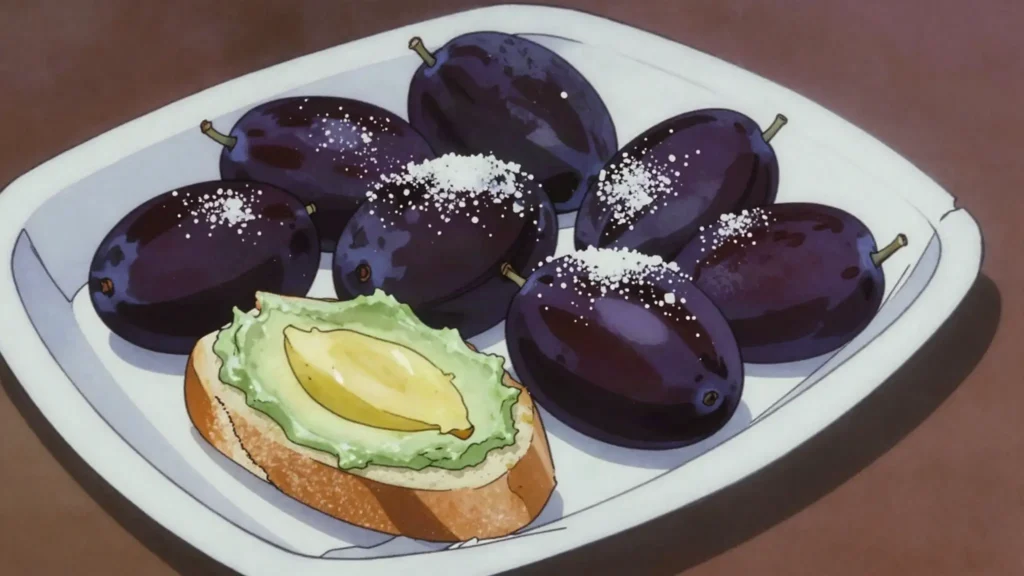
- Drain the fruit and put it in a bowl. Sprinkle salt over them generously. Scoop or squeeze the pale green flesh out of the skin.
- Spread it onto a piece of fresh baguette. It has the consistency of a firm butter.
- Add a little more salt on top if you like. Eating it takes some getting used to.
Technique
- Dacryodes edulis is an important tree crop across Central Africa and its fruit is a significant seasonal income for growers.
- The pairing with baguette reflects the French colonial presence in Gabon, where bread became an everyday staple.
Substitutions
- There is no real substitute, since the flavour and texture are particular to the fruit.
- Frozen atanga is sold in African shops and can be softened the same way.
Variations
- Roasting in embers gives a smokier result than softening in water.
- Some households add chilli powder alongside the salt.
- The fruit is also cooked into stews and sauces in parts of Cameroon.
History
The African plum Dacryodes edulis, softened in hot water or embers and eaten with baguette, a pairing born of French colonial bread.
Frequently asked questions
What is Atanga?
Atanga is a snack from Gabon: boiled bush-butter fruit, salted, spread on baguette. The African plum Dacryodes edulis, softened in hot water or embers and eaten with baguette, a pairing born of French colonial bread.
How long does Atanga take to make?
Atanga takes 5 minutes of preparation and 10 minutes of cooking. The recipe makes serves 4. It is rated easy to make.
What can I substitute in Atanga?
Yes, within limits. There is no real substitute, since the flavour and texture are particular to the fruit. Frozen atanga is sold in African shops and can be softened the same way.
What is the most important thing to get right in Atanga?
Drop the atanga into the hot water. Cover the pan and leave them for about five minutes. Do not boil them hard at any point.