
Ingredients
The leaves
- about 80 vine leaves
- fresh, or preserved in brine
- rinsed thoroughly
- plus extra to line the pot
The filling
- 400 gshort or medium grain rice
- rinsed and drained
- 400 gminced lamb
- with about 20 percent fat
- or minced beef
- 2 tablespoonsolive oil
- 1 teaspoonsalt
- 1 teaspoonblack pepper
- 1 teaspoonground allspice
- half a teaspoon ground cinnamon
- a pinch of ground cardamom
- optional
The base of the pot
- 8lamb chops
- or lamb neck cutlets
- on the bone
- or lamb ribs
- 2tomatoes, sliced thickly
- or a few bones
The cooking liquid
- juice of 3 lemons
- about 1 litre water or stock
- 3 tablespoonsolive oil
- 2 clovesgarlic, crushed
- salt, to taste
To serve
- plain yoghurt
- lemon wedges
- flatbread
- a fresh salad
Directions
- Pick young leaves in late spring. They should be bright green and tender. Pick leaves about the size of a hand. Very large ones are coarse and thick. Drop them into boiling water briefly. Thirty seconds to a minute is enough. Lift them out into cold water at once. That stops them cooking further.
- Rinse them under running water first. Then soak the leaves in warm water. Soak them for at least twenty minutes. Taste the liquid before adding salt to it. They tear easily when pulled apart dry. Soak the whole roll first, then unpeel. Work gently and with real patience. Keep the torn ones for lining the pot.
- Cut that stem off flush with the leaf. It also stops the roll sitting flat. Rinse it until the water runs clear. Drain it thoroughly before mixing. Use minced lamb with real fat in it. Lean mince gives a dry crumbly filling.
- Mix everything together in a large bowl. Add the olive oil to the mixture. Mix it thoroughly with your hands. The filling should be loose, not packed. Cook it right through and taste it. Adjust the salt and spice accordingly. Lay a leaf flat, vein side facing up. The shiny side should be facing down. Place a line of filling near that end.
- Use about a teaspoon for a small leaf. Do not overfill under any circumstances. Fold in both sides towards the centre. Roll firmly but not so tight it splits. The rice needs a little room to swell.
- Set each roll aside seam side down. Use a wide heavy pot with a lid. Lay the lamb chops on the bottom. Arrange them in a single layer. Browning adds depth, and both are done. Lay sliced tomato among the chops. Lay them seam side down, side by side.
- Pack them tightly against each other. Tight packing stops them unrolling. Lay a heatproof plate on top of the rolls. It should be almost the width of the pot. Mix water or stock with the lemon juice. Add the olive oil and crushed garlic. Add salt, but taste the liquid first.
- Pour it over to just cover the rolls. Bring it to a boil over a medium heat. Cover the pot with its own lid. Simmer very gently for about an hour. Larger rolls may need longer than that. Take one of the rolls out carefully.
- Let it cool for a minute and cut it open. The rice should be completely soft. Add hot water if the pot is drying out. Squeeze extra lemon over in the last ten minutes. That keeps the sharpness bright and fresh. Turn off the heat and leave it covered. Rest it for fifteen minutes at least. The rolls firm up and hold together better.
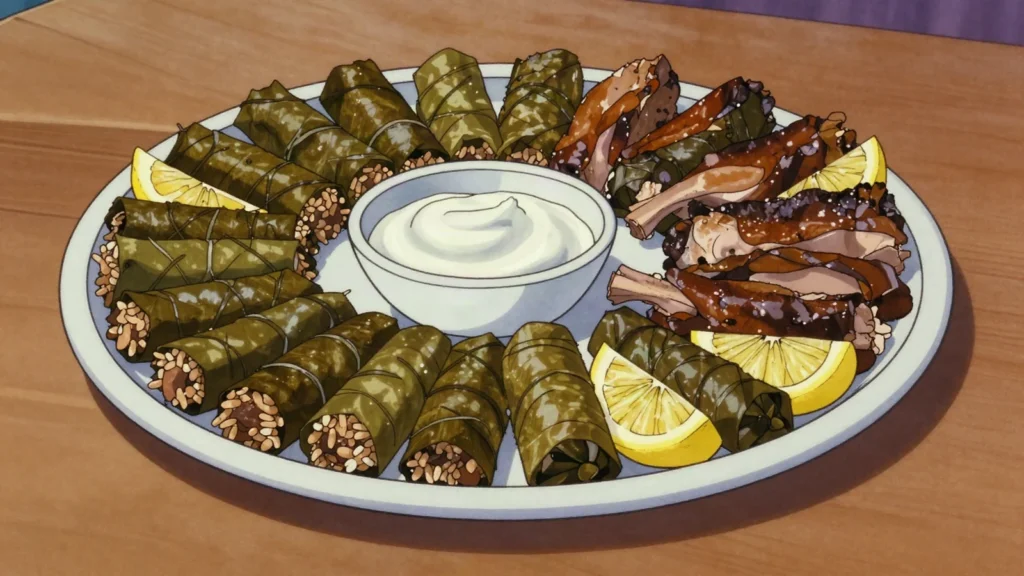
- Use a slotted spoon and work carefully. Arrange the rolls on a platter. Lay the lamb chops around or over them. Spoon some of the cooking liquid over. Serve plain yoghurt alongside. Serve extra lemon wedges as well. It is not usually served piping hot. Cook them from frozen with extra time.
Technique
- Stuffed vine leaves are made from the Balkans to Iran under many names — dolmades, yaprak sarma, warak enab, mahshi — and the dish is far older than any modern border. The atlas records the whole family and adjudicates no origin claim, while recording the real differences between versions.
- The Palestinian characteristic is the pot layered with lamb chops beneath the rolls, so the rolls absorb the rendering fat from below and one pot produces both. Lebanon’s warak enab leans harder on lemon and is often lighter and sharper.
- Do not overfill. This is the mistake beginners always make: raw rice swells to several times its volume and an overfilled roll bursts. Less filling than you think is correct.
- The rice goes in raw. Cooked rice turns to mush; raw rice swells and absorbs the lemon and meat juices, which is the whole point.
- Rinse brined leaves thoroughly and soak them for twenty minutes, changing the water. Unrinsed leaves make the dish far too salty and there is no fixing it after cooking — taste the cooking liquid before adding any salt at all.
- The weighted plate on top is not optional. Without it the rolls float, are lifted by the boiling liquid, and unroll.
- Simmer gently, never boil. A hard boil breaks the rolls apart.
- Squeeze extra lemon over in the last ten minutes. Lemon added at the start loses its edge in an hour of cooking.
- Rest it fifteen minutes off the heat before serving. The rolls firm up and hold together; served straight from the pot they break.
- You cannot taste raw meat filling, so fry a small spoonful, cook it through and taste that before committing the batch.
- Rolling them thin is a genuine matter of pride, and making them is usually a shared activity with several people rolling hundreds in one session.
Substitutions
- Fresh young vine leaves replace brined ones; blanch them for thirty seconds and refresh in cold water. They need no de-salting.
- Minced beef replaces lamb; use one with real fat in it, since lean mince gives a dry filling.
- A vegetarian version filled with rice, tomato, parsley, mint and onion is made across the region and is often served cold with plenty of olive oil.
- Lamb ribs, neck cutlets or just bones can line the pot in place of chops.
- Chard or cabbage leaves replace vine leaves where those are unavailable, giving a related but different dish.
- Short or medium grain rice holds together best; long grain works but is less traditional.
Variations
- Warak enab in Lebanon and Syria is the close relative, leaning more on lemon and often cooked without meat beneath.
- The Lenten and vegetarian version, filled with rice and herbs alone, is served cold with olive oil and is a dish in its own right.
- Some Palestinian cooks layer potatoes as well as chops in the base of the pot.
- Mahshi more broadly covers stuffed vegetables — courgette, aubergine, pepper — filled with the same mixture and often cooked in the same pot.
- Turkish yaprak sarma, Greek dolmades and Armenian versions all belong to the same family with their own spicing.
- Some households add a little pomegranate molasses to the cooking liquid for depth.
History
Rolled thin as a matter of pride; in Palestine the pot is often layered with cutlets so the rolls cook in their fat.
Frequently asked questions
What is Warak dawali?
Warak dawali is a main from Palestine: vine leaves rolled tight around rice and meat, cooked over lamb chops. Rolled thin as a matter of pride; in Palestine the pot is often layered with cutlets so the rolls cook in their fat.
How long does Warak dawali take to make?
Warak dawali takes 2 hours of preparation and 1 hour 30 minutes of cooking. The recipe makes serves 8. It is rated hard to make.
What can I substitute in Warak dawali?
Yes, within limits. Fresh young vine leaves replace brined ones; blanch them for thirty seconds and refresh in cold water. They need no de-salting. Minced beef replaces lamb; use one with real fat in it, since lean mince gives a dry filling. A vegetarian version filled with rice, tomato, parsley, mint and onion is made across the region and is often served cold with plenty of olive oil. Lamb ribs, neck cutlets or just bones can line the pot in place of chops. Chard or cabbage leaves replace vine leaves where those are unavailable, giving a related but different dish. Short or medium grain rice holds together best; long grain works but is less traditional.
What is the most important thing to get right in Warak dawali?
Rinse them under running water first. Then soak the leaves in warm water. Soak them for at least twenty minutes. Taste the liquid before adding salt to it. They tear easily when pulled apart dry. Soak the whole roll first, then unpeel. Work gently and with real patience. Keep the torn ones for lining the pot.