
Ingredients
Taro
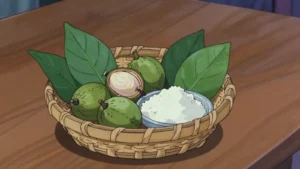
- 1large brak corm, giant swamp taro, about 3 kg
To cook
- a large pot of water
- salt
To serve
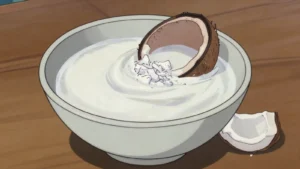
- coconut cream
- grated coconut
- sugar or syrup, for a sweet version
Equipment
- gloves
- a heavy knife
Directions
- Rub your hands with oil if you have no gloves. Do not touch your face or eyes while handling it.
- Cut it into large chunks, since it will be sliced after cooking. Now boiling it for several hours.
- Put the pieces in a large pot, cover them well with water and add salt.
- Boil steadily for two to three hours, topping up the water as it evaporates. Change the water once partway through, which helps carry away the dissolved compounds.
- Taste a very small piece: it should taste starchy and mild with no prickling or itching whatsoever. If there is any prickling, keep boiling and test again.
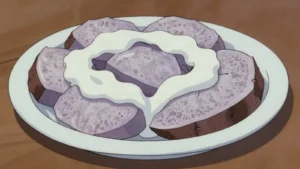
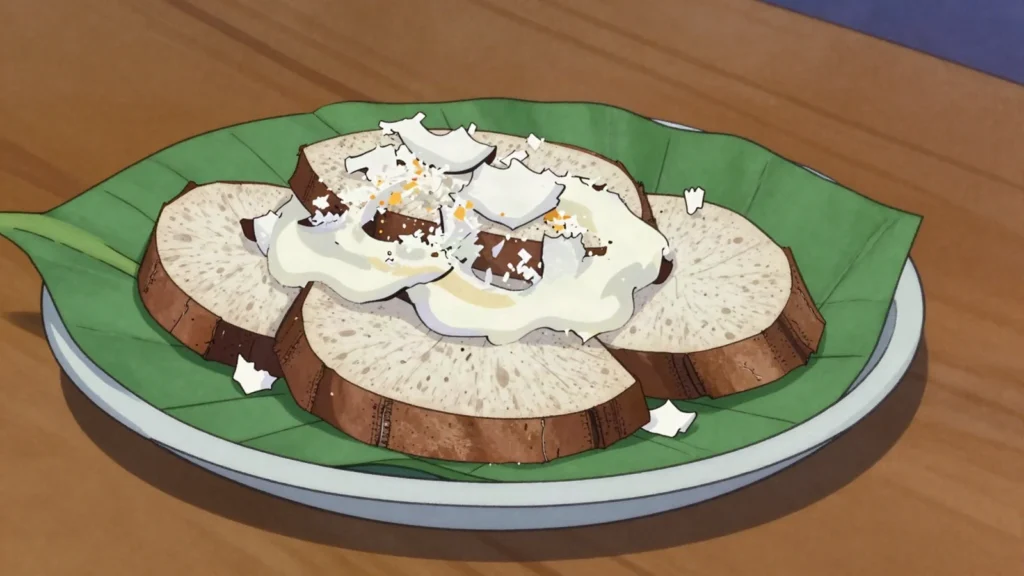
- Drain it, let it cool slightly, and cut it into thick slices. The rich coconut against the dense dry starch is the standard pairing across the Pacific.
Technique
- It is a different genus from ordinary taro and needs far longer cooking.
- The itchiness is calcium oxalate crystals, broken down only by prolonged boiling.
- It tolerates brackish waterlogged ground where other crops fail.
Substitutions
- Ordinary taro, which cooks much faster and is milder.
- There is no direct substitute for its density.
Variations
- Served with coconut cream, as a sweet version.
- Pounded and preserved, as on other Pacific atolls.
- Sliced and fried after boiling.
History
Grown in Palau’s freshwater swamps as a backup to kukau taro, and traditionally reserved for large ceremonial gatherings.
Frequently asked questions
What is Brak?
Brak is a salad & side from Palau: giant swamp taro, dense and slightly itchy; long-boiled and served in slices. Grown in Palau’s freshwater swamps as a backup to kukau taro, and traditionally reserved for large ceremonial gatherings.
How long does Brak take to make?
Brak takes 20 min of preparation and 3 hr of cooking. The recipe makes 8 servings. It is rated medium to make.
What can I substitute in Brak?
Yes, within limits. Ordinary taro, which cooks much faster and is milder. There is no direct substitute for its density.
What is the most important thing to get right in Brak?
Rub your hands with oil if you have no gloves. Do not touch your face or eyes while handling it.