
Ingredients
Noodles
- 400 gfresh egg noodles, or 300 g dried
Meat
- 300 gchicken thigh, sliced
- or prawns, or both
Base
- 1onion, sliced
- 6 clovesgarlic, chopped
- 3 tbspoil
- 1 tbspSurinamese sambal, or another chilli paste
Vegetables
- 200 gwhite cabbage, shredded
- 2carrots, in matchsticks
- 150 ggreen beans or long beans
- 4spring onions
- 150 gbeansprouts
Sauce
- 4 tbspketjap manis, sweet soy sauce
- 2 tbsplight soy sauce
- 1 tbspoyster sauce, optional
- 1stock cube
- 1 tspsugar
- black pepper
- 4 tbspwater
To serve
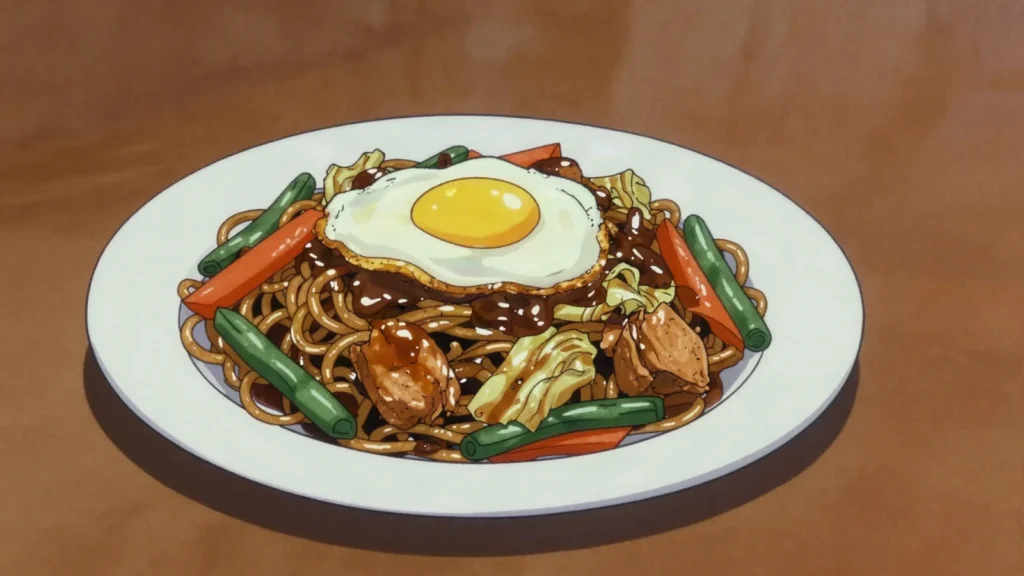
- a fried egg or a boiled egg
- extra sambal
- sliced cucumber
- with fried chicken alongside
Directions
- Drain them extremely well and toss them with a teaspoon of oil. Wet noodles drop the pan temperature and steam everything instead of frying it.
- Combine everything in the sauce list in a bowl before you start cooking. The whole stir-fry takes about five minutes and there is no time to measure once it starts.
- Fry the garlic and onion for thirty seconds until fragrant. Add the sambal and fry it briefly, which takes the raw edge off. Add the chicken and cook until just done. Now the vegetables, added by how long they take.
- Keep the vegetables crisp, since the contrast with soft noodles is much of the point. Beansprouts need thirty seconds at most and turn limp and watery if cooked longer.
- Add the noodles and pour the sauce around the edge of the pan rather than into the middle. Pouring it down the hot sides caramelises it against the metal, which gives the smoky depth a good bami has. Toss and lift with tongs rather than stirring, which separates the strands without breaking them.
- Let the noodles sit against the hot pan for a few seconds between tosses so some catch and colour. It should be clearly sweet, clearly savoury and noticeably peppery, with a little heat from the sambal.
- Add more ketjap manis for sweetness and colour, or more soy for salt. Now serving it out while it is hot. Serve it with a fried or boiled egg on top and extra sambal on the side.
Technique
- It descends from Javanese bakmi goreng, brought by contract labourers.
- Ketjap manis is thick and sweet and cannot be replaced by ordinary soy sauce.
- It is sweeter than most Asian fried noodles, which is correct.
Substitutions
- Any sweet soy sauce in place of ketjap manis.
- Dried egg noodles, cooked slightly under.
Variations
- Nasi, the same treatment applied to rice.
- Made with prawns or with tofu.
- Made hotter, with more sambal.
History
Javanese fried noodles adapted in Suriname and sold at warungs, eaten with sambal, chicken and a boiled egg.
Frequently asked questions
What is Bami?
Bami is a main from Suriname: javanese-style stir-fried noodles with sweet soy, served with chicken. Javanese fried noodles adapted in Suriname and sold at warungs, eaten with sambal, chicken and a boiled egg.
How long does Bami take to make?
Bami takes 25 min of preparation and 15 min of cooking. The recipe makes 4 servings. It is rated easy to make.
What can I substitute in Bami?
Yes, within limits. Any sweet soy sauce in place of ketjap manis. Dried egg noodles, cooked slightly under.
What is the most important thing to get right in Bami?
Drain them extremely well and toss them with a teaspoon of oil. Wet noodles drop the pan temperature and steam everything instead of frying it.