
Ingredients
Taro
- 1.5 kgswamp taro corm
- Cyrtosperma merkusii
- or 1.5 kg dryland taro
- water, to cover
- salt
Sometimes served with
- coconut cream
- grated fresh coconut
- a little salt water
Alongside
- fish, grilled or in coconut
- pork, at ceremonies
- as the starch of the meal
Handling
- gloves, for peeling
- or oiled hands
Directions
- Allow more time than for ordinary taro. Put on gloves before you start. Wash off all the mud and roots. Peeling it takes some real work. Cut the corm into large pieces first.
- Peel each piece with a sharp knife. Cut the skin away quite thickly. Cut away more than seems necessary. Discard all the peel carefully.
- Rinse the peeled pieces in cold water. Keep them in water until you cook them. Cut taro darkens quickly in air. Cold water stops that happening. Put the pieces in a large pot. Cover them well with cold water. Add plenty of salt to the water.
- Bring the pot up to a full boil. Boiling it takes quite a long time. Let it boil steadily rather than simmering. Give swamp taro at least an hour.
- Keep it boiling properly throughout. Add boiling water if it drops too far. The pieces must stay fully covered. Taste a very small piece once cooked. There should be no itch or prickle at all.
- Boil it on until that disappears entirely. Drain all the pieces thoroughly. Let them steam dry for a minute. Properly cooked swamp taro is firm and dense.
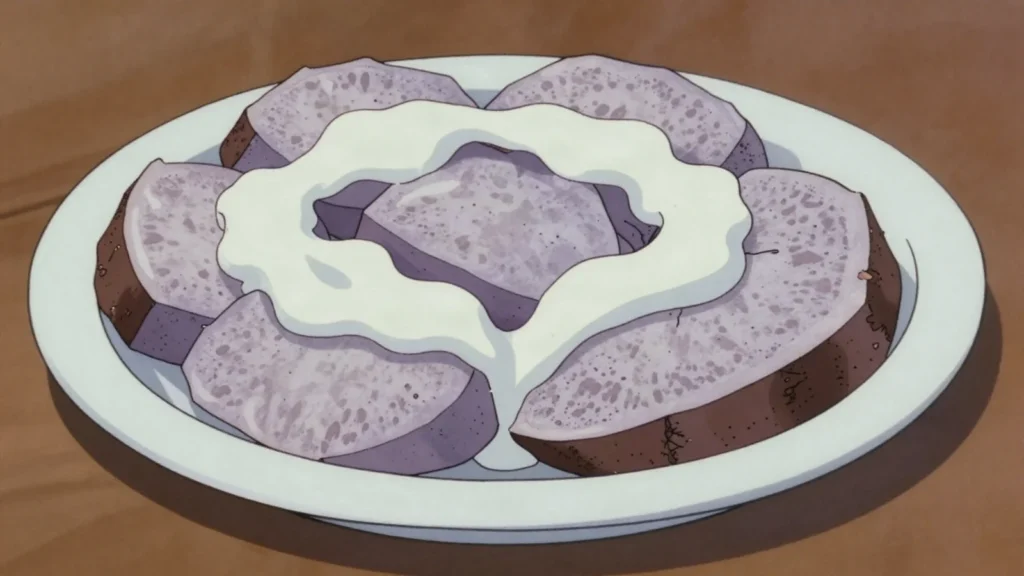
- Cut the cooked taro into thick slices. Set them out on a platter or a leaf. Serve fish or pork alongside it. Pour coconut cream over the slices. It keeps three days refrigerated.
Technique
- Taro patches in Palau are wetland plots called mesei, worked by women and passed down; a well kept patch is publicly visible and is a real measure of a woman’s standing, not simply a matter of food production, and taro is required at funerals and other ceremonies where being able to supply it matters socially.
- Taro contains needle-shaped calcium oxalate crystals that cause severe itching and burning, so wear gloves or oil your hands to peel it, cut the skin away thickly since the layer just beneath is the most irritant, and never rub your eyes while handling it.
- Thorough boiling is what breaks the crystals down: taste a very small piece once cooked and there should be no itch or prickle at all, since any tingling means it is undercooked and needs to boil on. Swamp taro is denser than dryland taro and often needs ninety minutes.
Substitutions
- Ordinary dryland taro cooks faster and is softer and more floury.
- Coconut cream or grated fresh coconut both serve to enrich the plain starch.
Variations
- Kakake in the Solomon Islands and Micronesian giant swamp taro are the same species.
- A little sea water is sprinkled over it in some places to season it.
- The largest corms, grown for years, are reserved for major ceremonies.
History
Wetland taro is grown in irrigated patches tended by women, and a woman’s skill in her taro patch carries real social standing.
Frequently asked questions
What is Kukau?
Kukau is a salad & side from Palau: boiled swamp taro, ceremonial staple tended in women’s gardens. Wetland taro is grown in irrigated patches tended by women, and a woman’s skill in her taro patch carries real social standing.
How long does Kukau take to make?
Kukau takes 20 minutes of preparation and 1 hour 30 minutes of cooking. The recipe makes serves 6. It is rated medium to make.
What can I substitute in Kukau?
Yes, within limits. Ordinary dryland taro cooks faster and is softer and more floury. Coconut cream or grated fresh coconut both serve to enrich the plain starch.
What is the most important thing to get right in Kukau?
Bring the pot up to a full boil. Boiling it takes quite a long time. Let it boil steadily rather than simmering. Give swamp taro at least an hour.