
Ingredients
Noodles
- 600 gfresh mì Quảng rice noodles, wide and turmeric-yellow
Broth
- 500 gpork ribs or belly, in pieces
- 300 gprawns, shelled, shells kept
- 1 litrewater
- 2shallots
- 3 clovesgarlic
- 1 tbspground turmeric
- 2 tbspfish sauce
- 1 tspsugar
- 2 tbspannatto oil
Also
- 4quail eggs or 2 hen eggs, boiled
Toppings
- 100 groasted peanuts, crushed
- 2bánh tráng mè, toasted sesame rice crackers
- spring onions
- coriander
Herbs
- lettuce, shredded
- Vietnamese mint, rau răm
- basil
- banana blossom, shredded
- bean sprouts
To serve
- lime wedges
- sliced chilli
- fish sauce
Directions
- Fry the prawn shells in a little oil until they turn bright orange and smell strongly of prawn. Add water and simmer the shells 20 minutes, then strain and discard them.
- Fry the shallots and garlic in annatto oil until fragrant, then add the turmeric and cook 30 seconds. Add the pork and brown it, then pour in the prawn stock, add the fish sauce and sugar, and simmer 40 minutes until tender.
- Keep the broth reduced and intensely seasoned. It should taste slightly too strong on its own, because there is so little of it per bowl.
- Add the prawns for the last 3 minutes only, and take them out as soon as they curl. Blanch the fresh noodles briefly in hot water and drain them well.
- Toast the sesame rice crackers over a flame or under a grill, turning, until they puff and colour in patches. Bánh tráng goes from toasted to burnt in about ten seconds.
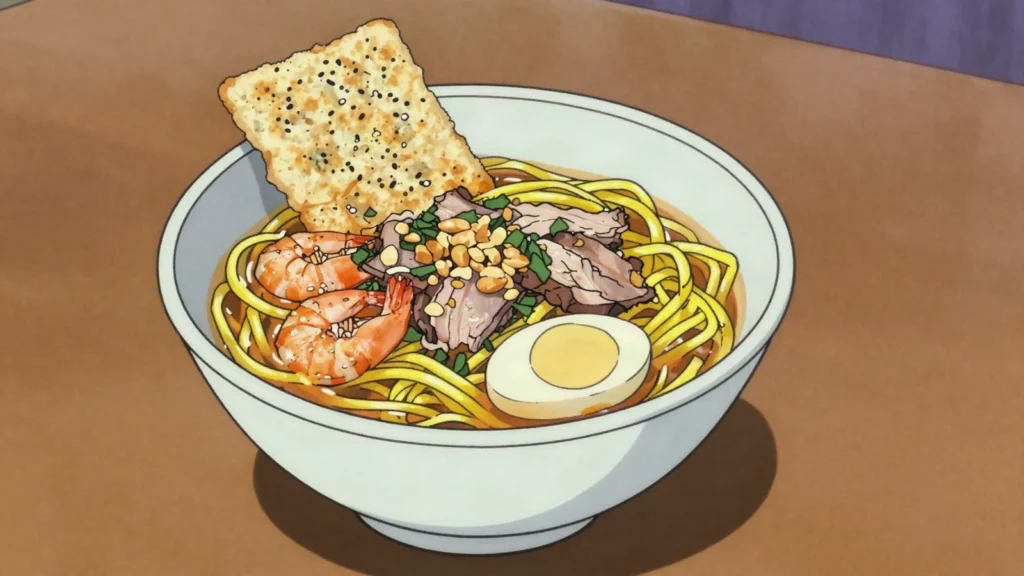
- Arrange the pork, prawns and half an egg over the noodles. Ladle over only a few spoonfuls of broth, just enough to wet the base of the bowl.
- Scatter crushed peanuts and spring onion over, and snap a piece of toasted rice cracker on top. Serve with lime, chilli and extra fish sauce, and tell people to toss the whole bowl before eating.
Technique
- Chicken, frog or fish versions are all traditional in Quảng Nam.
- The crushed peanut and the rice cracker are not garnishes and the dish is incomplete without them.
- Fresh mì Quảng noodles are sold in Vietnamese shops; wide fresh rice noodles are the nearest substitute.
Substitutions
- Wide fresh rice noodles, or dried ones soaked and blanched.
- Chicken thighs in place of pork, which is a standard variation.
Variations
- Mì Quảng gà, with chicken.
- Mì Quảng cá lóc, with snakehead fish.
- Vegetarian, with tofu and mushrooms.
History
A turmeric-tinted noodle dish, its thick rice noodles topped with a small amount of rich broth rather than served fully submerged in soup, along with pork, shrimp, herbs and a rice cracker, developed specifically in Quang Nam province in central Vietnam, from which the dish takes its regional name directly. Its deliberately minimal broth, just enough to moisten and flavour the noodles and toppings rather than filling the bowl as in most other Vietnamese noodle soups, is considered an essential, defining characteristic distinguishing mi quang from noodle soups more broadly, reflecting a specifically central Vietnamese approach to noodle dishes distinct from both northern pho and southern hu tieu traditions. It remains one of central Vietnam’s most iconic and recognized regional specialties.
Frequently asked questions
What is Mi Quang?
Mi Quang is a main from Vietnam: turmeric noodles with shrimp, pork, peanuts and rice crackers. A turmeric-tinted noodle dish, its thick rice noodles topped with a small amount of rich broth rather than served fully submerged in soup, along with pork, shrimp, herbs and a rice cracker, developed specifically in Quang Nam province in central Vietnam, from which the dish takes its regional name directly. Its deliberately minimal broth, just enough to moisten and flavour the noodles and toppings rather than filling the bowl as in most other Vietnamese noodle soups, is considered an essential, defining characteristic distinguishing mi quang from noodle soups more broadly, reflecting a specifically central Vietnamese approach to noodle dishes distinct from both northern pho and southern hu tieu traditions. It remains one of central Vietnam’s most iconic and recognized regional specialties.
How long does Mi Quang take to make?
Mi Quang takes 40 min of preparation and 1 hr of cooking. The recipe makes 4 servings. It is rated medium to make.
What can I substitute in Mi Quang?
Yes, within limits. Wide fresh rice noodles, or dried ones soaked and blanched. Chicken thighs in place of pork, which is a standard variation.
What is the most important thing to get right in Mi Quang?
Scatter crushed peanuts and spring onion over, and snap a piece of toasted rice cracker on top. Serve with lime, chilli and extra fish sauce, and tell people to toss the whole bowl before eating.