
Ingredients
The fish
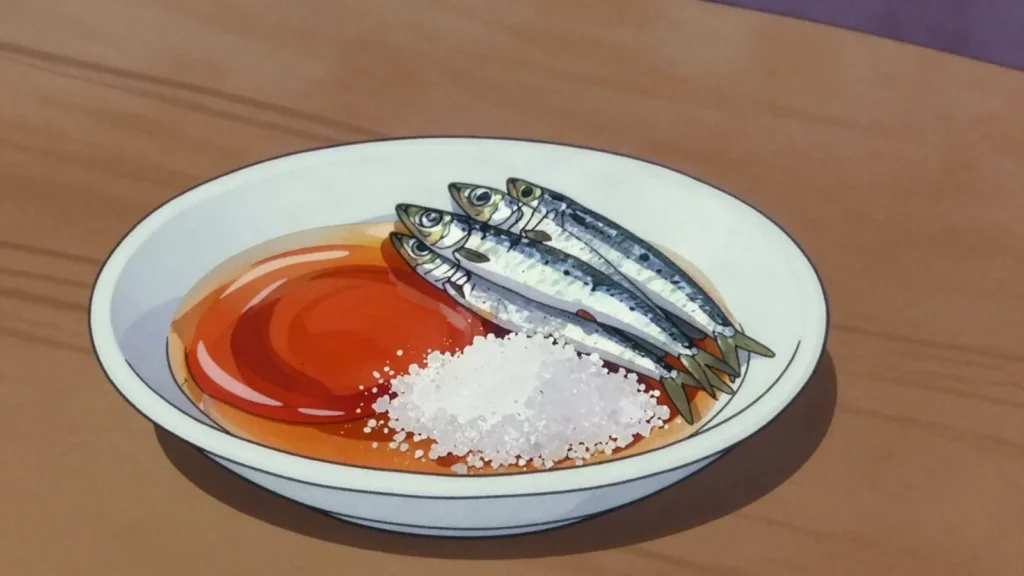
- 10 kgfresh anchovies
- small and whole
- not gutted or washed
The salt
- 3 kgcoarse sea salt
- roughly three parts fish to one of salt
The vessel
- a wooden barrel
- or a large food-grade crock
- a weighted lid or press
- a tap or drain at the base
To serve
- as a seasoning
- or in a dipping sauce
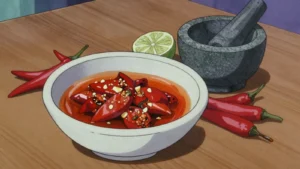
- with lime, sugar, garlic and chilli
Directions
- Use small whole fresh anchovies. Do not gut or wash them at all. Use them all whole and unwashed. The fish must be genuinely fresh. Discard any batch that smells off.
- Mix the fish and salt thoroughly. Every fish must be coated in salt. Mix it properly rather than layering. Pack the mixture into the barrel.
- Press it down firmly as you go. Air pockets let spoilage take hold. Press down every layer very hard.
- Lay a board or a plate on the top. The fish must stay under the brine. Keep them weighted throughout. Cover the barrel to keep insects out. Do not seal it airtight at all.
- Set the barrel somewhere warm. Leave it for at least a whole year. It should smell strongly savoury.
- Discard it entirely if it smells rotten. Strain it through a fine cloth. Bottling it is straightforward enough.
- Pour it into clean dry bottles. Seal all of the bottles tightly. The high salt keeps it indefinitely. Keep it out of direct sunlight. Start with less than you think. It keeps years in a sealed bottle.
Technique
- The salt is what makes this safe, not incidental seasoning: at roughly a quarter of the fish weight it prevents spoilage organisms growing while the fish’s own gut enzymes continue to break the flesh down. Reducing it is genuinely unsafe — a low-salt version can support botulism — so the three-to-one ratio is a safety matter rather than a matter of taste.
- The fish are used whole, ungutted and unwashed, because the gut enzymes are what drive the fermentation; gutting removes them entirely. They must also be genuinely fresh, since already-spoiling fish gives bad sauce.
- Phu Quoc’s version holds a European protected designation of origin granted in 2013, the first Vietnamese product to receive one — it ties the name to the island and to defined methods, including salting the anchovies on board immediately after catching.
Substitutions
- Most people buy rather than make it, since this is a year-long process needing quantity; look for a high protein figure on the label and a short ingredient list of fish and salt alone.
- A large food-grade crock stands in for a wooden barrel, provided it can be weighted and drained.
Variations
- The first draw, nước mắm nhĩ, is the finest grade and kept separate from later weaker draws.
- Cover the vessel against insects but do not seal it airtight, since fermentation produces gases and a sealed vessel builds pressure.
- Diluted with water and lime juice with sugar, garlic and chilli it becomes nước chấm, the dipping sauce served with a great many dishes.
History
Phu Quoc island’s version holds a European protected designation of origin granted in 2013, the first Vietnamese product to receive one.
Frequently asked questions
What is Nuoc Mam?
Nuoc Mam is a sauce & condiment from Vietnam: amber fish sauce pressed from anchovies salted in wooden barrels for a year. Phu Quoc island’s version holds a European protected designation of origin granted in 2013, the first Vietnamese product to receive one.
How long does Nuoc Mam take to make?
Nuoc Mam takes 1 hour plus a year of preparation and no cooking at all. The recipe makes about 2 litres. It is rated hard to make.
What can I substitute in Nuoc Mam?
Yes, within limits. Most people buy rather than make it, since this is a year-long process needing quantity; look for a high protein figure on the label and a short ingredient list of fish and salt alone. A large food-grade crock stands in for a wooden barrel, provided it can be weighted and drained.
What is the most important thing to get right in Nuoc Mam?
Use small whole fresh anchovies. Do not gut or wash them at all. Use them all whole and unwashed. The fish must be genuinely fresh. Discard any batch that smells off.