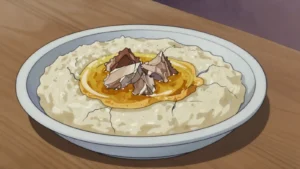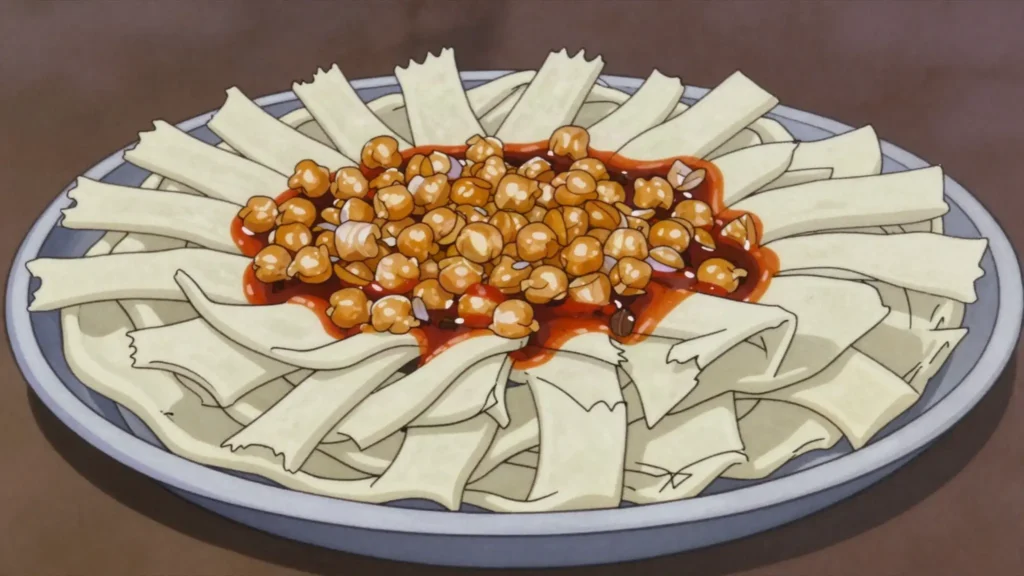

Ingredients
Noodles
- 600 gplain flour
- 1 tspsalt
- 320 mlwarm water
- 2 tbspoil
- extra flour, for dusting
Sauce
- 600 glamb or chicken, in pieces
- 4 tbspoil
- 3onions, sliced
- 5garlic cloves, crushed
- 3 tbsptomato paste
- 2tomatoes, grated
- 2 tspground cinnamon
- 1 tspturmeric
- 1 tspground black pepper
- 1 tspground caraway
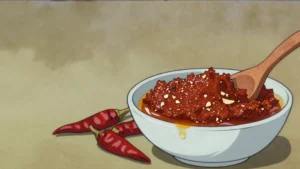
- 1 tbspharissa, to taste
- salt
To add
- 300 gcooked chickpeas
- 2onions, sliced and slowly fried
Equipment
- a couscoussier, or a steamer over a pot
- a clean cloth
Directions
- Put the flour and salt in a large bowl. Add most of the warm water gradually. Bring it together into a firm dough. Knead it for twelve minutes until smooth and elastic. It should be firm rather than soft.
- Work in the oil towards the end of kneading. Cover it and rest it for thirty minutes. Rolling and cutting takes real work. Divide the dough into four pieces. Roll one piece out very thin on a floured surface. Roll it as thin as you can manage. Dust it generously with flour. Fold the sheet loosely into a flat roll.
- Cut it across into thin strips with a sharp knife. Aim for strips about two or three millimetres wide. Toss them in plenty of flour as you go. Spread them out on a floured tray. Do not let them clump together.
- Let them dry for twenty minutes while you start the sauce. Building the sauce is done in the base of the couscoussier. Heat the oil in the bottom pot. Season the meat and brown it in batches over a high heat. Lift the meat out and set it aside. Add the sliced onions and cook them for ten minutes.
- Add the garlic and cook for another minute. Stir in the tomato paste and cook it until it darkens. Add the grated tomatoes and all the spices. Cook it down for eight minutes. Return the meat with any juices.
- Add the harissa and season with salt. Pour in water to cover the meat generously. Bring the whole pot up to a simmer. There must be plenty of liquid, since it produces the steam. Toss the noodles again in flour and shake off the excess. Put them loosely in the steamer basket. Do not press them down, since steam must pass through.
- Set the basket over the simmering sauce. Seal the join with a damp cloth so no steam escapes. Steam them for twenty minutes. Tip the noodles into a wide bowl. Sprinkle over a few spoonfuls of warm water.
- Work quickly, since they are hot. Let them stand for ten minutes to absorb. Return the noodles to the basket. Steam them for another twenty minutes. Judging when they are done is by texture. Take a few strands and taste them. They should be tender with no chalky centre.
- Cook the sliced onions very slowly in oil for twenty-five minutes. They should collapse and turn deep golden and sweet. Add the cooked chickpeas to the sauce for the last fifteen minutes. The meat should be completely tender by now.
- Taste it and adjust the salt and harissa. It should be thick rather than watery. Tip the steamed noodles into a large bowl. Ladle over a little of the sauce liquid and toss it through. Mound them on a serving platter. Spoon the meat and chickpeas over the centre. Ladle more sauce over the whole thing. Scatter the slowly fried onions over the top. Serving it is done hot from a shared platter.
Technique
- The noodles are steamed over the sauce rather than boiled, which is what defines the dish.
- Steam, rest with water, then steam again, since one steaming leaves chalky centres.
- Toss the cut noodles in plenty of flour so they do not clump together.
Substitutions
- Dried thin noodles, steamed the same way, if hand-cutting defeats you.
- Chicken in place of lamb.
Variations
- Made with chicken, which is common.
- Vegetarian, with chickpeas and no meat.
- With more harissa for a hotter sauce.
History
Hand-rolled noodles are steamed above the sauce in a couscoussier rather than boiled, a technique shared with Algerian rechta.
Frequently asked questions
What is Rishda?
Rishda is a main from Libya: steamed hand-cut noodles topped with chickpeas, onion and spiced sauce. Hand-rolled noodles are steamed above the sauce in a couscoussier rather than boiled, a technique shared with Algerian rechta.
How long does Rishda take to make?
Rishda takes 1 hour plus 30 min resting of preparation and 1 hour 30 min of cooking. The recipe makes 6 servings. It is rated hard to make.
What can I substitute in Rishda?
Yes, within limits. Dried thin noodles, steamed the same way, if hand-cutting defeats you. Chicken in place of lamb.
What is the most important thing to get right in Rishda?
Put the flour and salt in a large bowl. Add most of the warm water gradually. Bring it together into a firm dough. Knead it for twelve minutes until smooth and elastic. It should be firm rather than soft.