
Ingredients
Paste
- 200 grice flour
- 60 gtapioca starch
- 1.2 litrespork or chicken stock
- 1 tspsalt
- 2 tbspoil
Filling
- 300 gminced pork
- 30 gdried wood ear mushrooms, soaked
- 100 gbutton or shiitake mushrooms, chopped
- 3shallots, chopped
- 2 tbspfish sauce
- 1 tspsugar
- 1 tspblack pepper
- 5quail eggs, boiled and halved, optional
To wrap
- banana leaves, softened over a flame
- string
To serve
- warm, with chilli sauce
- with pickled vegetables and cha lua
Directions
- Use pork or chicken stock rather than water. The wrapper is the bulk of the dish and it is otherwise almost tasteless, so the stock is where its flavour comes from. Season it well before you start. Whisk both into the cold stock until completely smooth before any heat is applied. Never add dry flour to hot liquid, which forms lumps that will not disperse.
- Cook it over a medium-low heat, stirring continuously with a wooden spoon. Stir without stopping and scrape the base and corners of the pan throughout. It thickens suddenly, and once it starts it catches and scorches within seconds if you look away.
- Cook it until it is thick, glossy and pulls away from the sides of the pan as you stir. It should be thick enough to hold a shape on a spoon but still soft enough to spread. Stir in the oil at the end, which keeps it smooth and glossy. Let it cool slightly, but work with it warm since it stiffens as it cools.
- Soak the wood ear until soft, trim the hard base and chop it finely. Fry the shallots, then the pork, then both kinds of mushroom. Season with fish sauce, sugar and plenty of black pepper.
- Cook it until completely dry, since any liquid will make the parcel collapse. Let the filling cool completely. Pass the banana leaves over a flame until glossy and pliable, which stops them splitting. Cut them into rectangles and overlap two or three pieces for each parcel. Spoon paste into the cone, press a hollow in the middle, add the filling, and cover it with more paste.
- Leave a good margin of paste all round the filling so it is completely enclosed. Do not overfill, since the parcel needs to fold closed cleanly. Fold the leaf over the top and tuck the ends underneath to make a squat pyramid. Tie it firmly with string in both directions.
- Tie it tightly, since a loose parcel lets water in and the paste becomes sloppy. Steam the parcels for thirty to forty minutes over vigorously boiling water. Set them with the folded side down so they hold themselves closed. Top up the water and never let the pot boil dry.
- Let them cool for at least twenty minutes before unwrapping. Straight from the steamer the paste is too soft to hold its shape and the parcel collapses when opened. Serve chilli sauce alongside, which is the standard accompaniment in Hanoi. They keep two days refrigerated and are resteamed to reheat.
Technique
- The flour is cooked into a paste on the stove before wrapping.
- The paste is made with stock rather than water, since it carries the flavour.
- They must cool before unwrapping or they collapse.
Substitutions
- Foil in place of banana leaves, accepting the loss of aroma.
- Shiitake in place of wood ear.
Variations
- With a quail egg set into the filling.
- Made vegetarian, with mushrooms alone.
- Made larger, as a substantial breakfast.
History
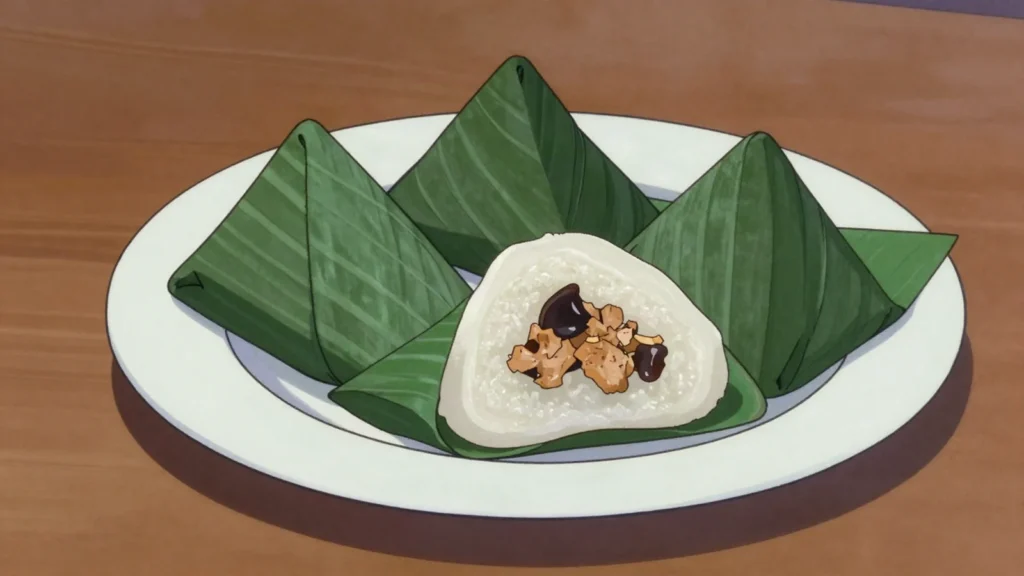
Sold warm from baskets by Hanoi street vendors as a morning snack, the wrapper peeled back like petals.
Frequently asked questions
What is Banh Gio?
Banh Gio is a snack from Vietnam: pyramid of rice flour paste with pork and wood-ear mushroom, steamed in leaf. Sold warm from baskets by Hanoi street vendors as a morning snack, the wrapper peeled back like petals.
How long does Banh Gio take to make?
Banh Gio takes 45 min of preparation and 45 min of cooking. The recipe makes 10 parcels. It is rated hard to make.
What can I substitute in Banh Gio?
Yes, within limits. Foil in place of banana leaves, accepting the loss of aroma. Shiitake in place of wood ear.
What is the most important thing to get right in Banh Gio?
Use pork or chicken stock rather than water. The wrapper is the bulk of the dish and it is otherwise almost tasteless, so the stock is where its flavour comes from. Season it well before you start. Whisk both into the cold stock until completely smooth before any heat is applied. Never add dry flour to hot liquid, which forms lumps that will not disperse.