
Ingredients
Leaves
- 600 gyoung cassava leaves, thick stalks stripped out (frozen and pre-pounded is fine)
- 6garlic cloves, peeled
- 1 tspcoarse salt
- 600 mlwater
Enrichment
- 180 graw peanuts, roasted and ground to a coarse flour
- 400 mlthick coconut milk, first pressing if you make your own
- 300 mlthin coconut milk or coconut water, second pressing
- 1onion, finely chopped
- 3 tbspcoconut oil or peanut oil
- 1 tspsalt
- ½ tspblack pepper
To serve
- 400 grice, steamed, or a bowl of xima (stiff maize porridge)
- Molho de piri-piri, alongside
- 1lime, in wedges
Directions
- Strip the leaves off their stalks and wash them well. Pound them in a heavy wooden mortar with the garlic and coarse salt, in batches, until you have a dark green, fibrous, almost pesto-like mash with no whole leaves left. This takes 15–20 minutes and it is the step nobody skips.
- Tip the pounded leaves into a heavy pot with the water and the thin coconut milk, bring to a boil, then lower to a steady simmer.
- Simmer uncovered for 40–45 minutes, stirring every 10 minutes and topping up with a little hot water if it catches. The leaves must cook this long; it is a safety requirement, not a texture preference.
- Meanwhile roast the peanuts in a dry pan over medium heat for 6–8 minutes, shaking constantly, until they smell toasted and the skins loosen. Rub off the skins and grind them coarsely in the mortar or a blender.
- Fry the onion in the coconut oil in a small pan over medium heat for 6 minutes until soft and just golden, then stir it into the pot.
- Add the ground peanuts and stir well. The mixture will thicken noticeably and turn a duller, browner green.
- Pour in the thick coconut milk, season with salt and pepper, and simmer gently uncovered for a further 15 minutes without letting it boil hard, or the coconut milk will split.
- It is ready when it is thick enough to hold a furrow when you draw the spoon through it, and a slick of oil has risen to the surface at the edges. That oil ring is the Mozambican sign the dish is done.
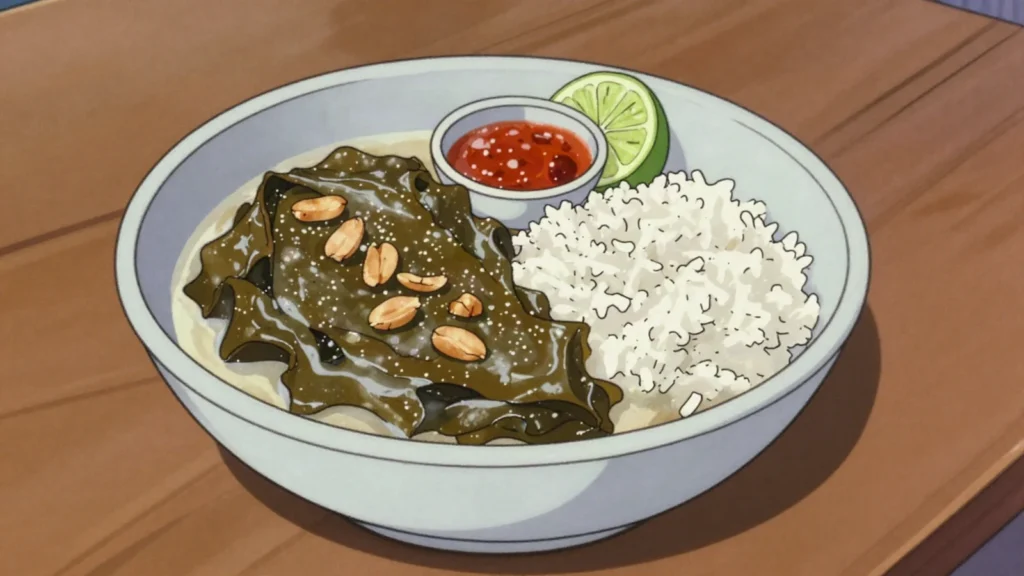
- Taste and adjust salt. Serve hot over rice or beside a mound of xima, with piri-piri sauce and lime on the table.
Technique
- Cassava leaves contain cyanogenic compounds. Thorough pounding, which ruptures the cells and lets the enzyme break them down, followed by at least 30–40 minutes of boiling, is what makes them safe. Never serve them lightly cooked and never use the cooking water from a short boil.
- Use young, tender leaves from the top of the plant. Old leaves stay stringy no matter how long you cook them.
- The order matters: peanuts first, thick coconut milk last. Coconut milk added early and boiled hard curdles and the sauce goes grainy.
- Matapa is the everyday dish of southern Mozambique, made in enormous pots for gatherings, and is normally eaten with xima and a fierce piri-piri on the side.
Substitutions
- No cassava leaves: frozen ones from an African or Brazilian grocer are the standard workaround and come already pounded. Failing that, use 600 g of a mix of sweet potato leaves and mature spinach, which changes the flavour but keeps the texture; these need only 15 minutes of cooking.
- Peanut butter can replace ground peanuts: use 150 g of unsweetened crunchy, whisked into a little of the hot liquid first.
- Tinned coconut milk works; use the thick cream from the top of the tin as the first pressing and the watery part as the second.
Variations
- Matapa de amendoim, made peanut-heavy and thick, the inland style.
- Matapa served folded into xima as a single dish rather than side by side.
- Cabbage or pumpkin-leaf matapa, cooked the same way when cassava leaves are out of season.
History
A stew of cassava leaves, pounded until smooth and simmered with ground peanut and coconut milk, often with shrimp or crab added, developed along Mozambique’s Indian Ocean coast, where coconut and seafood were both readily available and peanut, a South American crop, arrived through Portuguese colonial-era trade beginning in the 1500s and 1600s. Cassava itself is not native to Mozambique either, having arrived through the same Portuguese trade networks from South America, meaning matapa’s now-defining combination of ingredients, cassava leaf, peanut and coconut, reflects several centuries of overlapping colonial and trade contact rather than a single older Indigenous recipe. It remains one of the dishes most strongly associated with Mozambican national identity today, closely tied to the country’s Indian Ocean coastal cooking traditions.
Frequently asked questions
What is Matapa?
Matapa is a soup & stew from Mozambique: cassava leaves ground with peanuts, garlic and coconut milk. A stew of cassava leaves, pounded until smooth and simmered with ground peanut and coconut milk, often with shrimp or crab added, developed along Mozambique’s Indian Ocean coast, where coconut and seafood were both readily available and peanut, a South American crop, arrived through Portuguese colonial-era trade beginning in the 1500s and 1600s. Cassava itself is not native to Mozambique either, having arrived through the same Portuguese trade networks from South America, meaning matapa’s now-defining combination of ingredients, cassava leaf, peanut and coconut, reflects several centuries of overlapping colonial and trade contact rather than a single older Indigenous recipe. It remains one of the dishes most strongly associated with Mozambican national identity today, closely tied to the country’s Indian Ocean coastal cooking traditions.
How long does Matapa take to make?
Matapa takes 30 min of preparation and 1 hr of cooking. The recipe makes 4 servings. It is rated medium to make.
What can I substitute in Matapa?
Yes, within limits. No cassava leaves: frozen ones from an African or Brazilian grocer are the standard workaround and come already pounded. Failing that, use 600 g of a mix of sweet potato leaves and mature spinach, which changes the flavour but keeps the texture; these need only 15 minutes of cooking. Peanut butter can replace ground peanuts: use 150 g of unsweetened crunchy, whisked into a little of the hot liquid first. Tinned coconut milk works; use the thick cream from the top of the tin as the first pressing and the watery part as the second.
What is the most important thing to get right in Matapa?
Simmer uncovered for 40–45 minutes, stirring every 10 minutes and topping up with a little hot water if it catches. The leaves must cook this long; it is a safety requirement, not a texture preference.