
Ingredients
Chicken
- 1whole chicken, or 6 pieces on the bone
- 2 litreswater
Aromatics
- 1onion, halved
- 2 clovesgarlic
- 1carrot
- 2bay leaves
- a few sprigs mint
- 1strip lemon peel
- salt and black pepper
Body
- 150 gshort-grain rice
- or 150 g small pasta, in the Portuguese style
To finish
- juice of half a lemon
- chopped mint or coriander
- a little olive oil
To serve
- hot, in deep bowls, to anyone unwell
Directions
- Put the chicken in a pot with cold water rather than hot, and bring it slowly to a boil. Starting in cold water draws the flavour out of the bird and into the broth, which is exactly what is wanted here.
- Skim it while it is still a coherent raft on the surface, since once it disperses into the liquid the broth is permanently cloudy. Add the onion, garlic, carrot, bay and lemon peel once the surface is clean.
- Use a strip of peel with no white pith, since pith turns the broth bitter over an hour. Never let it boil hard, which emulsifies the fat into the liquid and turns a clear golden broth greasy and grey. Simmer it gently for about an hour until the chicken is completely tender. Discard the boiled vegetables, which have given everything they have.
- Skim the fat from the surface, leaving a faint shimmer rather than removing it entirely. Shred it finely rather than cutting it into chunks, since it should be light in the spoon rather than substantial.
- Use a short-grain rice, which softens and releases a little starch to give the soup body. Cook the rice in the broth for fifteen to twenty minutes until completely soft. Cook it well past the point of being al dente, since this is not a dish that wants firm grains.
- Use less than seems right, since it swells considerably and keeps absorbing after cooking. Canja should stay brothy and light, and too much rice turns it into a thick porridge by the following day. Return the shredded chicken and warm it through. Season it firmly, since a clear light broth shows every fault of underseasoning and there is nothing else carrying it.
- Squeeze in the lemon juice and scatter the chopped mint over just before serving. Serve it hot in deep bowls with a thread of olive oil over the top. It thickens on standing as the rice keeps absorbing, so loosen it with hot broth when reheating.
Technique
- It is the standard restorative soup across the Lusophone world.
- Small pasta is used in place of rice in much of Portugal.
- The name is thought to have reached Portuguese through Asian trade routes.
Substitutions
- Small pasta shapes in place of rice.
- A good chicken stock if you are not poaching a bird.
Variations
- Made with pasta rather than rice.
- With a beaten egg stirred through at the end.
- With coriander instead of mint.
Frequently asked questions
What is Canja de galinha?
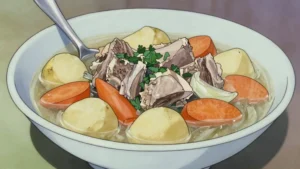
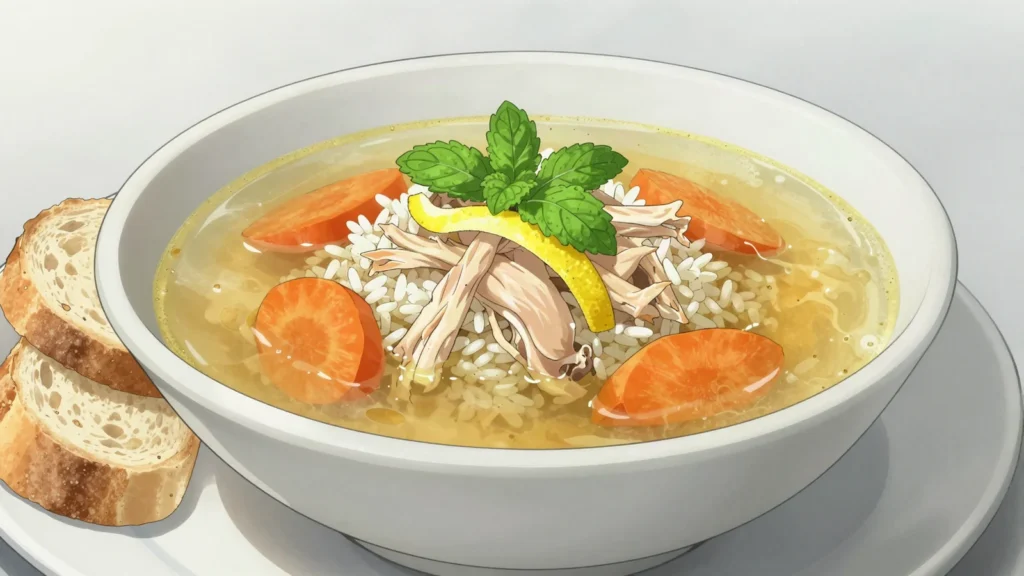
Canja de galinha is a soup & stew from Cape Verde: chicken simmered with rice and lemon into a light restorative soup.
How long does Canja de galinha take to make?
Canja de galinha takes 20 min of preparation and 1 hr 15 min of cooking. The recipe makes 6 servings. It is rated easy to make.
What can I substitute in Canja de galinha?
Yes, within limits. Small pasta shapes in place of rice. A good chicken stock if you are not poaching a bird.
What is the most important thing to get right in Canja de galinha?
Put the chicken in a pot with cold water rather than hot, and bring it slowly to a boil. Starting in cold water draws the flavour out of the bird and into the broth, which is exactly what is wanted here.