Not a nut but a legume that ripens underground — the groundnut of Africa and Asia, the peanut of the American South — roasted, boiled, ground into pastes and sauces, and the base of stews and satays across three continents.
Where it comes from
The peanut is South American, domesticated in the foothills of the Andes, and the Portuguese carried it from Brazil to West Africa in the sixteenth century, where it was so quickly adopted that it replaced the native Bambara groundnut and became a staple — the groundnut soup and stew of Ghana, Nigeria and Senegal are built on it. The Spanish took it to the Philippines and China, and it spread through Southeast Asia into the satay sauces of Indonesia and Malaysia and the kung pao of Sichuan. It came to North America with enslaved Africans, and the American South made it a crop and a butter.
Its uses divide by treatment. Raw peanuts are boiled in the shell in the American South and in China; roasted they are eaten as a snack and crushed over noodles and salads across Asia; ground to a paste they become peanut butter and the bases of West African stews and Indonesian sauces; pressed they give a neutral, high-heat frying oil. Peanut allergy is among the most severe of food allergies, and the ingredient should always be declared.
Varieties
- Runner — Small, uniform kernels; most American peanuts and most peanut butter.
- Virginia — Large kernels; the roasted-in-shell ‘ballpark’ peanut.
- Spanish — Small, round, red-skinned, high in oil; for candy, snacks and pressing.
- Valencia — Sweet, three or four to a pod; for boiling and natural peanut butter.
- Groundnut paste — The West African paste, unsweetened and often roasted dark; the base of maafe and groundnut soup.
- Peanut butter — Ground roasted peanuts; natural (peanuts and salt) or stabilised with oil and sugar.
In the kitchen
Roast raw peanuts in a dry pan or the oven until golden and fragrant, and their flavour deepens completely; rub off the papery skins if you like. Crushed, they finish pad thai, gado-gado, Vietnamese salads and Sichuan noodles. Ground to a paste — or straight from a jar of unsweetened peanut butter — they thicken and enrich: a satay sauce with coconut milk, chilli and lime; a West African maafe with tomato, onion and chilli around lamb or chicken.
Boiled peanuts — raw, in the shell, simmered in salted water for hours — are soft, briny and beany, a Southern and Chinese snack. Peanut oil is the frying oil of Chinese and Southern kitchens, clean and able to take high heat.
Choosing and keeping
Raw peanuts should be plump and free of mould — a mouldy peanut can carry aflatoxin, and any that smell musty or look shrivelled should be thrown away. Shelled raw or roasted peanuts keep a few months in a sealed jar and longer in the fridge or freezer; their oil goes rancid in warmth.
Natural peanut butter separates — stir it back and keep it in the fridge. For cooking, buy unsweetened; the sugared kind belongs on toast.
Dishes with peanut
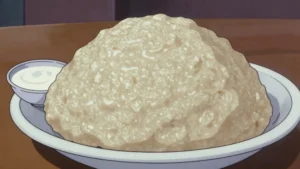 Sishwalathick maize and sorghum porridge eaten with meat or sour milk
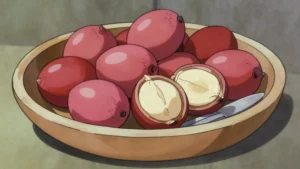 Kola nutBitter caffeine-rich seed chewed slowly and offered to guests on arrival
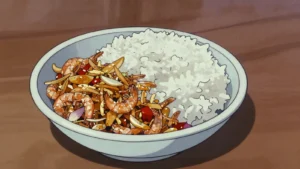 BalachaungCrispy fried dried-shrimp, garlic and chili relish for rice
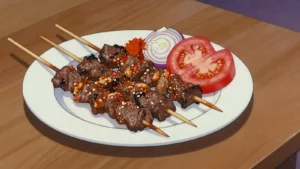 AgasheSkewered meat crusted in peanut-chili spice, grilled
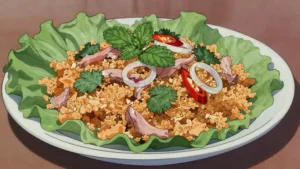 Naem KhaoCrispy fried rice-ball salad with sour pork and herbs
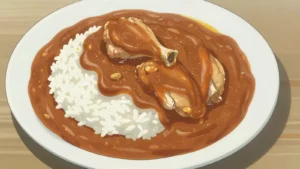 Sauce arachideCreamy peanut sauce with chicken or beef, served over rice
 Kizakacassava leaves pounded and cooked with peanuts
 ChoukouyaDry-grilled beef or mutton dusted with spicy kankankan peanut powder
Peanut is tagged on 341 dishes from 78 countries in the atlas. These notes are written from general knowledge and carry no per-fact citation — see About.