A South American root that feeds a large part of the tropics, and one that has to be processed correctly because the wrong kind, eaten raw, is poisonous.
Where it comes from
Cassava, Manihot esculenta, was domesticated in west-central Brazil and carried by Portuguese traders to Africa and Asia, where it took hold completely. It grows on poor soil, tolerates drought, and can be left in the ground for a year or more and dug when needed, which makes it a famine reserve as well as a staple.
The root contains cyanogenic compounds that release cyanide. Sweet cassava has little and needs only peeling and thorough cooking; bitter cassava has a great deal and must be grated, soaked, fermented, pressed and cooked. The techniques for that — the tipiti press, the long fermentations behind garri and fufu — are not folklore but the reason the crop is edible at all.
Varieties
- Sweet cassava — Low in cyanogens. Peeled, boiled or roasted and eaten as a root vegetable.
- Bitter cassava — High in cyanogens, higher yielding, and pest-resistant because of it. Always processed, never simply boiled.
- Garri — West African: grated, fermented, pressed and roasted to a dry granule. Keeps for months, reconstitutes in water.
- Fufu and related doughs — Fermented cassava pounded or stirred to a smooth, stretchy mass eaten with soup.
- Tapioca — Washed-out pure starch, dried to pearls or flour. Puddings, boba, and a thickener that sets clear.
- Farofa — Brazilian toasted cassava meal, scattered over a plate for texture.
In the kitchen
Cassava has no gluten and its starch sets clear and stretchy rather than opaque and short, which is why tapioca thickens a fruit filling without clouding it and why cassava doughs are springy in a way wheat doughs are not.
The fibrous core running down the middle of the root stays woody however long it is cooked and is pulled out before cooking.
Choosing and keeping
Peel it, and never eat it raw. Buy it firm with clean white flesh; grey or blue streaking means it has begun to spoil, which happens within days of lifting.
Frozen cassava is genuinely good and is often better than the tired fresh root sold a long way from where it grew.
Dishes with cassava
 Bubble TeaSweet milk tea shaken with chewy tapioca pearls, invented in Taiwan
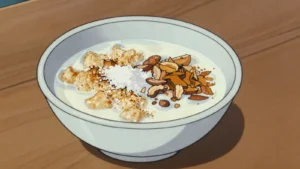 GarriToasted fermented cassava grains, soaked cold with sugar or stirred hot into eba
 Nam VanSweet coconut milk with banana, tapioca pearls or jackfruit, served warm or iced
 AttiékéTangy fermented cassava couscous served with grilled fish and pepper relish
 SombePounded cassava leaves cooked long with palm oil, groundnut and smoked fish
 TapiocaCassava-starch crepe folded over coconut, cheese or condensed milk
 CasabeCrisp flatbread of pressed bitter cassava, eaten with stews or oil
 FarineToasted cassava meal eaten with fish, milk or sugar
Cassava is tagged on 181 dishes from 69 countries in the atlas. These notes are written from general knowledge and carry no per-fact citation — see About.