
Ingredients
The steak
- 4thin beef steaks
- rump or sirloin, about 120 g each
- beaten flat
- salt and black pepper
The marinade
- 6garlic cloves, crushed
- 2bay leaves
- 1 tablespoonpiri-piri
- or to taste
- 3 tablespoonswhite wine
- or beer
- 2 tablespoonsolive oil
To cook and finish
- 2 tablespoonsbutter
- a little more garlic
- a splash of the marinade
- 1egg per roll, optional
To serve
- 4Portuguese rolls
- papo seco, or crusty rolls
- mustard
- piri-piri sauce
- chips alongside
Directions
- Beat it between two sheets of plastic. That stops it tearing and spreading mess. Butter, garlic and marinade go in. It has a crisp and thin crust. Beat all of the steaks out thin. Aim for about half a centimetre.
- Work each one of them out evenly. Crush the garlic to a paste with salt. Salt gives the blade something to work against. Use the flat of a large knife. Combining it is straightforward enough.
- Mix the garlic with the wine and oil. Add the piri-piri and bay leaves. Add black pepper to them as well. Rub the marinade over the steaks. Thirty minutes is enough here. Salt the steak just before cooking. Salt sitting on meat draws water out. That water then prevents browning.
- Season it right at the last moment. Heat a heavy pan until very hot. A properly hot pan sears immediately. Lift them from the marinade and pat them dry. Wet meat steams rather than searing. Keep the marinade for the sauce. Lay the steaks in the hot pan. Give them about a minute a side.
- Take it out early rather than late. Lift the steaks onto a warm plate. Let them rest for a few minutes. A few minutes is enough for thin steak. Add the butter to the hot pan. Add a little more crushed garlic. Pour in the reserved marinade. It must boil properly to be safe.
- Let it bubble for a full minute. Let it bubble and reduce slightly. Pour any juices from the plate in. Do not throw those juices away. Fry an egg per roll in the same pan. Cook it to your own preference. Cook it through for anyone vulnerable. Spread mustard inside if you like. Some cafes use it and some do not. Lay one steak inside each roll. Spoon the hot pan sauce over it.
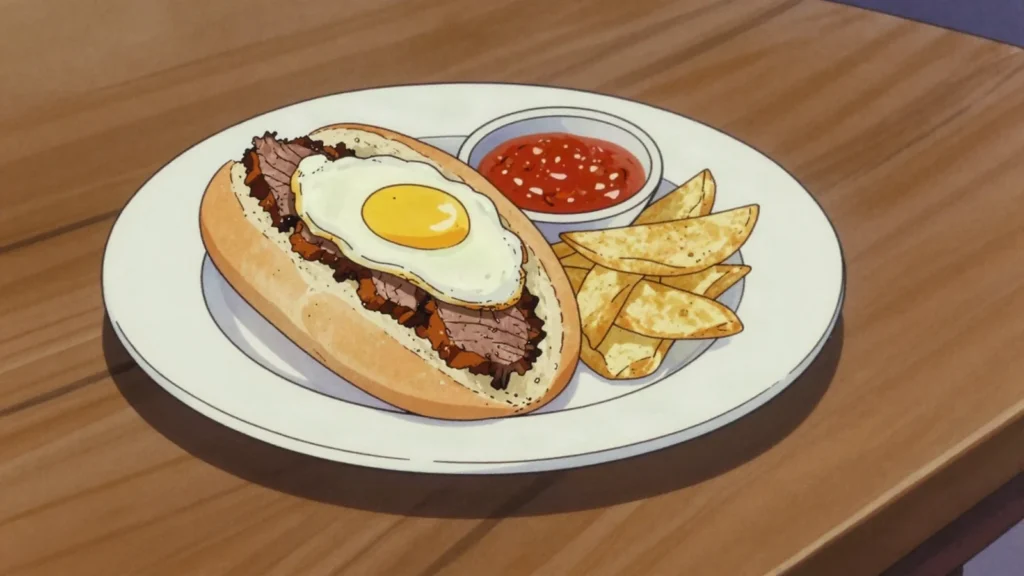
- Lay a fried egg on top of the steak. Add plenty of piri-piri to taste. Add as much as you can take of it. Serving it is always done immediately. Serve chips alongside if you like. It does not keep at all well after. Assemble every single roll fresh.
Technique
- Keep the marinade for the pan sauce but boil it for a full minute before it goes near the finished dish, since it has touched raw beef. That bubbling also picks up the browned residue from the pan, which carries real flavour.
- The steak is beaten to about half a centimetre so it cooks in two minutes and fits the roll — a thick steak makes an awkward sandwich. Get the pan genuinely hot and slightly smoking, since a cool pan lets thin meat stew, and take it out early rather than late because thin steak overcooks in seconds.
- Salt the steak just before it goes in the pan, since salt sitting on meat draws water out and that water then prevents browning. Pat it dry from the marinade for the same reason.
Substitutions
- Beer stands in for white wine in the marinade.
- A fried egg on top is a common Mozambican addition; a runny yolk is not fully cooked and carries a small salmonella risk, so cook it through for anyone vulnerable or use pasteurised eggs.
Variations
- Prego means nail and the name is variously explained, some saying it refers to nailing garlic into the meat; none of the explanations is well documented and the atlas records the name without settling it.
- Mozambique was a Portuguese colony until 1975 and the café culture arrived with that, but the country made the sandwich its own by loading it with locally grown piri-piri — the result is genuinely Mozambican.
- Garlic is used very generously, six cloves for four steaks, and is the defining flavour; crush it to a paste with salt using the flat of a knife, which spreads far better than chopped pieces.
History
A Portuguese steak roll kept by Mozambican cafés, where it is loaded with piri-piri and eaten standing at the counter.
Frequently asked questions
What is Prego no pão?
Prego no pão is a street food from Mozambique: garlicky steak sandwich in a Portuguese roll. A Portuguese steak roll kept by Mozambican cafés, where it is loaded with piri-piri and eaten standing at the counter.
How long does Prego no pão take to make?
Prego no pão takes 20 minutes plus marinating of preparation and 15 minutes of cooking. The recipe makes serves 4. It is rated easy to make.
What can I substitute in Prego no pão?
Yes, within limits. Beer stands in for white wine in the marinade. A fried egg on top is a common Mozambican addition; a runny yolk is not fully cooked and carries a small salmonella risk, so cook it through for anyone vulnerable or use pasteurised eggs.
What is the most important thing to get right in Prego no pão?
Season it right at the last moment. Heat a heavy pan until very hot. A properly hot pan sears immediately. Lift them from the marinade and pat them dry. Wet meat steams rather than searing. Keep the marinade for the sauce. Lay the steaks in the hot pan. Give them about a minute a side.