
Ingredients
The shiro
- 150 gshiro powder
- milled chickpea or broad bean flour
- already spiced with berbere
- or plain chickpea flour plus berbere
The base
- 2onions, very finely chopped
- 4garlic cloves, crushed
- 2cm ginger, grated
- 4 tablespoonsoil
- or niter kibbeh, if not fasting
- 1 tablespoonberbere
- if using plain flour
- 1tomato, chopped, optional
The liquid
- about 800 ml water
- hot, added gradually
- salt, to taste
To serve
- injera
- or rice
- a green chilli, split
- chopped tomato, optional
Directions
- Taste your own blend before deciding how much to use. Start with less and add more once you know it. Shiro should be smooth and silky rather than grainy. Whisk the flour into cold water to a smooth paste first. Then pour that paste into the hot onion base. Sprinkle the dry flour very slowly into the hot pot.
- Whisk constantly and hard the whole time you do it. Thick shiro bubbles heavily and spits as it cooks. Use a deep pan and keep the heat moderate throughout. Stir with a long spoon and stand back a little.
- Chop the onions as finely as you possibly can. Coarse pieces stay visible and spoil the smooth texture. Chop them very finely or grate them if you prefer. Take real time over that rather than rushing it. Cook the onion slowly in a heavy pan until soft. Understanding the dry start is worth explaining here. Cook the onion dry for about ten minutes on low heat.
- Stir it regularly so it softens without catching. It should be soft and translucent before oil goes in. Pour the oil into the pan with the softened onion. Cook it for a further ten minutes, stirring often. The onion turns golden and softens further still.
- Add the crushed garlic and the grated ginger now. Give them about one minute in the hot pan. Stir them constantly so they do not catch and burn. Adding the spice is the next step if you need it. Add the berbere if your flour is not already spiced. Fry the berbere briefly in the hot oil first. Heat releases the aromatic oils in the spice blend. Give it about thirty seconds while stirring hard.
- Add the chopped tomato and cook it down briefly. Cook it until it collapses into the onion entirely. Whisk the shiro powder into cold water in a bowl. Use about half the water for making the paste. Add the water gradually to the flour, not the reverse.
- Whisk it until it is entirely smooth and lump free. It should look like a thin pale batter at that point. Check the paste carefully for any remaining lumps. Break down anything you find against the bowl. Lumps at this stage never disappear in the pot.
- Pour the paste into the pan of cooked onion. Turn the heat down low before the paste goes in. Pour it in slowly while whisking the pan constantly. Keep whisking until it is entirely combined and smooth. Do not stop whisking until it comes together.
- Keep whisking hard right through that change. That is where lumps form if you stop stirring. Whisk in the remaining hot water a little at a time. Add it gradually rather than all at once. Whisk it smooth between each addition of water. That keeps the texture entirely even throughout. Simmer the stew gently for about fifteen minutes. Fifteen minutes is a reasonable minimum for that.
- Stir it regularly right through that whole simmering. Thick legume stew catches on the base very easily. Keep the heat low enough to control that bubbling. Use a long spoon and keep your hands clear of it. A lid held as a shield helps while you stir it.
- Make it slightly looser than you want it to end up. Add more hot water if it becomes too thick to pour. Simmer it longer if it stays too thin for you. Season the stew generously with salt near the end. It tastes flat and dull if it is under-seasoned. Taste it carefully and adjust it properly. Add the salt near the end rather than at the start.
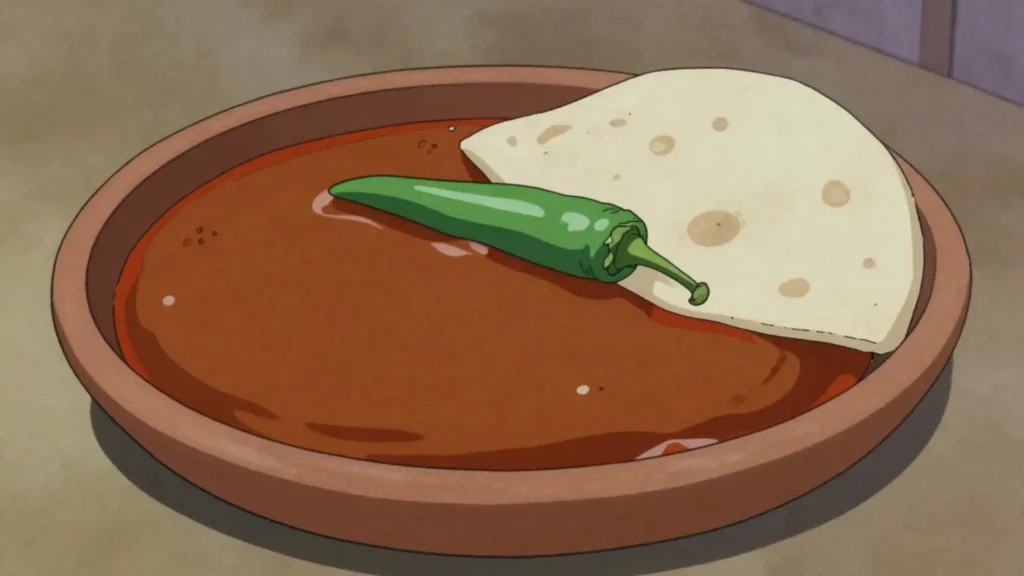
- Drop a split green chilli into the pot near the end. Some households do this and others do not. Lift it out before serving if you prefer. Spoon the shiro onto injera laid out on a platter. Scatter chopped tomato or green chilli over the top. It keeps three days refrigerated in a covered bowl.
Technique
- Lumps are the commonest fault and never break down once formed, because dry flour dropped into hot liquid gels on the outside while staying dry inside. Whisk the shiro powder into cold water to a smooth lump-free paste first, then pour that into the hot onion base while whisking constantly — it is the reliable route for a home cook.
- Thick shiro bubbles heavily and spits as it simmers, and those spits are hot enough to burn. Use a deep pan, keep the heat moderate, stir with a long spoon and stand back a little.
- Simmer it at least fifteen minutes after the flour goes in to cook out the raw taste, and stir regularly, scraping the base — thick legume stew catches easily and a burnt patch ruins the whole pot.
Substitutions
- Plain chickpea flour plus a tablespoon of berbere gets reasonably close to real shiro powder, but is not identical: shiro is legume flour already milled with berbere, garlic, ginger and other spices, and the atlas records that difference honestly. Ethiopian shops sell the real powder in most cities.
- Niter kibbeh, the spiced clarified butter, replaces the oil on non-fasting days; the atlas gives the fasting version with oil as the default. Broad bean or lentil flour replaces chickpea, and mitin shiro (mixed, heavily spiced) and nech shiro (pale, mild) are both standard variants.
Variations
- Berbere blends vary enormously in heat, from gently warm to genuinely fierce — taste your own before deciding how much to use, and start with less. If your flour is unspiced, fry the berbere in the hot oil about thirty seconds first, stirring hard so it does not burn, since burnt berbere turns acrid.
- Chop the onion as finely as you possibly can or grate it, since it must disappear entirely into the finished stew. Cook it dry over low heat for ten minutes first, then a further ten with the oil — that twenty minutes carries most of the depth and rushing it gives a thin harsh shiro.
- Shiro should pour thickly and be scoopable with injera rather than sitting as a solid mass, and it thickens further as it cools, so make it slightly looser than you want. Legume flour absorbs a surprising amount of salt, so season generously near the end.
History
A thick stew made from ground chickpea or broad bean flour, cooked with berbere spice blend, garlic and onion until it forms a smooth, hearty paste, documented across Ethiopia as one of the country’s most essential and widely eaten everyday dishes, particularly significant during Ethiopian Orthodox Christian fasting periods when meat is traditionally avoided, making the plant-based, protein-rich shiro wat especially important during those extended observances. Its reliance on berbere, a complex Ethiopian spice blend combining chili, garlic and numerous warming spices, reflects the deep centrality of that specific spice mixture across virtually all of Ethiopian cooking. Shiro wat remains one of the most commonly eaten dishes across Ethiopian households, valued as an affordable, satisfying staple.
Frequently asked questions
What is Shiro wat?
Shiro wat is a soup & stew from Ethiopia: silky spiced chickpea-flour stew, everyday and fasting favorite. A thick stew made from ground chickpea or broad bean flour, cooked with berbere spice blend, garlic and onion until it forms a smooth, hearty paste, documented across Ethiopia as one of the country’s most essential and widely eaten everyday dishes, particularly significant during Ethiopian Orthodox Christian fasting periods when meat is traditionally avoided, making the plant-based, protein-rich shiro wat especially important during those extended observances. Its reliance on berbere, a complex Ethiopian spice blend combining chili, garlic and numerous warming spices, reflects the deep centrality of that specific spice mixture across virtually all of Ethiopian cooking. Shiro wat remains one of the most commonly eaten dishes across Ethiopian households, valued as an affordable, satisfying staple.
How long does Shiro wat take to make?
Shiro wat takes 10 minutes of preparation and 30 minutes of cooking. The recipe makes serves 4. It is rated easy to make.
What can I substitute in Shiro wat?
Yes, within limits. Plain chickpea flour plus a tablespoon of berbere gets reasonably close to real shiro powder, but is not identical: shiro is legume flour already milled with berbere, garlic, ginger and other spices, and the atlas records that difference honestly. Ethiopian shops sell the real powder in most cities. Niter kibbeh, the spiced clarified butter, replaces the oil on non-fasting days; the atlas gives the fasting version with oil as the default. Broad bean or lentil flour replaces chickpea, and mitin shiro (mixed, heavily spiced) and nech shiro (pale, mild) are both standard variants.
What is the most important thing to get right in Shiro wat?
Taste your own blend before deciding how much to use. Start with less and add more once you know it. Shiro should be smooth and silky rather than grainy. Whisk the flour into cold water to a smooth paste first. Then pour that paste into the hot onion base. Sprinkle the dry flour very slowly into the hot pot.