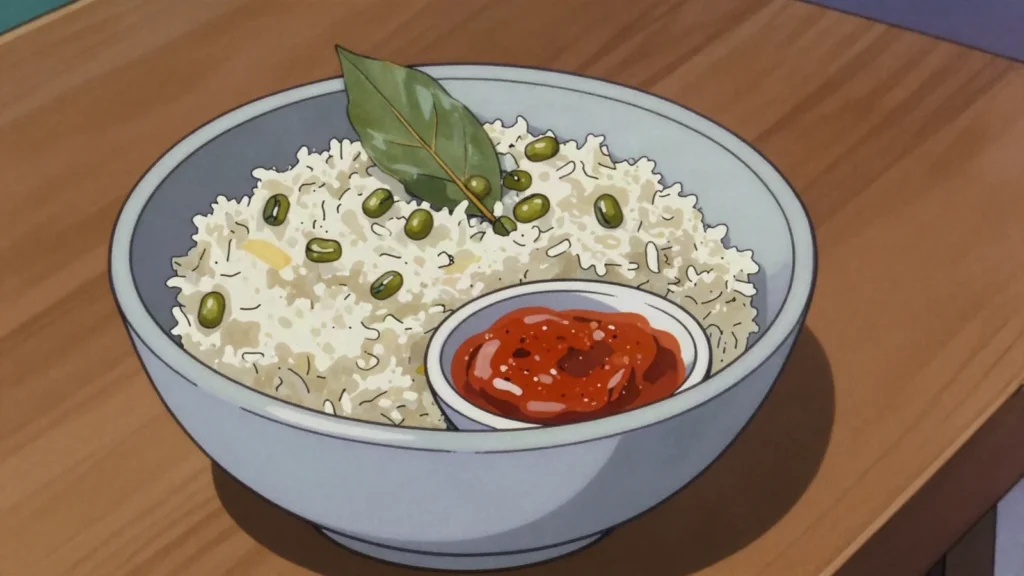

Ingredients
The grains
- 400 glong grain rice
- rinsed
- 200 gmung beans
- soaked for a few hours
The pot
- 400 mlthin coconut milk
- the second pressing
- 400 mlthick coconut milk
- the first pressing
- 1onion, finely chopped
- 3garlic cloves, crushed
- 1 teaspoonground turmeric
- about 500 ml water
- salt
Sometimes added
- 1cinnamon stick
- 4cardamom pods
- 1bay leaf
- 2 tablespoonsoil
To serve
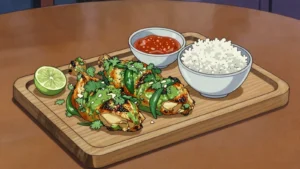
- with fish or chicken
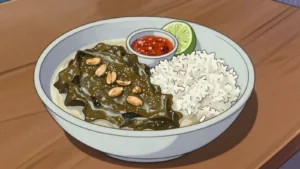
- with matapa
- cassava leaves in coconut
- with piri piri
Directions
- Rinse the mung beans thoroughly. Cover them well with cold water. Leave them for a good few hours. Draining them is straightforward enough. Drain all of the soaked beans. Discard all of the soaking water. Put the beans in a pot with fresh water. Bring them up to a gentle simmer. Let them cook for about twenty minutes. They should be nearly tender by then.
- Take them off slightly underdone. Fully soft beans collapse into the rice. Drain all the part-cooked beans. Set them aside for the rice pot. Heat the oil in a heavy deep pot. Add the very finely chopped onion. Cook it for about six minutes. Add the crushed garlic in to it.
- Cook it for two more full minutes. Add the ground turmeric to the pot. Add the whole spices if using them. Fry them for about thirty seconds. Add the rinsed rice to the pot. Turn it gently through the oil. That helps them stay distinct as they cook. Turn it gently so grains do not break. Give it two or three full minutes.
- Add the part-cooked mung beans. Stir them gently through the rice. Pour in the thin coconut milk. Add the water and season it with salt. There should be enough to cook the rice.
- Add hot water if it looks short. Cooking the rice takes about twenty minutes. Bring the pot up to a full boil. Let it cook for about eighteen minutes. The rice must steam rather than boil. Pour the thick coconut milk over the top. Cover it over again immediately. Let it warm through for five minutes. The thick milk must not boil at all.
- Take the pot off as soon as it is hot. Take it off the heat with the lid on. Let it stand for ten full minutes. The grains firm up as they settle. Bring the beans up through the grains. Lift and fold rather than stirring. Judging it takes a careful look.
- Taste it and adjust the salt as needed. It needs more salt than expected. Taste it properly right at the end. Take out the bay leaf as well. Serving it is always done hot. Spoon it out into a serving dish. Serve fish or chicken alongside. Serve matapa alongside it as well. Put piri piri out on the table. It keeps three days refrigerated. Steam it again gently to reheat.
Technique
- The atlas carries three close relatives: mucapata from Mozambique, mseto from Zanzibar and mumawash from Kuwait, all rice cooked with mung beans. They descend from khichdi, the old and widespread Indian rice and pulse dish, carried across the Indian Ocean by the Gujarat trade — the coastal African versions leaning on the coconut palm and the Gulf version on dried shrimp and spices.
- Mucapata is drier than mseto, with the grains staying separate rather than collapsing into a porridge, and served as a side rather than a bowl dish. Take the mung beans off slightly underdone before they go in with the rice, since fully soft beans collapse into it.
- The thin coconut milk cooks the rice and beans and the thick goes over at the very end to warm through under the lid, since thick coconut milk splits with long cooking. Keep the heat low, since coconut milk makes rice catch easily.
Substitutions
- Whole mung beans are used rather than split, since they hold their shape.
- Cinnamon, cardamom or a bay leaf go in in some households; fish them out before serving.
Variations
- Zambézia sits on the Indian Ocean coast where coconut palms grow in quantity and ships traded for a long time.
- Matapa, cassava leaves cooked in coconut with groundnut, is served with it as a matter of course.
- Fork it through gently at the end, lifting and folding, so the grains and beans stay whole.
History
Rice cooked with mung beans and coconut milk, a northern coastal dish shaped by Indian Ocean trade with Gujarat.
Frequently asked questions
What is Mucapata?
Mucapata is a salad & side from Mozambique: zambezia rice cooked with mung beans and coconut. Rice cooked with mung beans and coconut milk, a northern coastal dish shaped by Indian Ocean trade with Gujarat.
How long does Mucapata take to make?
Mucapata takes 15 minutes plus soaking of preparation and 45 minutes of cooking. The recipe makes serves 6. It is rated easy to make.
What can I substitute in Mucapata?
Yes, within limits. Whole mung beans are used rather than split, since they hold their shape. Cinnamon, cardamom or a bay leaf go in in some households; fish them out before serving.
What is the most important thing to get right in Mucapata?
Cook it for two more full minutes. Add the ground turmeric to the pot. Add the whole spices if using them. Fry them for about thirty seconds. Add the rinsed rice to the pot. Turn it gently through the oil. That helps them stay distinct as they cook. Turn it gently so grains do not break. Give it two or three full minutes.