
Ingredients
Noodles
- 500 gfresh egg noodles, or 300 g dried, cooked and cooled
Bumbu
- 6shallots
- 4 clovesgarlic
- 3candlenuts, or macadamias
- 2red chillies
- 1 tspterasi, shrimp paste, toasted
Stir fry
- 3 tbspoil
- 200 gchicken, sliced thin
- 100 gprawns, optional
- 2eggs
- 150 gcabbage, shredded
- 100 gmustard greens or choy sum
- 2spring onions
Sauce
- 4 tbspkecap manis
- 1 tbsplight soy sauce
- 1 tspground white pepper
- salt
To serve
- bawang goreng, fried shallots
- acar, pickled cucumber and carrot
- sambal
- prawn crackers
- a fried egg on top
Directions
- Cook the noodles until barely done, then rinse them cold, drain them hard and toss them in a spoonful of oil. Warm, freshly boiled noodles turn to paste in a hot wok. The oil stops them welding into a single block while you prepare everything else.
- Pound or blend the shallots, garlic, candlenuts, chillies and toasted terasi into a smooth bumbu paste. Candlenuts are the traditional thickener and they are mildly toxic raw, so they must be cooked, which frying the bumbu does.
- Toast the terasi wrapped in foil in a dry pan for a couple of minutes before using it. Have everything chopped and beside the stove before you start, because the cooking takes six minutes.
- Heat the wok until it smokes, then add the oil. Fry the bumbu over a medium heat for 3 to 4 minutes until it darkens and the oil separates out.
- Wait for the oil to split from the paste. Turn the heat to high, add the chicken and prawns and stir fry until just cooked. Add the cabbage and greens and toss for a minute. Add the noodles and the kecap manis and soy, and toss hard for 2 minutes.
- Lift and toss the noodles rather than stirring them, so they keep meeting the hot surface of the wok. The noodles should end up glossy and evenly dark brown, with no pale patches. Season with white pepper and salt and taste.
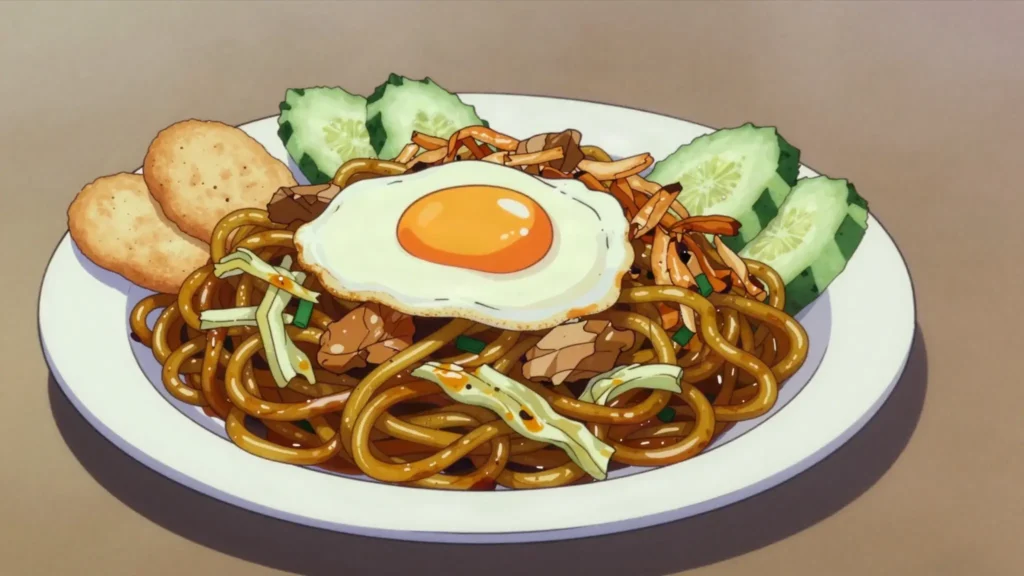
- Serve topped with fried shallots, a fried egg, prawn crackers and acar on the side. The fried egg with a runny yolk on top is standard and it is not a garnish, because the yolk becomes part of the sauce.
Technique
- Kecap manis is essential and there is no real substitute for its thick molasses sweetness.
- Cook in two batches rather than crowding the wok, which drops the heat and steams the noodles.
- Bakso, meatballs, and thin-sliced beef are both common additions.
Substitutions
- Dark soy sauce with palm sugar dissolved in it, in place of kecap manis.
- Macadamia nuts for candlenuts, which are closest in fat and texture.
Variations
- Mie goreng jawa, with a more savoury and less sweet balance.
- Vegetarian, with tofu and tempeh and no terasi.
- Mie goreng seafood, with squid and prawns.
History
Indonesian-style fried noodles, stir-fried with sweet soy sauce, egg, vegetables and often chicken or shrimp, documented across Indonesia with roots tracing to Chinese immigrant culinary influence, brought to the Indonesian archipelago through Chinese trading communities that settled across the region over many centuries. Its notably sweet flavour, achieved through the addition of kecap manis, a thick, sweet Indonesian soy sauce distinctly different from the saltier soy sauces used in Chinese cooking itself, reflects a specifically Indonesian adaptation of that originally Chinese noodle-cooking technique. Mie goreng remains one of the most commonly eaten everyday dishes across Indonesia, widely available from street food stalls and warungs throughout the country.
Frequently asked questions
What is Mie Goreng?
Mie Goreng is a main from Indonesia: wok-fried sweet-soy noodles with vegetables and egg. Indonesian-style fried noodles, stir-fried with sweet soy sauce, egg, vegetables and often chicken or shrimp, documented across Indonesia with roots tracing to Chinese immigrant culinary influence, brought to the Indonesian archipelago through Chinese trading communities that settled across the region over many centuries. Its notably sweet flavour, achieved through the addition of kecap manis, a thick, sweet Indonesian soy sauce distinctly different from the saltier soy sauces used in Chinese cooking itself, reflects a specifically Indonesian adaptation of that originally Chinese noodle-cooking technique. Mie goreng remains one of the most commonly eaten everyday dishes across Indonesia, widely available from street food stalls and warungs throughout the country.
How long does Mie Goreng take to make?
Mie Goreng takes 20 min of preparation and 10 min of cooking. The recipe makes 4 servings. It is rated easy to make.
What can I substitute in Mie Goreng?
Yes, within limits. Dark soy sauce with palm sugar dissolved in it, in place of kecap manis. Macadamia nuts for candlenuts, which are closest in fat and texture.
What is the most important thing to get right in Mie Goreng?
Pound or blend the shallots, garlic, candlenuts, chillies and toasted terasi into a smooth bumbu paste. Candlenuts are the traditional thickener and they are mildly toxic raw, so they must be cooked, which frying the bumbu does.