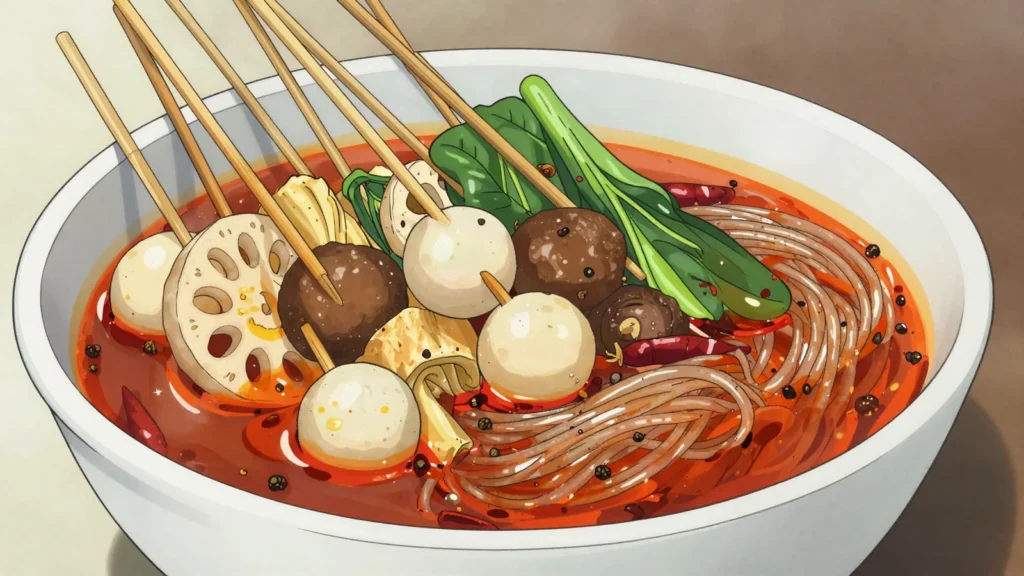

Ingredients
Broth base
- 100 gbeef tallow or oil
- 80 gdoubanjiang, Pixian chilli bean paste
- 30 gdried chillies, soaked
- 3 tbspSichuan peppercorns
- 6 clovesgarlic
- 30 gginger
- 2spring onions
- 1star anise
- 1 piececassia bark
- 2bay leaves
- 1 tspfennel seed
- 2black cardamom pods
Broth
- 2 litreschicken or bone stock
- 2 tbsplight soy sauce
- 1 tbspsugar
- salt
To cook, chosen at the counter
- sliced lotus root
- wood ear fungus
- enoki mushrooms
- leafy greens
- tofu skin and puffs
- vermicelli or wide sweet potato noodles
- quail eggs
- fish balls and luncheon meat
- thinly sliced beef or lamb
Sesame sauce, optional
- 3 tbspsesame paste
- 1 tbspsoy sauce
- 1 tbspblack vinegar
- 1 tspsugar
- chilli oil
- crushed peanuts
- coriander
Directions
- Soak the dried chillies in hot water 20 minutes, then drain and chop them. Toast the Sichuan peppercorns in a dry pan for a minute until fragrant, then set them aside.
- Melt the tallow over a low heat and fry the ginger, garlic and spring onion until fragrant.
- Add the doubanjiang and fry it slowly for 5 to 8 minutes until the fat turns deep red and separates. Add the soaked chillies and all the whole spices and fry a further 3 minutes.
- Pour in the stock, add the soy and sugar, and simmer 30 to 40 minutes. Add the toasted Sichuan peppercorns for the last 10 minutes only.
- Add them late. Boiled for an hour they turn bitter and lose the numbing quality, which is exactly the ma in malatang. Strain the broth if you want it clean, or leave the aromatics in.
- Start with what takes longest: lotus root, potato, quail eggs and dense root vegetables, 5 to 8 minutes. Then the noodles, tofu, fish balls and mushrooms, 3 to 4 minutes.
- Lift each batch out into the serving bowls as it is done, then ladle the hot broth over. Mix the sesame sauce ingredients loosely and offer it alongside, which is the northern habit. Serve at once, very hot, with coriander and crushed peanuts.
Technique
- Pixian doubanjiang is the specific paste and substitutes noticeably change the broth.
- The broth keeps a week in the fridge and improves; the base can be frozen in portions.
- Northern-style malatang leans on the sesame dipping sauce, while Sichuan versions drink the broth.
Substitutions
- Any Sichuan chilli bean paste, though Pixian is the standard.
- Vegetable oil in place of beef tallow, for a lighter and vegetarian-friendly broth.
Variations
- Vegetarian, with mushroom stock and no meat.
- Made mild, with the chillies reduced and the peppercorns kept.
- Ganguo, the dry-pot version with no broth at all.
History
A hot pot-style dish in which skewered or loose ingredients, including vegetables, meat and tofu, are cooked to order in a spicy, numbing broth built on chili and Sichuan peppercorn, with málà, the specific flavour combination of spicy heat and tingling numbness that gives the dish its name, considered a defining hallmark of Sichuan cuisine found across several other well-known Sichuan dishes. Developed originally as a street food along the Yangtze River in Sichuan and neighboring regions, particularly associated historically with boatmen and dockworkers who could select and cook individual ingredients quickly and cheaply, malatang spread into a much broader and now standardized fast-food format across China, with customers typically selecting their own ingredients from a self-serve display before having them cooked and priced by weight.
Frequently asked questions
What is Malatang?
Malatang is a street food from China: skewers and vegetables cooked to order in numbing chilli broth. A hot pot-style dish in which skewered or loose ingredients, including vegetables, meat and tofu, are cooked to order in a spicy, numbing broth built on chili and Sichuan peppercorn, with málà, the specific flavour combination of spicy heat and tingling numbness that gives the dish its name, considered a defining hallmark of Sichuan cuisine found across several other well-known Sichuan dishes. Developed originally as a street food along the Yangtze River in Sichuan and neighboring regions, particularly associated historically with boatmen and dockworkers who could select and cook individual ingredients quickly and cheaply, malatang spread into a much broader and now standardized fast-food format across China, with customers typically selecting their own ingredients from a self-serve display before having them cooked and priced by weight.
How long does Malatang take to make?
Malatang takes 30 min of preparation and 1 hr of cooking. The recipe makes 4 servings. It is rated medium to make.
What can I substitute in Malatang?
Yes, within limits. Any Sichuan chilli bean paste, though Pixian is the standard. Vegetable oil in place of beef tallow, for a lighter and vegetarian-friendly broth.
What is the most important thing to get right in Malatang?
Add the doubanjiang and fry it slowly for 5 to 8 minutes until the fat turns deep red and separates. Add the soaked chillies and all the whole spices and fry a further 3 minutes.