
Ingredients
Noodles
- 300 gdangmyeon sweet potato glass noodles
- 3 tbspsoy sauce
- 2 tbspsesame oil
- 1 tbspsugar
Vegetables
- 1onion, sliced
- 1carrot, julienned
- 150 gspinach
- 150 gshiitake mushrooms, sliced
- 1sweet pepper, sliced
- 4spring onions
Beef
- 200 gbeef sirloin, in thin strips
- 1 tbspsoy sauce
- 1 tspsugar
- 1 clovegarlic, crushed
- 1 tspsesame oil
To finish
- 2 tbsptoasted sesame seeds
- sesame oil
- salt
Directions
- Marinate the beef strips in the soy, sugar, garlic and sesame oil for 20 minutes.
- Fry the onion alone, the carrot alone, the mushrooms alone, the pepper alone, each with a pinch of salt and a little oil, and set each aside as it is done. Blanch the spinach for 30 seconds, refresh it in cold water, and squeeze it dry hard, then dress it with sesame oil and salt.
- Squeeze the spinach genuinely dry, in your fists, or its water ends up in the noodles.
- Fry the marinated beef last, quickly, over a high heat.
- Boil the noodles for 6 to 7 minutes until translucent and springy, then drain. Do not rinse them in cold water, and cut through them a few times with scissors.
- Combine everything in a large bowl and toss it with your hands rather than tongs. Hands are how it is done in Korea, and they distribute the dressing without shredding the vegetables.
- Taste and adjust with more soy, sesame oil or sugar.
Technique
- Dangmyeon are sweet potato starch noodles, chewy and translucent, and mung bean noodles are not the same thing.
- It is served at room temperature or barely warm, never piping hot.
- A meat-free version is completely standard and loses very little.
Substitutions
- Pork or chicken in place of beef.
- Any mushroom, though shiitake carries the most flavour.
Variations
- Vegetarian, with extra mushrooms.
- Japchae-bap, served over rice as a main.
- With gochujang stirred through, which is a modern variation.
History
Stir-fried glass noodles made from sweet potato starch, tossed with vegetables and often beef, first documented in the early 1600s at the royal court of King Gwanghaegun, where a nobleman is credited with presenting an early version of the dish to the king, who reportedly enjoyed it enough to promote its creator. Notably, that original version contained no noodles at all, since sweet potato itself had not yet reached Korea; the dish was originally built purely on vegetables, and dangmyeon, the glass noodles now considered essential to japchae, were only added after sweet potato was introduced to Korea in the late 1700s, transforming what began as a noodle-free vegetable dish into the noodle dish now widely eaten.
Frequently asked questions
What is Japchae?
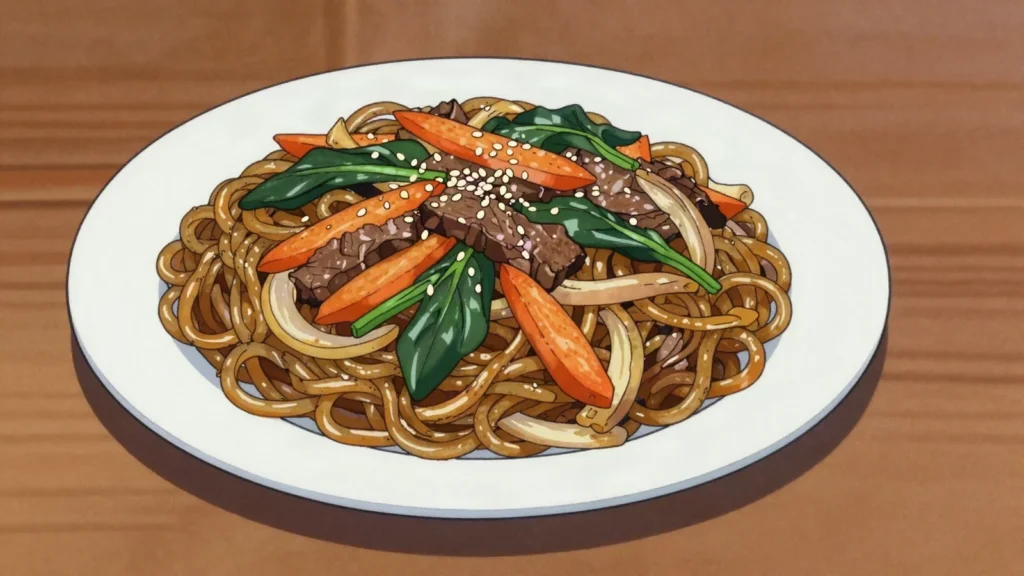
Japchae is a salad & side from South Korea: sweet-potato glass noodles stir-fried with vegetables, beef and sesame. Stir-fried glass noodles made from sweet potato starch, tossed with vegetables and often beef, first documented in the early 1600s at the royal court of King Gwanghaegun, where a nobleman is credited with presenting an early version of the dish to the king, who reportedly enjoyed it enough to promote its creator. Notably, that original version contained no noodles at all, since sweet potato itself had not yet reached Korea; the dish was originally built purely on vegetables, and dangmyeon, the glass noodles now considered essential to japchae, were only added after sweet potato was introduced to Korea in the late 1700s, transforming what began as a noodle-free vegetable dish into the noodle dish now widely eaten.
How long does Japchae take to make?
Japchae takes 40 min of preparation and 25 min of cooking. The recipe makes 6 servings. It is rated medium to make.
What can I substitute in Japchae?
Yes, within limits. Pork or chicken in place of beef. Any mushroom, though shiitake carries the most flavour.
What is the most important thing to get right in Japchae?
Boil the noodles for 6 to 7 minutes until translucent and springy, then drain. Do not rinse them in cold water, and cut through them a few times with scissors.