The one capsicum bred to have no heat at all — a fruit eaten as a vegetable, raw or cooked, whose colour tells you nothing but how ripe it was picked.
Where it comes from
Every pepper, sweet or hot, descends from wild capsicums of Central and South America, and the sweet bell is a very recent branch of that family, selected over the last two centuries for size, thick walls and a recessive gene that switches off capsaicin. It arrived in Europe with the Spanish and then travelled east through the Ottoman world, which is why it is so deeply embedded in Hungarian, Balkan, Turkish and Levantine cooking that those kitchens hardly think of it as American.
Green, yellow, orange and red bells are usually the same plant at different points of ripening. Green is unripe — grassy, a touch bitter, cheaper because it is picked sooner. As the fruit ripens it sweetens and the walls thicken, and a red bell has roughly twice the sugar of a green one from the same plant. Purple, brown and white bells exist as novelties and mostly turn green when cooked.
Varieties
- Green bell — The unripe fruit. Firm, grassy, slightly bitter; holds its shape in a stir-fry and is the classic pepper of a Cajun trinity or a pizza topping.
- Red bell — Fully ripe. Sweet, soft, and the one for roasting, where the skin blisters off and the flesh turns silky.
- Yellow and orange bell — Ripe varieties selected for colour. Milder and fruitier than red, without the depth; mostly used raw or for colour.
- Romano / horn pepper — Long, tapered, thin-walled and sweeter than a bell. Roasts and grills faster and is the pepper of choice for stuffing whole in Turkey and the Balkans.
- Pimiento — Small, heart-shaped, very sweet and thick-fleshed. Traditionally the red stuffing in a green olive, and the Spanish pepper behind pimentón.
- Padrón and Shishito — Small frying peppers eaten whole with salt. Mostly mild, but every so often one in the pan carries real heat — which is the point.
In the kitchen
Roast whole over a flame or under a fierce grill until the skin is black and blistered all over, then steam them in a covered bowl for ten minutes; the skin slips off and the flesh underneath is sweet and smoky. That one technique is the basis of ajvar, escalivada, muhammara and a hundred salads.
Raw, the white ribs and the seeds are where the bitterness lives; take them out. Cooked, a bell pepper releases a lot of water — in a stew or sauce add it early so that water cooks away, or sear it hard first.
Choosing and keeping
Choose peppers that are heavy for their size with taut, glossy skin and a green, fresh-cut stem. Soft spots and wrinkling near the stem mean age. They keep a week or more in the fridge unwashed.
Roasted and skinned peppers keep for a week in the fridge under a film of olive oil, and freeze well; raw peppers freeze badly, turning limp when thawed.
Dishes with bell pepper
 MachucaGarifuna mashed plantains with coconut fish soup
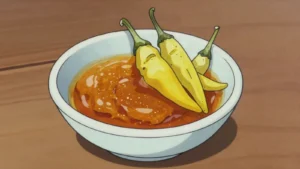 Moruga scorpion pepper sauceBlistering yellow sauce from one of the world's hottest chillies
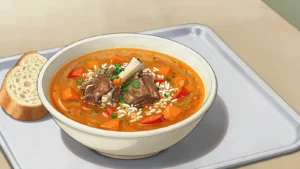 Kurban chorbaLamb or mutton soup cooked in a cauldron and shared at village feasts.
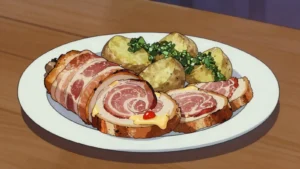 PamplonaGrilled chicken or pork roll stuffed with cheese, peppers, bacon
 Arroz chaufaPeruvian-Chinese fried rice with soy, spring onions and chicken
 Baked macaroni and cheeseFirm sliceable baked mac with cheddar and pepper
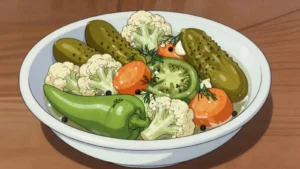 TourshiVegetables brined with garlic and dill, served beside grilled meat and vodka.
 Iskender kebabdöner slices over pide with tomato sauce, melted butter and yoghurt
Bell pepper is tagged on 321 dishes from 113 countries in the atlas. These notes are written from general knowledge and carry no per-fact citation — see About.