
Ingredients
Fermented tea (laphet)
- 500 gyoung green tea leaves, top two leaves and a bud
- 1 tspsalt
- 1 tbsplime juice
Dressing paste
- 150 gprepared laphet (fermented tea leaves), rinsed and squeezed
- 3 tbsppeanut oil or sesame oil
- 1 tbsplime juice
- ½ tspsalt
- 2green chillies, finely sliced
Crunch
- 80 gyellow split peas, soaked 4 hr and deep-fried until hard and golden
- 80 groasted peanuts, skins rubbed off
- 40 gwhite sesame seeds, toasted
- 60 gdried broad beans, fried
- 60 ggarlic, thinly sliced and fried crisp in oil, oil reserved
Fresh
- 2tomatoes, deseeded and cut into thin wedges
- 150 gwhite cabbage, very finely shredded
- 1lime, in wedges
- 2 tbspfried garlic oil, from above
Directions
- To make laphet, steam the picked green tea leaves for 5 minutes until they go limp and dark, then roll and bruise them by hand for 10 minutes to break the cells.
- Pack the bruised leaves tightly into a clean jar or a bamboo tube with the salt and lime juice, forcing out every air pocket, weight them under a plate so no leaf sits above the liquid, and seal. Ferment in a cool dark place at 15–22°C (60–70°F) for 3 months, checking monthly and keeping the leaves submerged.
- When you come to use it, rinse the fermented leaves in cool water, taste, and if it is very sharp soak it 10 minutes and squeeze it dry in your hands. It should be sour, faintly bitter, tannic and savoury.
- Chop the laphet coarsely and pound or stir it with the oil, lime juice, salt and green chilli into a loose, dark, glistening paste. Let it sit 10 minutes.
- Fry the drained split peas in oil at 170°C (350°F) for 4–5 minutes until they stop bubbling and turn hard and golden, then drain on a rack. They must be genuinely crunchy, not chewy.
- Fry the sliced garlic in cool oil brought slowly up to 140°C (275°F), stirring, for 4–5 minutes until pale gold, and lift it out just before it colours fully; it keeps darkening off the heat. Save the oil.
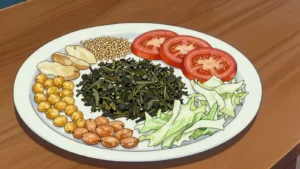
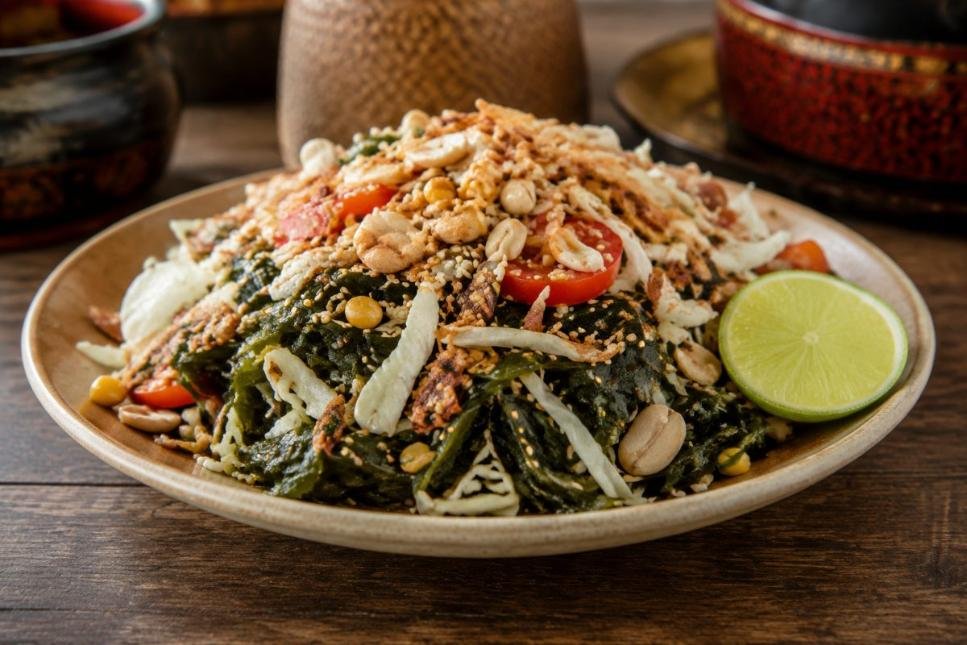
- On a wide plate, lay out the components in separate mounds around the tea paste in the centre: split peas, peanuts, sesame, broad beans, fried garlic, tomato and cabbage. This is how it arrives at the table.
- At the table, pour over the reserved garlic oil and squeeze in the lime, then mix everything together with your fingers or two spoons for a good 30 seconds, so every mouthful gets tea, crunch and fresh.
- Taste and adjust with more lime, salt or chilli. Eat immediately, while the fried elements are still loud.
Technique
- Laphet is one of very few fermented tea preparations eaten as food rather than drunk, and Myanmar treats it as both a national dish and a formal offering: it is served at weddings, at funerals, and historically as a peace token between kingdoms.
- The crunch is the structure. If the split peas and beans have gone soft, refry them; a laphet thoke without loud texture is just a bowl of sour leaves.
- Keep the leaves under the brine during the ferment and use a clean weight. Any leaf exposed to air will mould, and the batch has to be discarded.
- Mix only at the table, right before eating. Mixed early, the moisture from the tomato and tea paste kills the fried elements within minutes.
Substitutions
- Making laphet at home needs fresh tea leaves you will not find in most countries. Buy ready-fermented laphet from a Burmese or Southeast Asian grocer, in a tub in the chiller; that is what most kitchens in Yangon do too.
- An honest approximation with no fermented tea: steep 40 g good green tea leaves in hot water 5 minutes, drain, then blitz with 2 tbsp lime juice, 1 tbsp oil and ½ tsp salt and leave 24 hours in the fridge. It is not laphet and it will taste younger and greener, but it works.
- No fried broad beans: double the split peas, or use plain salted roasted chickpeas.
Variations
- Ah-thoke laphet, the mixed salad above, the everyday form.
- Mandalay laphet, a drier, more bitter style served with a separate tray of accompaniments to compose yourself.
- Laphet eaten plain with green tea after a meal, the ceremonial form.
History
Fermented tea leaves with fried beans, garlic and sesame; laphet was historically presented between rival kingdoms and used to seal legal disputes.
Frequently asked questions
What is Laphet Thoke?
Laphet Thoke is a salad & side from Myanmar: fermented tea leaves tossed with crunchy beans, nuts, garlic and tomato. Fermented tea leaves with fried beans, garlic and sesame; laphet was historically presented between rival kingdoms and used to seal legal disputes.
How long does Laphet Thoke take to make?
Laphet Thoke takes 25 min of preparation and 3 months for the ferment (or use ready laphet) of cooking. The recipe makes 4 servings. It is rated medium to make.
What can I substitute in Laphet Thoke?
Yes, within limits. Making laphet at home needs fresh tea leaves you will not find in most countries. Buy ready-fermented laphet from a Burmese or Southeast Asian grocer, in a tub in the chiller; that is what most kitchens in Yangon do too. An honest approximation with no fermented tea: steep 40 g good green tea leaves in hot water 5 minutes, drain, then blitz with 2 tbsp lime juice, 1 tbsp oil and ½ tsp salt and leave 24 hours in the fridge. It is not laphet and it will taste younger and greener, but it works. No fried broad beans: double the split peas, or use plain salted roasted chickpeas.
What is the most important thing to get right in Laphet Thoke?
Fry the drained split peas in oil at 170°C (350°F) for 4–5 minutes until they stop bubbling and turn hard and golden, then drain on a rack. They must be genuinely crunchy, not chewy.