The tender, mineral, faintly sour leaf that cooks down to a fraction of its raw bulk — Persian by origin, and a green so widely adopted that it is native to nobody’s cooking and central to everybody’s.
Where it comes from
Spinach was domesticated in Persia and spread east to China by the seventh century and west with the Arabs to Sicily and Spain by the tenth; the Arabs called it the prince of vegetables. It was in France and England by the fourteenth century and became the standard cooked green of European cooking — hence Florentine for anything on a bed of spinach — while in India, the Middle East and East Asia it sits beside the region’s own greens as an everyday vegetable.
Its distinctive taste is oxalic acid, which is also what makes it feel slightly rough on the teeth and why it pairs so naturally with dairy, whose calcium binds the acid — spinach with cream, with paneer, with ricotta, with yoghurt. A kilo of raw leaves wilts to a small bowl, and most of what is lost is water; that water is why spinach must be squeezed dry before it goes into a filling or a pastry.
Varieties
- Baby spinach — Small, tender, flat leaves sold ready-washed. Mild; for salads and quick wilting.
- Flat-leaf (smooth) spinach — Larger, spade-shaped, tender leaves. The best for cooking; wilts quickly, washes easily.
- Savoy (curly) spinach — Crinkled, dark, thicker leaves with more flavour and more grit to wash out. Stands up to longer cooking.
- Palak (Indian spinach) — Often a broad-leaved variety with tender stems used whole; the spinach of palak paneer and saag.
- Water spinach, Malabar spinach, New Zealand spinach — Unrelated plants eaten the same way in Asia and Africa; hollow-stemmed water spinach is stir-fried across Southeast Asia.
In the kitchen
Wilt it in a dry, hot pan with nothing but its own moisture, turning, until it just collapses — a minute or two — then drain and squeeze. Boiling it loses flavour and colour to the water. For a filling or a pie, squeeze it hard in a cloth: wet spinach makes soggy pastry. Baby leaves can go into a dish raw at the end and wilt in the residual heat.
It welcomes garlic, butter, nutmeg, cream, lemon, feta, ricotta and paneer; olive oil and pine nuts in Catalonia; yoghurt and garlic in Iran and Turkey. Frozen spinach, thawed and squeezed, is honestly as good as fresh for anything that will be cooked into a filling or a sauce.
Choosing and keeping
Leaves should be crisp, dark and dry, with no yellowing or slime. Loose spinach keeps two or three days in the fridge in a bag with a paper towel; bagged baby leaves go off fast once opened. Wash it in several changes of water — grit hides in the crinkles.
Frozen spinach is a good product, sold in blocks or pellets; it thaws in a sieve. Cooked spinach reheated the next day is fine but loses colour.
Dishes with spinach
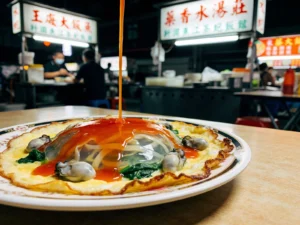 Oyster OmeletteNight-market egg and sweet-potato-starch omelette with plump oysters and sweet chili sauce
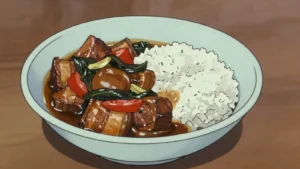 Henakisoa sy amalonaPork belly stewed with freshwater eel and greens over rice
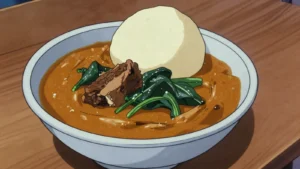 Miyan gyadaGroundnut soup with meat and greens, ladled over tuwo
 Qutabthin half-moon flatbread filled with greens, meat or pumpkin, griddled
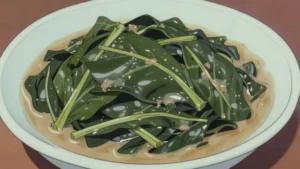 Umbhidvo wetintsangayoung pumpkin leaves cooked with groundnuts
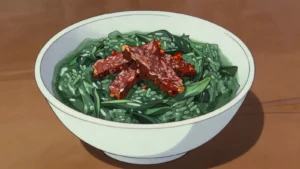 Vary amin’ananasoupy rice cooked with greens, often topped with kitoza
 Morohowild or garden greens braised with onion
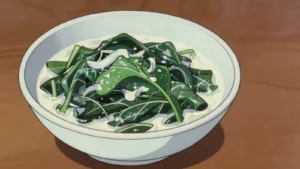 Island CabbageBroad tender hibiscus-family leaves boiled in coconut milk.
Spinach is tagged on 126 dishes from 82 countries in the atlas. These notes are written from general knowledge and carry no per-fact citation — see About.