
Ingredients
Rice
- 400 gshort-grain rice, cooked
- 1 tbspsesame oil
- 1 tspsalt
- 1 tbsptoasted sesame seeds
Fillings
- 4 sheetsgim, dried seaweed
- 1carrot, in fine strips
- 150 gspinach, blanched
- 4strips danmuji, yellow pickled radish
- 2eggs, made into a thin omelette and sliced
- 150 gbeef or ham, in strips
- 4strips imitation crab, optional
- burdock root, seasoned, optional
Seasoning
- soy sauce
- sesame oil
- sugar
- salt
To finish
- sesame oil to brush
- toasted sesame seeds
To serve
- at a picnic, on a hike, or from a lunchbox
Equipment
- a bamboo rolling mat
Directions
- Cook short-grain rice slightly firmer than usual, using a little less water. Soft wet rice makes a roll that collapses when sliced, and firmer grains hold the shape. Season it while it is still warm with sesame oil, salt and sesame seeds. Season it warm rather than hot or cold, since warm rice absorbs the seasoning and cold rice will not take it up.
- Fold it through with a cutting motion using a rice paddle rather than stirring. Stirring crushes the grains into paste, and folding keeps them distinct. Let it cool to just above room temperature before rolling. Blanch the spinach briefly, squeeze it completely dry and dress it with sesame oil, garlic and salt.
- Squeeze the spinach as hard as you can, since any water left in it will soak the seaweed and split the roll. Stir-fry the carrot strips briefly with a pinch of salt until just softened. Make a thin flat omelette, let it cool, and cut it into long strips. Season the beef or ham with soy, sugar and sesame oil and cook it through. It is sold in long strips ready for this purpose in Korean shops.
- Warm or wet fillings steam inside the roll and turn the seaweed soggy within minutes. Now the rolling, which takes practice. Lay a sheet of gim shiny side down on the bamboo mat. Spread rice over about two thirds of the sheet, leaving the far third bare.
- Spread it thinly, since a thick layer of rice makes a fat roll that will not close and it overwhelms the fillings. Wet your fingers to stop the rice sticking to them. Lay the fillings in a neat line across the rice, about a third of the way up. Keep the fillings in a tight line rather than scattered, since a loose arrangement gives a roll with gaps that falls apart when cut.
- Pull the mat forward over the fillings and press firmly to compact the roll before continuing. That first firm press is what makes a tight roll, and rolling loosely is the main reason kimbap falls apart. Keep rolling, pressing gently through the mat as you go, and seal the bare edge with a few grains of wet rice. Now let the finished rolls rest seam side down for a few minutes.
- Use a very sharp knife and wipe the blade clean between every cut. Cut with a single drawing motion rather than sawing or pressing down. Cut into rounds about two centimetres thick. Serve at room temperature rather than chilled, since refrigeration makes the rice hard and dry. Eat it the day it is made, since it does not keep well overnight.
Technique
- The rice is seasoned with sesame oil and salt, not vinegar.
- Its origins are genuinely disputed rather than settled.
- Danmuji, the yellow pickled radish, is essential to the flavour.
Substitutions
- Ham or tinned tuna in place of beef.
- Any crisp pickle if danmuji cannot be found, though it is not the same.
Variations
- Chungmu kimbap, plain rice rolls served with squid and radish kimchi.
- Samgak kimbap, the triangular convenience store version.
- Made with tuna and mayonnaise, which is very popular.
History
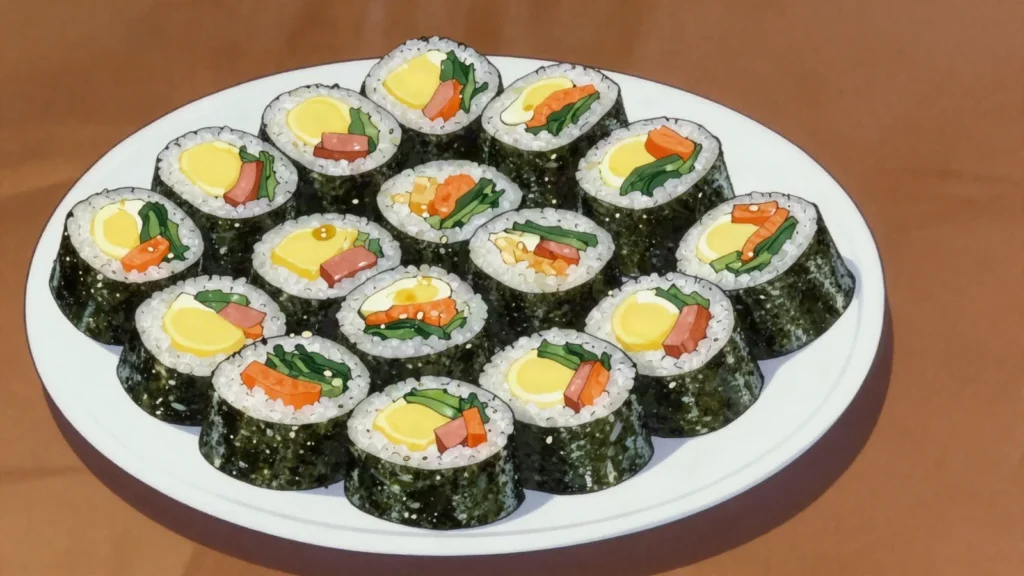
Rice and various fillings, including vegetables, egg and meat, rolled in dried seaweed sheets and sliced into rounds, closely related in basic format to Japanese sushi rolls though developed as its own distinct Korean dish, seasoned with sesame oil rather than vinegar in the rice, a difference in flavour and technique that clearly distinguishes kimbap from its superficially similar Japanese counterpart. Its exact historical relationship to Japanese sushi, whether it developed through direct Japanese influence during Japan’s colonial occupation of Korea from 1910 to 1945 or represents an independent parallel Korean tradition, is genuinely debated among food historians. Kimbap became an especially popular portable food for picnics, school lunches and travel across South Korea through the 1900s, valued for how well it holds together and travels compared to a bowl of plain rice.
Frequently asked questions
What is Kimbap?
Kimbap is a snack from South Korea: seaweed rice rolls with pickled radish, egg and vegetables, picnic staple. Rice and various fillings, including vegetables, egg and meat, rolled in dried seaweed sheets and sliced into rounds, closely related in basic format to Japanese sushi rolls though developed as its own distinct Korean dish, seasoned with sesame oil rather than vinegar in the rice, a difference in flavour and technique that clearly distinguishes kimbap from its superficially similar Japanese counterpart. Its exact historical relationship to Japanese sushi, whether it developed through direct Japanese influence during Japan’s colonial occupation of Korea from 1910 to 1945 or represents an independent parallel Korean tradition, is genuinely debated among food historians. Kimbap became an especially popular portable food for picnics, school lunches and travel across South Korea through the 1900s, valued for how well it holds together and travels compared to a bowl of plain rice.
How long does Kimbap take to make?
Kimbap takes 45 min of preparation and 20 min of cooking. The recipe makes 4 rolls. It is rated medium to make.
What can I substitute in Kimbap?
Yes, within limits. Ham or tinned tuna in place of beef. Any crisp pickle if danmuji cannot be found, though it is not the same.
What is the most important thing to get right in Kimbap?
Cook short-grain rice slightly firmer than usual, using a little less water. Soft wet rice makes a roll that collapses when sliced, and firmer grains hold the shape. Season it while it is still warm with sesame oil, salt and sesame seeds. Season it warm rather than hot or cold, since warm rice absorbs the seasoning and cold rice will not take it up.