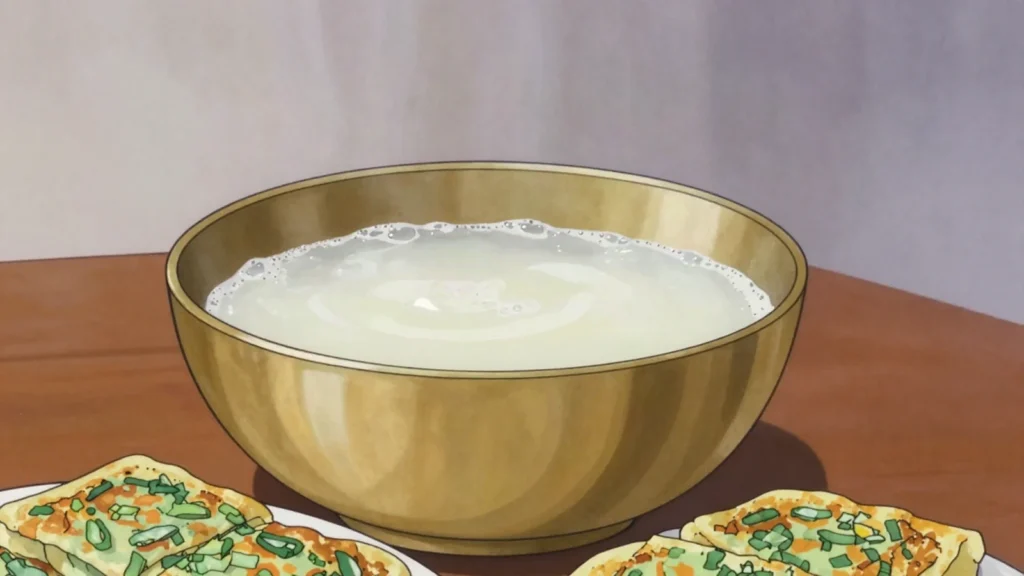

A milky, lightly fizzy rice wine, traditionally paired with pancakes on rainy days. It is Korea’s oldest brew and the farmers’ drink; rice-brewing bans between 1965 and 1977 forced wheat substitutes and dented its reputation for decades.
Producing alcohol at home is licensed or restricted in most of the atlas’s readership, and the ferment depends on a nuruk starter carrying a specific set of moulds and yeasts.
What goes into it
- rice
- nuruk — a Korean starter cake of moulds, yeasts and bacteria
- water
How it is made
Steamed rice is mixed with crushed nuruk and water and left to ferment for a week or two, during which the mould converts starch to sugar and the yeasts ferment it — both at once, in the same vessel. The mash is then coarsely strained, leaving the cloudy sediment that makes it milky, and it is bottled unpasteurised and still active.
How long it takes: one to two weeks of fermentation
How it is eaten
Shaken to mix the sediment, poured into a bowl, with pajeon on a rainy day.
History
Korea’s oldest brew and the farmers’ drink; rice-brewing bans between 1965 and 1977 forced wheat substitutes and dented its reputation for decades.
Frequently asked questions
What is Makgeolli?
Makgeolli is a wine & spirit from South Korea: milky lightly fizzy rice wine, traditionally paired with pancakes on rainy days. Korea’s oldest brew and the farmers’ drink; rice-brewing bans between 1965 and 1977 forced wheat substitutes and dented its reputation for decades.
How is Makgeolli made?
Steamed rice is mixed with crushed nuruk and water and left to ferment for a week or two, during which the mould converts starch to sugar and the yeasts ferment it — both at once, in the same vessel. The mash is then coarsely strained, leaving the cloudy sediment that makes it milky, and it is bottled unpasteurised and still active. It takes one to two weeks of fermentation.
Can I make Makgeolli at home?
No, and the atlas gives no method for it. Producing alcohol at home is licensed or restricted in most of the atlas’s readership, and the ferment depends on a nuruk starter carrying a specific set of moulds and yeasts.
What goes into Makgeolli?
Rice, nuruk — a Korean starter cake of moulds, yeasts and bacteria, water.
How is Makgeolli eaten?
Shaken to mix the sediment, poured into a bowl, with pajeon on a rainy day.