Ingredients
Greens
- 800 gwild amaranth leaves
- or 800 g spinach or chard
- water, for washing
The pot
- 2onions, chopped
- 3garlic cloves, crushed
- 1tomato, chopped, optional
- 2 tablespoonsoil
- or 2 tablespoons peanut oil
- 150 ggroundnut flour
- or 4 tablespoons groundnut paste
- about 200 ml water
- salt and black pepper
To serve
- sishwala, thick maize porridge
- or pap
- chilli, optional
Directions
- Discard any nuts that are shrivelled or discoloured. Discard any that smell musty or taste bitter. Sishwala is the Swazi thick maize porridge. Pick the leaves from their stems. Discard any thick or woody stalks. Wash them in several changes of cold water. Lift them out rather than pouring the water off. Stack the washed leaves together.
- Roll them up and slice them across. Chop the leaves fairly roughly. Bring a pot of salted water to a boil. Add the greens for about three minutes.
- Drain them and discard that water. Heat the oil in a wide heavy pan. Add the chopped onions to the pan. Cook them for a good eight minutes. Add the crushed garlic to them. Cook it for a good two minutes.
- Add the chopped tomato if using it. Cook it down for about five minutes. Add the chopped greens to the pan. They collapse down within a few minutes. Add a splash of water if the pan is dry. Season them with salt and black pepper. Cooking them takes a little while.
- Cover the pan and lower the heat. Let them cook for about fifteen minutes. Stir them through just once or twice. It takes longer to soften completely. Take a ladle of liquid from the pan.
- Mix it into the flour until smooth. Adding it dry gives lumps that never disperse. Let it cook for another ten minutes. Stir it regularly so it does not catch. The greens should be completely tender.
- Add water if it goes too thick. Taste it and adjust the salt now. It needs more than you might expect. Add chilli to it if you want heat. Serving it is done hot as a relish. Spoon it beside a mound of sishwala. Pinch off porridge and scoop with it. It keeps two days refrigerated.
Technique
- Imbuya is amaranth, which grows wild as a weed among cultivated crops and appears in quantity after the rains, so it is weeded out and eaten at the same time and is genuinely free food arriving exactly when the rains do.
- Groundnut flour stirred through the greens thickens and enriches them and adds protein to a vegetable dish, which is what turns a plain green into a proper relish.
- Groundnuts can carry aflatoxin, a mould toxin linked to liver damage and liver cancer that roasting does not destroy, so discard any that are shrivelled, discoloured, musty or bitter.
Substitutions
- Spinach or chard stand in for wild amaranth, though they cook faster and are milder.
- Groundnut paste can replace groundnut flour, loosened with warm liquid first.
Variations
- Some cooks blanch the greens first and discard that water.
- A version with tomato in the pot is common.
- Similar groundnut-thickened greens are cooked right across southern Africa.
History
Picked from Swazi fields as a free green after the rains, and eaten as relish with sishwala.
Frequently asked questions
What is Imbuya?
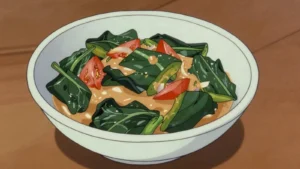
Imbuya is a salad & side from Eswatini: wild amaranth leaves boiled and cooked with onion and groundnut. Picked from Swazi fields as a free green after the rains, and eaten as relish with sishwala.
How long does Imbuya take to make?
Imbuya takes 25 minutes of preparation and 35 minutes of cooking. The recipe makes serves 6. It is rated easy to make.
What can I substitute in Imbuya?
Yes, within limits. Spinach or chard stand in for wild amaranth, though they cook faster and are milder. Groundnut paste can replace groundnut flour, loosened with warm liquid first.
What is the most important thing to get right in Imbuya?
Discard any nuts that are shrivelled or discoloured. Discard any that smell musty or taste bitter. Sishwala is the Swazi thick maize porridge. Pick the leaves from their stems. Discard any thick or woody stalks. Wash them in several changes of cold water. Lift them out rather than pouring the water off. Stack the washed leaves together.