
Ingredients
The head
- 1cow’s head, split
- or 1 sheep’s head, for a smaller version
- coarse salt, for cleaning
- water, for boiling
To boil with
- 3onions, halved
- 1 headof garlic
- 2 tablespoonssalt
- 1 tablespoonblack peppercorns
- 3bay leaves
To finish
- 2onions, sliced
- 3 tablespoonsoil
- salt and black pepper
- chilli, optional
To serve
- sishwala or pap
- cooked greens
- chilli sauce
Directions
- Keep the raw head cold until you cook it. Wash hands and surfaces thoroughly afterwards. Traditionally that is done over an open fire. Hold or set the head over the flames. Turn it so every surface is reached. Work outside rather than in a kitchen. Let the head cool enough to handle.
- Work over every surface systematically. Rinse it repeatedly as you scrape. Keep going until the skin is pale and clean. Rub the whole head with coarse salt. Work into every crevice with your hands.
- Rinse it in several changes of cold water. Remove the eyes if you prefer. Some cooks keep them and some do not. Put the head halves in a very large pot. Cover them well with cold water.
- Bring it up slowly to a simmer. Skim it off with a large spoon. Keep skimming until no more appears. That keeps the whole broth clean. Add the halved onions and the garlic. Add the peppercorns and bay leaves. Add the salt to the pot as well.
- Cover it and let it simmer gently. Cooking it takes several hours. Top up with hot water as it reduces. Judging when it is done takes a test. Lift the head out and let it cool a little. Work while it is still fairly warm. Pick all the meat off the bones.
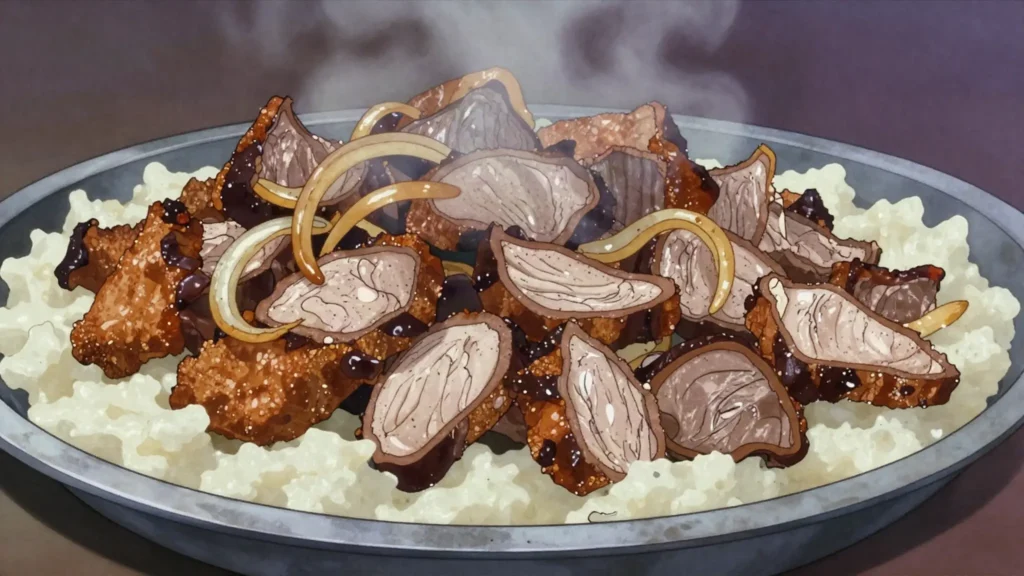
- Take the cheek, the tongue and the jaw meat. Peel the skin off the tongue and discard it. It peels off easily while the tongue is hot. Chop the picked meat into rough pieces. Heat the oil in a wide heavy pan. Add the sliced onions to the pan.
- Cook them for a good eight minutes. Add the picked meat to the pan. Fry it hard for about eight minutes. Let it brown and crisp at the edges. Season it with salt and black pepper. Add chilli to it if you want heat. Serving it is done piping hot. Pile the meat onto a large platter. Serve sishwala or pap alongside. Put chilli sauce on the table. It keeps three days refrigerated.
Technique
- At Nguni ceremonies the head carries meaning within the ritual rather than being simply meat: different parts go to different people according to seniority and role, the rules vary between communities and families, and eating it is traditionally restricted to men. The atlas records the custom as it is observed.
- The head is singed over a fire to burn off the hair, then the blackened skin is scraped clean, and that scraping is repeated until no hair remains at all, since any missed hair ruins the whole pot.
- A head is almost entirely connective tissue, so it needs four or five hours of gentle simmering to turn the collagen to gelatine; there is no way to hurry it, and the tongue skin peels off easily while hot but sets hard once cool.
Substitutions
- A sheep’s head is cooked the same way and makes a much smaller version.
- A blowtorch does the singeing at home in place of an open fire.
Variations
- The brain is usually removed and fried separately as a delicacy.
- The picked meat is fried with onion or served plain from the pot.
- The cooking broth is kept and used as a soup base.
History
At Swazi and wider Nguni ceremonies the head of the slaughtered beast is cooked separately and eaten by men, following strict rules of division.
Frequently asked questions
What is Inhloko?
Inhloko is a main from Eswatini: cow’s head singed, boiled long and shared out at ceremonies. At Swazi and wider Nguni ceremonies the head of the slaughtered beast is cooked separately and eaten by men, following strict rules of division.
How long does Inhloko take to make?
Inhloko takes 1 hour of preparation and 5 hours of cooking. The recipe makes serves 10 or more. It is rated hard to make.
What can I substitute in Inhloko?
Yes, within limits. A sheep’s head is cooked the same way and makes a much smaller version. A blowtorch does the singeing at home in place of an open fire.
What is the most important thing to get right in Inhloko?
Keep the raw head cold until you cook it. Wash hands and surfaces thoroughly afterwards. Traditionally that is done over an open fire. Hold or set the head over the flames. Turn it so every surface is reached. Work outside rather than in a kitchen. Let the head cool enough to handle.