
Ingredients
Fruit
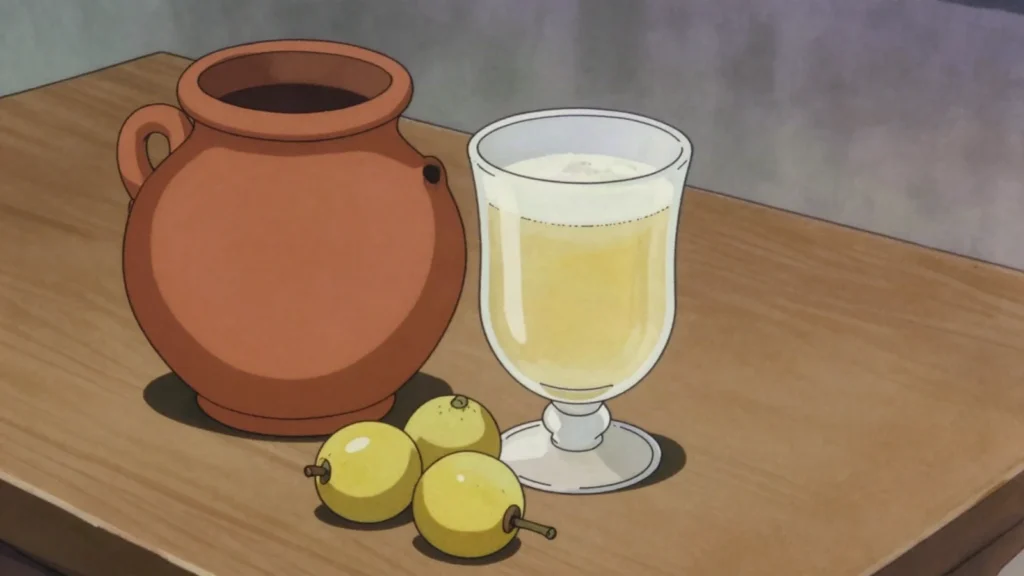
- 10 kgripe marula fruit (Sclerocarya birrea), fallen and fully yellow
- 3–5 litresclean drinking water
- up to 500 g sugar, only if the fruit is underripe
Equipment
- a large clean plastic or clay fermenting drum with a loose-fitting lid
- a woven grass strainer or a large piece of muslin
- clean gourds or bottles for serving
Directions
- Gather only fruit that has fallen of its own accord and turned fully yellow and fragrant. Green marula picked from the tree gives a thin, sour wine.
- Wash the fruit in clean water, discarding anything split, bruised or mouldy.
- Nick or peel each fruit and squeeze the juice and the slippery pulp into the drum by hand, keeping the hard stones aside; return a good handful of the skins to the drum, since they carry the wild yeast that drives the ferment.
- Add water at roughly half a litre per kilogram of fruit and stir well. The must should be cloudy and taste sharply tart and only faintly sweet.
- Cover loosely with a cloth or rest the lid on top without sealing it. The ferment has to breathe, and a sealed drum will build pressure.
- Stand it in a warm, shaded place at 25–30°C (75–85°F). Within 12 hours it will hiss and foam.
- Stir twice a day with a clean stick, pushing the floating cap of skins back under the liquid so it does not dry out and mould.
- After three to five days the foam subsides and the taste turns dry and yeasty, at roughly 3–5 percent alcohol. Strain through grass or muslin into gourds and drink the same day, at ambient temperature, passed round the group.
Technique
- Buganu is made by women in Eswatini and is the reason for the annual royal Buganu festival in February, when the season’s first wine is presented to the Queen Mother before anyone else drinks.
- Marula ferments on its own wild yeast. No cultured yeast is added and none is needed if the fruit is properly ripe.
- It does not keep. Buganu is drunk within a day or two of straining, after which it turns rapidly to vinegar.
- Food safety: use only clean vessels and drinkable water, keep the drum out of direct sun, and discard any batch that smells of solvent or grows a fuzzy surface mould.
Substitutions
- Outside marula country the same wild ferment works with very ripe mango or guava at the same fruit-to-water ratio, though nothing quite replaces marula’s resinous, tangy finish.
Variations
- The kernels inside the discarded stones are cracked and eaten as a snack, or pressed for marula oil, entirely separately from the wine.
- A shorter one-day ferment gives a sweet, barely alcoholic drink served to children and elders.
History
Marula fruit wine brewed by women; the Buganu ceremony each February and March is attended by the Queen Mother and marks the harvest.
Frequently asked questions
What is Buganu?
Buganu is a wine & spirit from Eswatini: marula-fruit wine celebrated at the royal Buganu festival. Marula fruit wine brewed by women; the Buganu ceremony each February and March is attended by the Queen Mother and marks the harvest.
How long does Buganu take to make?
Buganu takes 2 hr of preparation and 3–5 days fermenting of cooking. The recipe makes about 5 litres. It is rated medium to make.
What can I substitute in Buganu?
Yes, within limits. Outside marula country the same wild ferment works with very ripe mango or guava at the same fruit-to-water ratio, though nothing quite replaces marula’s resinous, tangy finish.
What is the most important thing to get right in Buganu?
Add water at roughly half a litre per kilogram of fruit and stir well. The must should be cloudy and taste sharply tart and only faintly sweet.