
Ingredients
Porridge
- 300 gwhite maize meal
- 150 gsorghum meal
- 1.2 litreswater
- 1½ tsp salt
To serve
- 500 mlemasi (thick sour milk)
- a relish of tomato, onion and greens stewed with oil
- or stewed groundnuts
Directions
- Bring 900 ml of the water to a rolling boil with the salt in a heavy three-legged pot or a thick-based pan.
- Slake the maize meal and sorghum meal together with the remaining 300 ml cold water into a lump-free slurry.
- Pour the slurry into the boiling water in a steady stream, stirring hard with a wooden spoon the entire time.
- Cook for 5 minutes, still stirring, until it thickens and begins to pull away from the sides of the pot.
- Turn the heat to its lowest, cover, and let it steam for 25–30 minutes without stirring so the grain cooks through and a crust forms on the base.
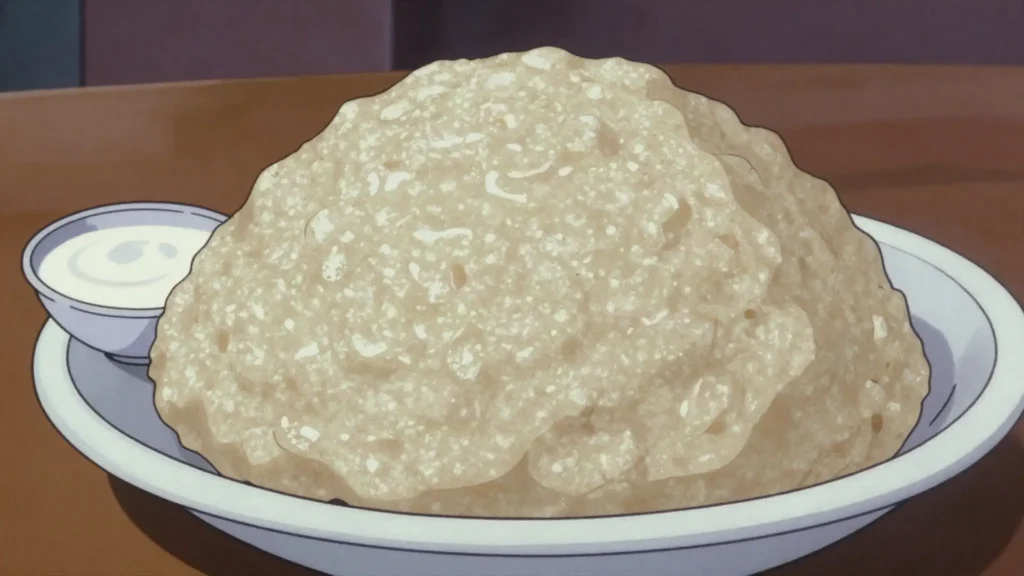
- Uncover and work it hard with the wooden spoon for 2–3 minutes, folding the mass over on itself, until it is dense, smooth and glossy and stands in a mound.
- Scoop into a bowl, press into a dome, and serve hot with sour milk or a relish, eaten with the right hand by pinching off a piece, rolling it and dipping.
Technique
- Sishwala sits at the stiff end of the porridge scale. It must hold its shape when scooped and be firm enough to pinch and dip without falling apart.
- Sorghum brings the colour and a faint bitterness while the maize brings the body; all-maize porridge is a softer, blander and quite different dish.
- The crust that forms on the base of the pot is prised off and eaten, traditionally by the cook, never scrubbed away.
- The steaming stage matters more than the stirring stage; lifting the lid to stir lets out the steam that finishes the grain.
Substitutions
- No sorghum meal: use all maize meal for a paler porridge, or swap in millet meal for a similar earthiness and colour.
Variations
- Loosened with far more water and left to sour overnight it becomes incwancwa, the thin fermented breakfast porridge.
- Cooked with a handful of ground groundnuts stirred in at the end for a richer everyday version.
History
Thick maize porridge, stiffer than emahewu and softer than pap, the staple base of nearly every Swazi meal.
Frequently asked questions
What is Sishwala?
Sishwala is a main from Eswatini: thick maize and sorghum porridge eaten with meat or sour milk. Thick maize porridge, stiffer than emahewu and softer than pap, the staple base of nearly every Swazi meal.
How long does Sishwala take to make?
Sishwala takes 10 min of preparation and 45 min of cooking. The recipe makes 4–6 servings. It is rated easy to make.
What can I substitute in Sishwala?
Yes, within limits. No sorghum meal: use all maize meal for a paler porridge, or swap in millet meal for a similar earthiness and colour.
What is the most important thing to get right in Sishwala?
Pour the slurry into the boiling water in a steady stream, stirring hard with a wooden spoon the entire time.