
Ingredients
Dough
- 600 gplain flour
- 350 mlwarm water
- 10 gdried yeast
- 4 tablespoonssugar
- 11/2 teaspoons salt
- 2 tablespoonsoil
To fry
- oil, for deep frying
To serve
- polony or cold sausage, sliced
- atchar, pickled mango relish
- jam or syrup
- tea
Directions
- Warm the water to just above body temperature. It should feel barely warm to a clean finger. Stir the yeast and sugar into it. Let it stand for five minutes until it foams.
- Put the flour and salt in a large bowl. Add the yeasted water and the oil. Bring it together into a soft dough. Turn it out onto a floured surface. Knead it for a good ten minutes. It should become smooth and elastic.
- Put the dough in an oiled bowl. Cover it over with a clean cloth. Leave it somewhere warm for about an hour. It should roughly double in size. Pinch off pieces about the size of an egg. Roll each one into a smooth ball. Set them out on a floured tray. Do not flatten them out at all. Cover them over with a clean cloth.
- Let them rise for about twenty minutes. They should look visibly puffed. Pour oil into a deep pan to eight centimetres. Never fill a pan more than halfway with oil.
- Heat the oil to about 170C for frying. A scrap of dough should sizzle up at once. Fry them for about four minutes a side. Turn them over as they colour. They should be deep golden all over.
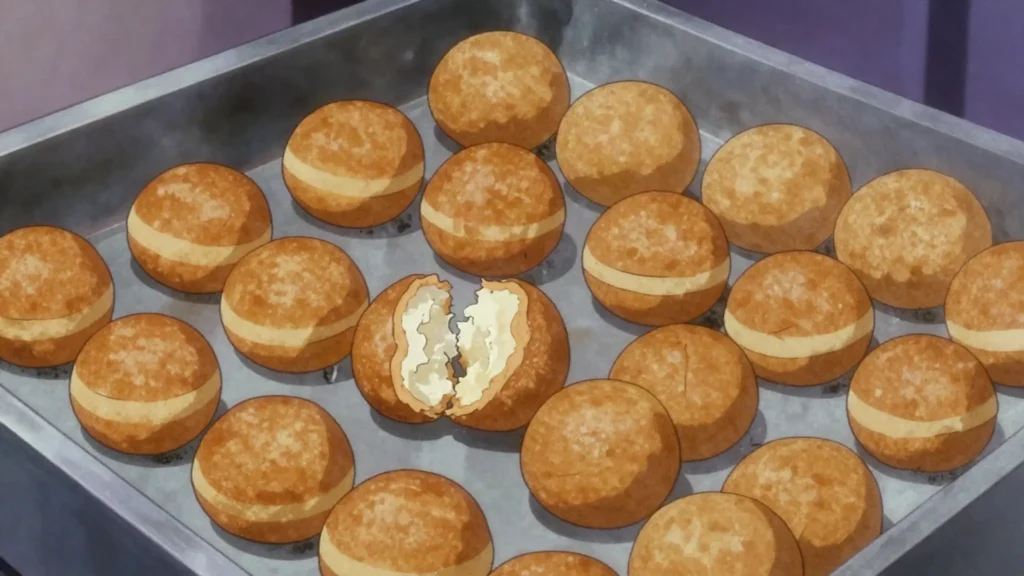
- Break one open from the first batch. The inside should be cooked and airy. Lift them onto kitchen paper or a rack. Let the excess oil drain away. Stack them in a bowl or a bucket.
- Cover them with a cloth to keep them warm. Serving them is done piping hot. Fill it with sliced polony or cold sausage. Add atchar, the pickled mango relish. They are best hot from the oil. Warm them in an oven to refresh them.
Technique
- The same fried bread is called vetkoek in Afrikaans, meaning fat cake, and magwinya or amagwinya across several Nguni languages, with Eswatini using emagwinya.
- It is barely sweet and has no filling inside, so it is closer to a fried bread roll than a doughnut, and is split and filled afterwards.
- Selling them from buckets at bus ranks is a common small business and a genuine everyday livelihood.
Substitutions
- Any plain yeasted bread dough can be fried the same way.
- The sugar can be reduced further for a fully savoury version.
Variations
- The standard filling is sliced polony with atchar, the pickled mango relish.
- A sweet version filled with jam or syrup is also eaten.
- Some sellers fill them with curried mince or beans.
History
The Southern African fat cake, cheap and filling, sold split with polony or eaten plain with tea.
Frequently asked questions
What is Emagwinya?
Emagwinya is a street food from Eswatini: fried dough balls sold hot from buckets at bus ranks and roadsides. The Southern African fat cake, cheap and filling, sold split with polony or eaten plain with tea.
How long does Emagwinya take to make?
Emagwinya takes 20 minutes plus rising of preparation and 25 minutes of cooking. The recipe makes about 20 balls. It is rated easy to make.
What can I substitute in Emagwinya?
Yes, within limits. Any plain yeasted bread dough can be fried the same way. The sugar can be reduced further for a fully savoury version.
What is the most important thing to get right in Emagwinya?
Put the dough in an oiled bowl. Cover it over with a clean cloth. Leave it somewhere warm for about an hour. It should roughly double in size. Pinch off pieces about the size of an egg. Roll each one into a smooth ball. Set them out on a floured tray. Do not flatten them out at all. Cover them over with a clean cloth.