
Ingredients
The shellfish
- 1 kglangoustines
- whole, shell on
- or 400 g langoustine tails
- plus 400 g shells and heads
- for the stock
The stock
- 2 tablespoonsbutter
- 1onion, chopped
- 1carrot, chopped
- 2 stickscelery, chopped
- 2 clovesgarlic, crushed
- 2 tablespoonstomato purée
- 100 mlbrandy or cognac
- or dry white wine
- 1.5 litreswater
- or fish stock
- 2bay leaves
- a few sprigs of thyme
- 6black peppercorns
The soup
- 50 gbutter
- 2 tablespoonsplain flour
- 300 mldouble cream
- 1 tablespoontomato purée
- a pinch of cayenne
- or paprika
- salt and white pepper
- a squeeze of lemon
To finish
- a knob of butter
- for the tails
- chopped chives or dill
- a swirl of cream
- a splash of brandy, optional
To serve
- good bread
- or rye bread
- butter
Directions
- Check the sourcing where you buy them. Live langoustines should be moving. Twist the head from the tail. Keep the heads, which carry most of the flavour.
- Peel the shell from the tail meat. Keep those shells too. Devein the tails if there is a visible thread. Set it aside in the refrigerator. Melt butter in a large heavy pot. Add the shells and heads. Fry them hard over a high heat. Give them a full eight to ten minutes. Press and crush them with a wooden spoon. They should turn deep orange-red.
- Add the onion, carrot, celery and garlic. Cook them for about eight minutes. Add the tomato purée. Cook it for two minutes. Add the brandy and let it bubble. Adding spirits to a hot pan can flare up. Take the pan off the heat before adding it. Stand back and keep your face away. Turn off an extractor fan first. Add the water or fish stock. Add the bay, thyme and peppercorns. Bring it to a simmer.
- Simmer it for forty minutes and no longer. Forty minutes extracts the good flavour. Strain it through a sieve into a bowl. Press the shells hard with a ladle. Strain it again through a fine sieve. That second straining is worth the minute.
- Strain very carefully if you do it. Melt the butter in a clean pot. Stir in the flour. Cook it for two minutes, stirring. It should smell nutty rather than raw. Add it a ladleful at a time. Whisk it smooth after each addition. Building it gradually keeps it smooth.
- Simmer it for ten minutes. Add the double cream and the tomato purée. Add a pinch of cayenne. Do not boil it hard after the cream goes in. Keep it at a bare simmer. Season with salt and white pepper. Add a squeeze of lemon. Taste it carefully. It should coat a spoon lightly. Melt a knob of butter in a small pan.
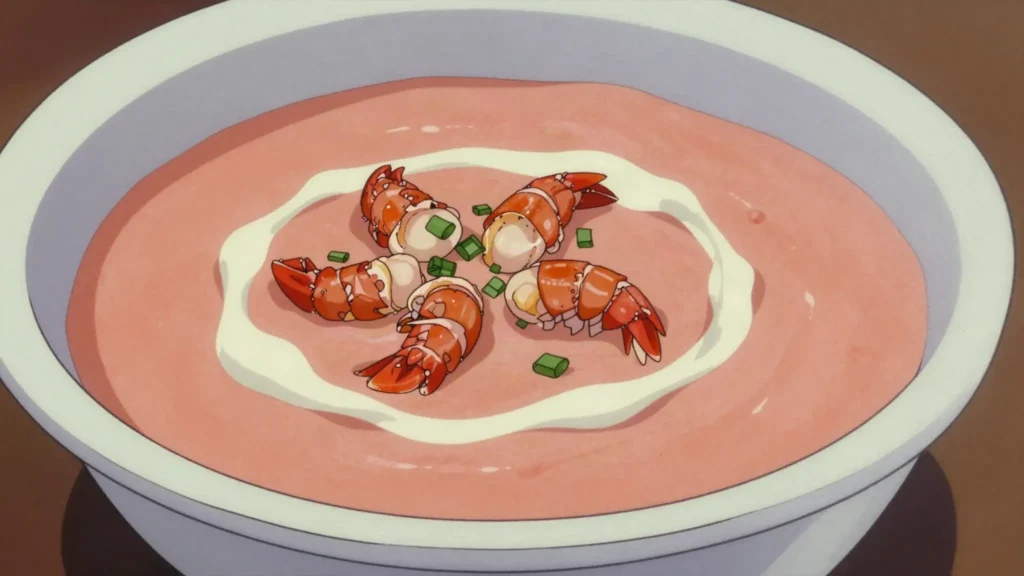
- Add the tails and cook them briefly. They need one to two minutes only. Take the soup off the heat first. Give them two minutes. Ladle the soup into warm bowls. Divide the tails between them. Swirl a little cream over. Scatter chopped chives or dill. Add a splash of brandy if you like.
- Serve good bread and butter alongside. That practice is genuine and still done in places. Cook fresh tails when you reheat it. Freeze it before the cream goes in if you can. Whisk it hard when reheating if it does.
Technique
- Fry the shells and heads hard for a full eight to ten minutes, crushing them, until they are deep orange-red and smell toasted. That frying is where the flavour and colour come from, and under-fried shells give a pale watery soup. It is the single most important step.
- Simmer the stock forty minutes and no longer. Shellfish stock turns bitter with long cooking, unlike meat stock — beyond an hour it actively deteriorates.
- Cook the tails one to two minutes only, until just opaque and still firm. Overcooked langoustine goes rubbery and tasteless, and it is the commonest failure here. Dropping the raw tails into the soup off the heat for two minutes is gentler still.
- Add the stock to the roux a ladleful at a time, whisking smooth after each. All at once gives lumps.
- Do not boil after the cream goes in. Keep it at a bare simmer or it can split.
- Strain the stock twice, the second time through a fine sieve. Shell fragments in a finished soup are genuinely unpleasant, and a food mill is safer than a blender if you want to break the shells down first.
- The squeeze of lemon at the end is necessary rather than optional. It cuts a soup this rich, and without it the whole thing sits heavy.
- Take the pan off the heat before adding brandy, stand back and turn off an extractor fan. Spirits added to a hot pan can flare up.
- Humar is not lobster. The animal is Nephrops norvegicus — the Norway lobster or langoustine, also sold as scampi or Dublin Bay prawn — a much smaller animal of a different genus. The English translation “lobster soup” is entrenched and misleading, and the correction is practical: langoustines are sweeter, more delicate and usually far cheaper.
- Iceland’s langoustine stock declined severely and targeted fishing was sharply restricted in recent years on the advice of the Marine and Freshwater Research Institute. The status may have changed since, so check it; langoustines are also landed in Scotland, Ireland and Norway, and certification schemes label some fisheries.
- Frozen langoustines are often better than fresh. Their flesh softens and goes mushy very quickly after catching, so most are frozen at sea.
- If you buy them live, chill them in a freezer for twenty minutes to sedate them and split the head lengthways with a heavy knife. That is the fastest method.
- Make the soup base ahead and cook fresh tails when you reheat it. The base keeps three days refrigerated and freezes well before the cream goes in.
Substitutions
- Whole prawns, crayfish or crab shells make the same soup by the same method.
- Dry white wine replaces brandy, giving a lighter and less sweet stock.
- Fish stock replaces water and deepens the base.
- Single cream replaces double for a lighter soup, though it splits more easily.
- Cornflour slaked in water replaces the roux for a gluten-free version.
- Paprika replaces cayenne for colour without much heat.
Variations
- A clearer, uncreamed version is served in some Icelandic restaurants.
- French bisque de homard uses true lobster and the same technique.
- Bisque de langoustines is the direct French relative.
- Icelandic plokkfiskur, the fish and potato mash, is the other harbour standard.
- A version finished with a spoonful of skyr rather than cream is a modern Icelandic touch.
- Langoustine tails simply grilled with garlic butter are how Höfn most often serves them.
Frequently asked questions
What is Humarsúpa?
Humarsúpa is a soup & stew from Iceland: creamy langoustine bisque, Reykjavik harbour favourite.
How long does Humarsúpa take to make?
Humarsúpa takes 30 minutes of preparation and 1 hour of cooking. The recipe makes serves 6. It is rated medium to make.
What can I substitute in Humarsúpa?
Yes, within limits. Whole prawns, crayfish or crab shells make the same soup by the same method. Dry white wine replaces brandy, giving a lighter and less sweet stock. Fish stock replaces water and deepens the base. Single cream replaces double for a lighter soup, though it splits more easily. Cornflour slaked in water replaces the roux for a gluten-free version. Paprika replaces cayenne for colour without much heat.
What is the most important thing to get right in Humarsúpa?
Strain very carefully if you do it. Melt the butter in a clean pot. Stir in the flour. Cook it for two minutes, stirring. It should smell nutty rather than raw. Add it a ladleful at a time. Whisk it smooth after each addition. Building it gradually keeps it smooth.