
Ingredients
Pluck
- 1sheep’s pluck, about 1.5 kg
- 1sheep’s stomach, cleaned
Mixture
- 300 gbeef suet, shredded
- 250 gpinhead oatmeal
- 3onions, finely chopped
- 500 mlof the cooking stock
Spice
- 2 tspsalt
- 2 tspblack pepper
- 1 tspground mace
- 1 tspground coriander
- 1 tspgrated nutmeg
- 1 tspcayenne
To serve
- mashed swede
- mashed potato
- whisky
Directions
- Lungs are not sold for food in some countries, the United States among them, and the standard workaround is to replace them with extra lamb shoulder or heart.
- Soak the stomach overnight in cold salted water, then turn it inside out and scrub it thoroughly.
- Simmer the pluck in water for 1 hour 30 minutes to 2 hours, with the windpipe hanging over the side of the pot into a bowl.
- Hang the windpipe out of the pot. It drains off the residue that would otherwise cook back into the meat, which is why the old recipes are so insistent about it.
- Toast the pinhead oatmeal in a dry pan or a low oven until it smells nutty and has coloured lightly.
- Toast the oatmeal. Untoasted it goes pasty and the haggis is stodgy; toasted, the grains stay separate and give the crumbly texture that is correct.
- Cool the pluck, discard the windpipe, and chop or coarsely mince everything.
- Chop it coarsely rather than mincing it fine. Haggis should be crumbly, and a fine paste is closer to pâté than to the thing itself.
- Mix the meat with the suet, toasted oatmeal, onions and all the spices, then moisten it with the cooking stock until it is loose and sloppy.
- Make it far wetter than seems right. The oatmeal swells enormously as it cooks, and a mixture that looks correct now will be dry and solid later.
- Fill the stomach only two thirds full, press the air out, and sew or tie it closed.
- Two thirds and no more, for the same reason. A tightly packed haggis bursts, which is precisely what all the old warnings are about.
- Prick it in several places with a needle.
- Lower it into simmering water and cook for 3 hours, never letting it boil, topping the water up as it goes.
- A bare simmer the whole time. A rolling boil splits the skin and you lose the lot into the pot.
- Lift it out, rest it a few minutes, and bring it to the table whole.
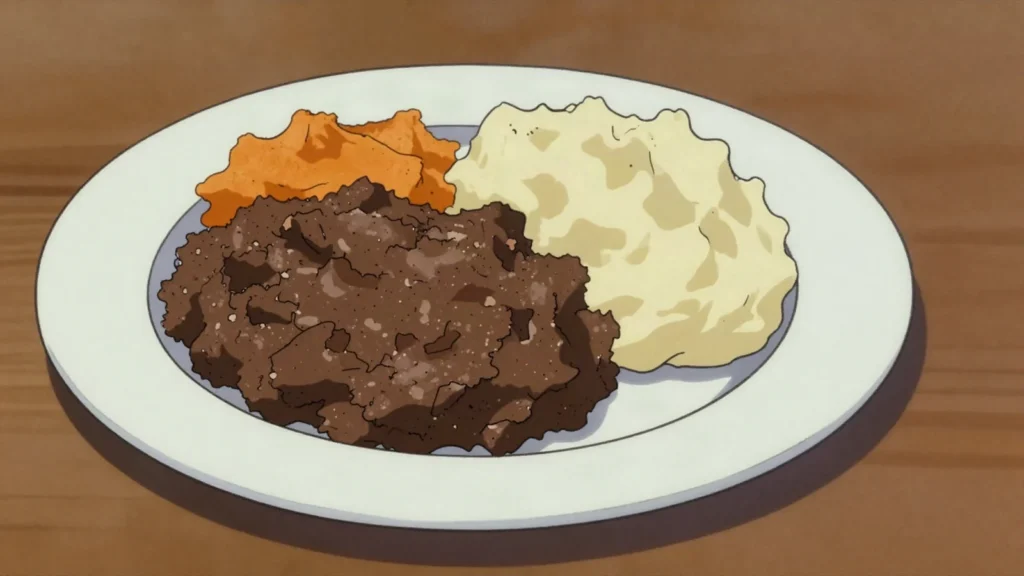
- Cut it open with a cross slash and let it spill out onto the plate, which is the traditional presentation.
- Serve with mashed swede and mashed potato, and a dram of whisky.
- Recipes for offal boiled in a stomach appear in fifteenth-century English manuscripts, and Robert Burns’s Address to a Haggis of 1786 made it Scotland’s emblem.
Technique
- Pinhead oatmeal, not rolled oats and not fine oatmeal, which turn to porridge.
- Order the pluck and the stomach from a butcher well in advance; neither is a shelf item.
- Steaming it in a covered pudding basin is far easier than sewing a stomach and is very nearly as good.
Substitutions
- A large ox bung or a synthetic sausage casing in place of the stomach.
- A pudding basin covered with pleated foil, steamed for the same time.
Variations
- Vegetarian haggis, with pulses, oats and vegetables, which is genuinely common in Scotland.
- Stacked as a tower with the neeps and tatties.
- Haggis pakora, the Scottish Indian restaurant invention.
History
A savory pudding of minced sheep’s offal, oats, suet and spices, traditionally cooked inside a sheep’s stomach lining, with dishes built on offal and grain going back centuries across the British Isles as a practical way to use the entire animal after slaughter rather than waste any part of it. Haggis became specifically and enduringly associated with Scotland in particular through the poet Robert Burns, who wrote ‘Address to a Haggis’ in 1786, a poem still recited today at Burns Night suppers held annually on or around his birthday, January 25th, a tradition that did much to cement haggis as a specifically Scottish national symbol rather than simply one of several regional offal puddings once found more widely across Britain.
Frequently asked questions
What is Haggis?
Haggis is a main from United Kingdom: spiced sheep offal and oatmeal, with neeps and tatties. A savory pudding of minced sheep’s offal, oats, suet and spices, traditionally cooked inside a sheep’s stomach lining, with dishes built on offal and grain going back centuries across the British Isles as a practical way to use the entire animal after slaughter rather than waste any part of it. Haggis became specifically and enduringly associated with Scotland in particular through the poet Robert Burns, who wrote ‘Address to a Haggis’ in 1786, a poem still recited today at Burns Night suppers held annually on or around his birthday, January 25th, a tradition that did much to cement haggis as a specifically Scottish national symbol rather than simply one of several regional offal puddings once found more widely across Britain.
How long does Haggis take to make?
Haggis takes 1 hr plus overnight soaking of preparation and 5 hr of cooking. The recipe makes 8 servings. It is rated hard to make.
What can I substitute in Haggis?
Yes, within limits. A large ox bung or a synthetic sausage casing in place of the stomach. A pudding basin covered with pleated foil, steamed for the same time.
What is the most important thing to get right in Haggis?
Hang the windpipe out of the pot. It drains off the residue that would otherwise cook back into the meat, which is why the old recipes are so insistent about it.