
Ingredients
The base
- 300 gdried beans
- black-eyed peas, or brown beans
- soaked overnight
- see the safety note on red kidney beans
- 500 gmaize kernels
- fresh, frozen or tinned sweetcorn
- or dried maize, soaked and boiled
The sauce
- 4 tablespoonsred palm oil
- or vegetable oil
- 2large onions, chopped
- 4tomatoes, chopped
- or 1 tin chopped tomatoes
- 2 tablespoonstomato purée
- 2hot chillies, chopped
- or to taste
- 4 clovesgarlic, crushed
- a thumb of ginger, grated
- 1stock cube
- or 500 ml stock
- 1 teaspoondried thyme
- or fresh
- 2bay leaves
- salt and black pepper
Sometimes added
- 150 gsmoked fish, flaked
- or dried prawns
- or crayfish powder
- 1 tablespoonground egusi
- melon seed, optional
To serve
- hot, on its own
- with fried plantain
- or bread
Directions
- Soak them for at least five hours and discard the water. Then boil them hard for at least ten minutes. Drain and rinse them before use. Add them near the end rather than at the start. Cut them from the cob with a knife.
- Stand the cob upright and slice downward. It needs soaking overnight and long boiling. Warm it gently to melt it. Do not heat palm oil until it smokes. Heat it gently and add the onions early. Drain the soaked beans and discard the water. Put them in a large pot with fresh water. Bring them to a rolling boil. Boil hard for ten minutes. Then simmer until tender.
- Brown beans can take an hour or more. Do not salt them until they are nearly tender. Salt added early can toughen the skins. Keep some of the bean cooking water. It is starchy and it helps thicken the dish.
- Boil fresh or dried maize separately until tender. Fresh kernels need about ten minutes. Heat the palm oil in a large pot. Add the chopped onions. Cook them for about ten minutes until soft.
- Add the garlic, ginger and chillies. Cook them for two minutes. Add the tomato purée and cook it two minutes. Add the chopped tomatoes. Cook them down for about ten minutes. They should collapse into a thick sauce. Add the thyme and bay leaves. Add the stock cube or the stock. Add the smoked fish or dried prawns if using.
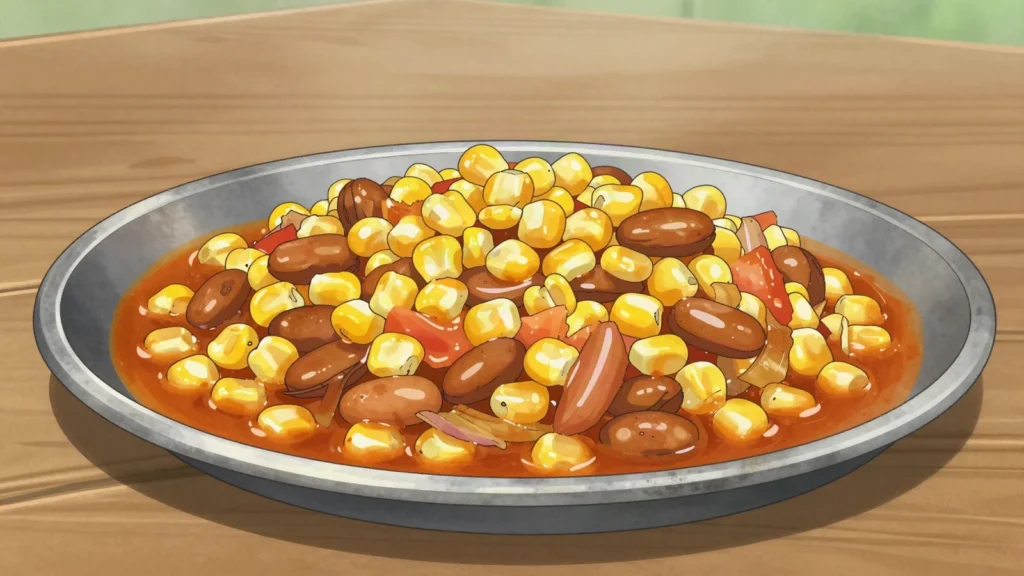
- Add the cooked beans and the maize. Add enough bean water or stock to loosen it. Stir it together thoroughly. Simmer it gently for about twenty minutes. Stir it regularly so it does not catch. Add liquid if it gets too thick. Corn chaff is thick rather than soupy. Mash a few beans against the pot to thicken it. Season with salt and plenty of black pepper.
- Taste it and adjust the chilli. Stir a spoonful in near the end. Serve it hot in bowls. It is cheap, filling and it keeps well. Leave them out for a vegan version. It keeps four days refrigerated. Add water when reheating it.
Technique
- If you use red kidney beans, soak them at least five hours, discard the soaking water, and boil them hard for ten full minutes before any simmering. Raw and undercooked red kidney beans contain phytohaemagglutinin, which causes severe vomiting and diarrhoea, and as few as four or five raw beans can do it. Slow cooking at around 80 degrees makes them more toxic rather than less, so a slow cooker is genuinely dangerous with them.
- Black-eyed peas and brown beans, the usual choice here, contain far less of that lectin — but soak and hard-boil any dried bean as a matter of habit. Tinned beans are fully cooked and carry no risk; drain, rinse and add them near the end.
- Wait for the oil to separate and rise before adding the beans and corn. That separation is the standard West African indicator that the tomato and onion base has cooked properly.
- Keep some of the bean cooking water. It is starchy and thickens the stew better than anything you could add.
- Mash a few beans against the side of the pot if it is thin. That gives body without flour.
- Sweetcorn sold in Europe and North America is far sweeter than the field maize used in West Africa, so the dish can come out sweeter than intended. Balance it with more chilli and more salt rather than less corn.
- Do not heat palm oil until it smokes. Some traditional recipes call for bleaching it that way, but overheating any oil produces harmful compounds and fills the kitchen with acrid smoke. Heat it gently and get the onions in early.
- Red palm oil is unrefined, deep orange-red and strongly flavoured — a different product from refined palm oil, and it solidifies at cool room temperature. Industrial palm oil has driven serious deforestation, largely through plantation agriculture in Southeast Asia; small-scale West African production is a different matter, and the atlas keeps that distinction rather than flattening it.
- Smoked fish, dried prawns or crayfish powder add a great deal of savoury depth. They are also allergens — leave them out for a vegan version, which is still a complete dish, and say plainly what is in it.
- Keep it thick rather than soupy. The beans and corn should be coated, not swimming.
- The English dish name in a French- and English-speaking country follows the partition of German Kamerun between Britain and France after 1918, which still shapes Cameroon.
Substitutions
- Tinned beans replace dried entirely and remove the lectin question; add them near the end.
- Frozen or tinned sweetcorn replaces fresh maize and needs no pre-cooking.
- Dried maize, soaked and long-boiled, gives a chewier and more traditional result.
- Vegetable oil replaces red palm oil, at the cost of the colour and much of the character.
- Crayfish powder or dried prawns replace smoked fish; all three are optional.
- Ground egusi thickens and enriches the stew and can be left out.
Variations
- Adalu in Nigeria is the beans-and-maize dish of the same family.
- Ekpang nkukwo and other Cameroonian one-pots use the same palm-oil base.
- Corn chaff made with green plantain instead of maize is eaten in some households.
- Ndolé, bitterleaf cooked with groundnuts and fish, is Cameroon’s best known dish.
- Waakye in Ghana pairs rice and beans instead of maize and beans.
- A version with smoked turkey or beef added is common where meat is affordable.
Frequently asked questions
What is Corn chaff?
Corn chaff is a main from Cameroon: boiled corn and beans stewed with palm oil and spices.
How long does Corn chaff take to make?
Corn chaff takes 20 minutes plus soaking of preparation and 1 hour 30 minutes of cooking. The recipe makes serves 6. It is rated easy to make.
What can I substitute in Corn chaff?
Yes, within limits. Tinned beans replace dried entirely and remove the lectin question; add them near the end. Frozen or tinned sweetcorn replaces fresh maize and needs no pre-cooking. Dried maize, soaked and long-boiled, gives a chewier and more traditional result. Vegetable oil replaces red palm oil, at the cost of the colour and much of the character. Crayfish powder or dried prawns replace smoked fish; all three are optional. Ground egusi thickens and enriches the stew and can be left out.
What is the most important thing to get right in Corn chaff?
Soak them for at least five hours and discard the water. Then boil them hard for at least ten minutes. Drain and rinse them before use. Add them near the end rather than at the start. Cut them from the cob with a knife.